





UAE’s 5 Largest Banks Record $10.37 Billion Profit in H1
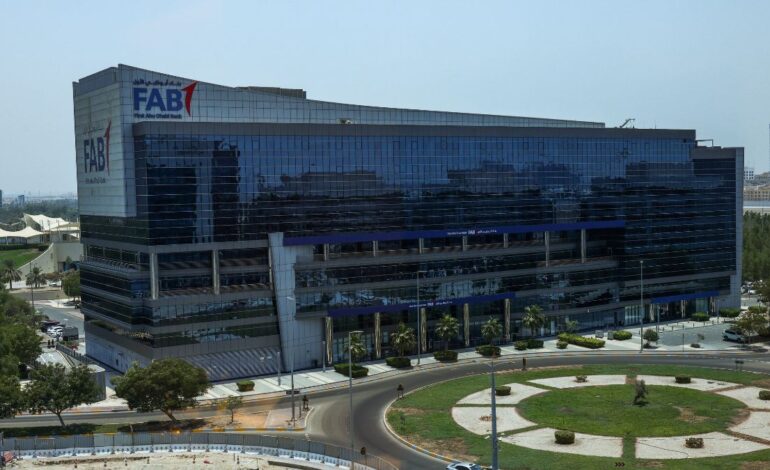

The UAE’s five largest banks reported a combined net profit of 38.1 billion dirhams ($10.37 billion) in the first half of 2026, marking a 7.8 percent increase year on year, according to a Moody’s analysis.
The lenders — First Abu Dhabi Bank, Emirates NBD, Abu Dhabi Commercial Bank, Dubai Islamic Bank, and Mashreq — together control roughly 79 percent of the UAE banking system’s assets, Moody’s said. Their improved earnings were driven by strong operating revenue that more than offset rising costs and a sharp increase in provisions.
The results follow a March assessment from Fitch Ratings, which said financial institutions across the Gulf Cooperation Council face limited short-term credit risk from the Iran war, supported by strong financial buffers and sovereign backing. Moody’s said net profit growth was underpinned by solid operating revenue, reflecting healthy net interest income, sustained fee and commission growth, and robust treasury and trading activity — factors that outweighed higher operating expenses and increased provisioning.
Net interest income rose 11 percent year on year to 46.8 billion dirhams, driven mainly by an 18 percent expansion in average interest-earning assets amid continued lending opportunities across the UAE and regional markets. This growth held up even as asset yields fell to 6.1 percent from 6.8 percent following rate cuts by the Central Bank of the UAE in the second half of 2025. Lower funding costs helped cushion the impact, with net interest margins narrowing only slightly to 2.6 percent from 2.8 percent.
Non-interest income also performed well, rising 12 percent to 26 billion dirhams. Fee and commission income grew 18 percent, supported by higher activity in trade finance, cards, wealth management, and transaction banking. Treasury and trading revenue remained strong as geopolitical volatility boosted activity in foreign exchange, derivatives, and capital markets. Non-interest income now makes up more than 35 percent of aggregate operating income, reflecting the banks’ continued shift away from traditional spread-based earnings.
Looking ahead, Moody’s expects profitability to remain solid through the rest of 2026, supported by continued loan growth tied to an ongoing multiyear capital expenditure cycle. Net interest margins are likely to stay relatively stable, though non-interest income could soften amid slower trade and deal activity. Moody’s noted that while cost efficiency will remain among the strongest globally, credit costs are expected to stay elevated as banks front-load provisions ahead of potential asset quality deterioration linked to the ongoing regional conflict — meaning overall earnings should keep growing, even as bottom-line profitability ratios continue to soften through year-end.
Also Read:
How Saudi Museums Are Blending Heritage with Artificial Intelligence
Operating Revenues Index in Saudi Arabia Climbs 6.1% on Non-Oil Activity