




Foreign Policy Challenges Mount for Trump Ahead of Midterm Elections
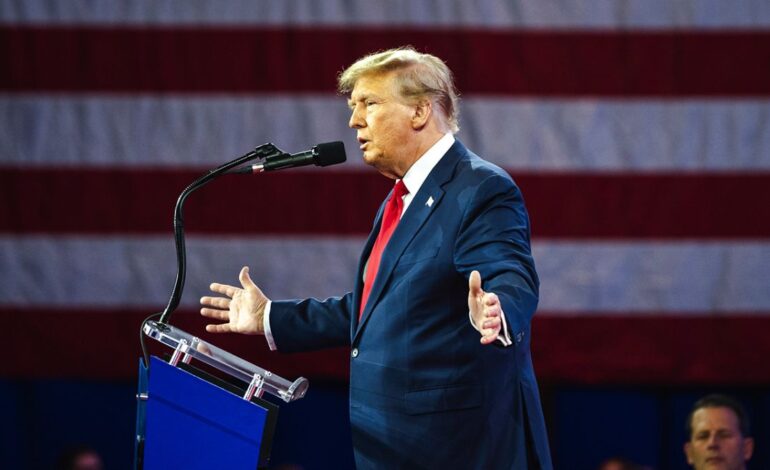

With the Iran war stuck at a costly standoff and conflicts from Ukraine to Gaza still unresolved, President Donald Trump’s ambitious foreign policy agenda appears increasingly stalled as he heads into November’s midterm elections.
The setbacks stand out for a president who returned to office promising to be a “peacemaker” and made resolving global conflicts central to his second-term agenda. Trump has grown visibly frustrated with questions on the topic, lashing out at reporters this week and renewing a threat to bomb Oman, a US ally negotiating with Iran over reopening the Strait of Hormuz.
The stalemate with Tehran has taken a political toll. Trump called off talks with Iran after weeks of pushing for a diplomatic resolution and announced a new campaign of economic pressure on Wednesday, seemingly acknowledging that months of military action failed to secure the concessions Washington wanted. As inflation persists and the war pushes gasoline prices higher, Trump’s approval rating has slipped to a new low of 33 percent, according to the latest Reuters/Ipsos poll.
Other diplomatic efforts have similarly stalled. Trump’s negotiator and son-in-law Jared Kushner left talks aimed at advancing a Gaza peace deal without progress, while an anticipated visit to Kyiv by Kushner and envoy Steve Witkoff to revive Ukraine peace talks has yet to materialize. After early wins including a Gaza ceasefire and the capture of Venezuela’s president, Trump’s broader record is increasingly defined by unresolved diplomatic pushes.
Asli Aydintasbas, a fellow at the Brookings Institution, said Trump has successfully disrupted Washington’s traditional foreign policy consensus but has struggled to convert that disruption into tangible results for Americans.
According to a Trump ally who spoke on condition of anonymity, the Iran conflict weighs heavily on the president, with no clear consensus within the White House on how to resolve it. The pressure could intensify further if investors begin pricing in a prolonged conflict, raising US borrowing costs and constraining Trump’s domestic priorities. The administration maintains that the cost is justified to prevent Iran from acquiring a nuclear weapon, despite Tehran’s denials that it seeks one. White House spokeswoman Anna Kelly pointed to ended conflicts, freed hostages in Gaza, and fairer trade deals as evidence of the administration’s foreign policy success, while a senior official said sanctions and a naval blockade have left Iran’s economy severely weakened.
Some analysts credit Trump for tackling disputes other administrations avoided, including conflicts between Rwanda and the Democratic Republic of Congo, and Thailand and Cambodia. Nick Snyder of the Hudson Institute said Trump’s pursuit of a more stable world extends to both active conflicts and longstanding economic disputes. But Trump’s unconventional approach — leaning heavily on America’s economic and military leverage, including with allies — has produced uneven results. Russia’s war in Ukraine remains far from resolution, with a recent strike on Kyiv killing 16 people. In Gaza, mediators worry that intensifying Israeli strikes are undermining a peace framework Trump brokered last October, while in Lebanon, Israeli strikes killed 11 people Sunday despite an active US-mediated peace arrangement.
One clear success came in Venezuela, where US forces captured President Nicolas Maduro without American casualties — an outcome analysts say may have led Trump to underestimate the complexity of joining Israel’s campaign against Iran. Stephen Wertheim of the Carnegie Endowment for International Peace argued that Trump’s heavy reliance on pressure and flattery often overlooks the strategic and domestic considerations of foreign leaders, leading to repeated setbacks.
With midterm elections approaching and Republicans facing the possibility of losing control of Congress, analysts warn that Trump’s approach may ultimately encourage adversaries to simply wait him out. “US adversaries understand that his political clock is shorter than theirs, and that while the United States can apply enormous coercive pressure, it may eventually lose patience,” Aydintasbas said, adding that leaders in Moscow, Beijing, and Tehran may have even greater incentive to hold out once the midterms have passed.





















2 Comments
[…] Foreign Policy Challenges Mount for Trump Ahead of Midterm Elections […]
[…] Foreign Policy Challenges Mount for Trump Ahead of Midterm Elections […]