



Fjord Wins Palme d’Or at Cannes with Powerful Take on Political Polarization
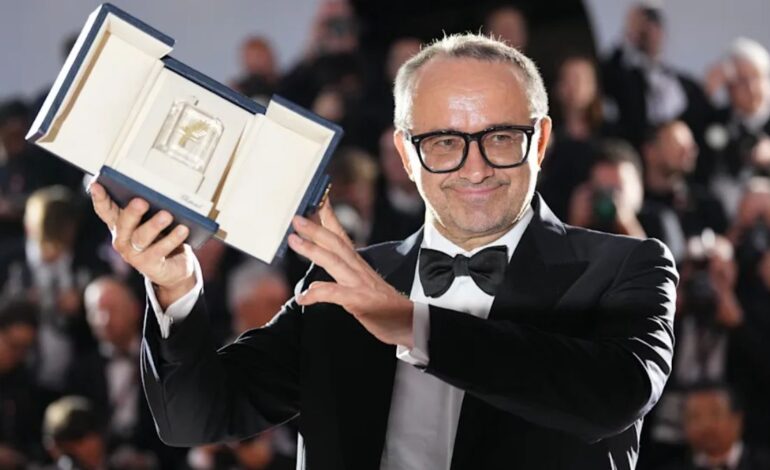

Cristian Mungiu’s “Fjord,” a Norwegian-set drama exploring political polarization and parental rights, has won the Palme d’Or at the 79th Cannes Film Festival, marking the second time the Romanian director has claimed cinema’s most prestigious prize.
The film, starring Sebastian Stan and Renate Reinsve as Romanian Evangelicals who move to Norway only to have their children removed by child services for spanking, resonated with the festival jury despite what was widely described as an underwhelming selection overall. Mungiu called the film “a plea against any type of fundamentalism,” addressing what he characterized as “left-wing fundamentalism” and calling for greater application of values like empathy and inclusion.
“Today the society is split. It’s divided. It’s radicalized,” Mungiu said at the awards ceremony. “This film is a pledge against any type of fundamentalism.”
A Second Palme d’Or for Mungiu
With this victory, Mungiu joins an exclusive group. He becomes just the tenth filmmaker in Cannes history to win the Palme d’Or twice. His first victory came in 2007 for “4 Months, 3 Weeks and 2 Days,” a Romanian drama about abortion that became an international critical success.
The win demonstrates sustained respect for Mungiu’s filmmaking across nearly two decades, with both his Palme d’Or victories addressing socially and politically charged subject matter. His return to Cannes’ highest honor suggests that serious, character-driven cinema exploring contemporary conflicts retains space at the festival despite broader commercial pressures.
Neon’s Unprecedented Run Continues
The victory extends one of cinema’s most extraordinary achievements: specialty label Neon has now won the Palme d’Or for seven consecutive years. “Fjord” adds to a streak that includes last year’s winner, Jafar Panahi’s “It Was Just an Accident,” and 2024’s champion “Anora,” which went on to win Best Picture at the Oscars.
This unprecedented run of consecutive Palme d’Or victories demonstrates either extraordinary curatorial instincts or remarkable luck in identifying projects that resonate with festival juries. Either way, the streak gives Neon outsized influence in shaping international cinema’s prestige landscape.
Awards Distributed Across International Filmmakers
The Grand Prix, Cannes’ second-highest honor, went to Andrey Zvyagintsev’s “Minotaur,” a Russian thriller set against the backdrop of the war in Ukraine. The film, loosely based on Claude Chabrol’s 1969 “The Unfaithful Wife,” explores a businessman’s suspicions about his wife while he faces pressure to conscript workers for Putin’s military.
Accepting the award, Zvyagintsev directly addressed Russian leadership: “The only person who can stop this butchery is you, Mr. President of the Russian Federation. Put an end to this slaughter.”
Best Director honors were split between Polish filmmaker Pawel Pawlikowski for “Fatherland” and the Spanish duo Javier Ambrossi and Javier Calvo for “The Black Ball.” Both best actress and best actor awards were shared, with Virginie Efira and Tao Okamoto splitting best actress for “All of a Sudden,” while Emmanuel Macchia and Valentin Campagne shared best actor for “Coward.”
The best screenplay award went to Emmanuel Marre for “A Man of His Time,” a French drama about Nazi collaboration in Vichy France inspired by his own family history.
A Festival Searching for Buzz
By consensus, the 79th Cannes was not a landmark festival. Hollywood largely abstained from the competition. Many selections failed to generate the critical enthusiasm Cannes typically inspires. The international conversation that characterizes successful Cannes years was notably muted.
Yet the awards distributed Saturday will significantly elevate the profiles of the winning films and filmmakers. Last year’s Cannes produced a succession of Oscar nominees, and this year’s winners—particularly “Fjord” and “Minotaur”—appear positioned for international recognition and continued festival success.
Missing Tributes and Memorable Moments
Barbra Streisand was scheduled to receive an honorary Palme d’Or but could not attend due to a knee injury. Isabelle Huppert delivered a tribute, and Streisand appeared via taped video message. The absence underscored the festival’s attempt to honor cinema history alongside contemporary achievement.
The jury, headed by Korean filmmaker Park Chan-wook, demonstrated characteristic humor. Chan-wook, a Cannes regular who has never won the Palme d’Or himself, joked that he preferred not to give away the award he has never received.
“To be honest, I didn’t want to award the Palme d’Or to any of the films, because it’s an award I myself have never gotten,” Chan-wook told reporters. “But I had no other choice.”
Looking Forward
As the festival concluded, attention turns to how Cannes winners will perform in the broader awards landscape. The recent precedent—”Anora’s” Best Picture victory—suggests that Palme d’Or winners retain meaningful commercial and critical visibility despite skepticism about any given festival’s overall quality.
“Fjord,” with its timely exploration of polarization and parental authority, appears positioned for continued conversations about contemporary politics and film’s role in addressing divisive issues.
Also Read:
Humanoid and Bosch Join Forces to Accelerate Robot Production
Authorities Recover Bodies of Last Two Italian Divers Missing in Maldives