






How ‘Return Hubs’ for Migrants Could Change EU Migration Policies
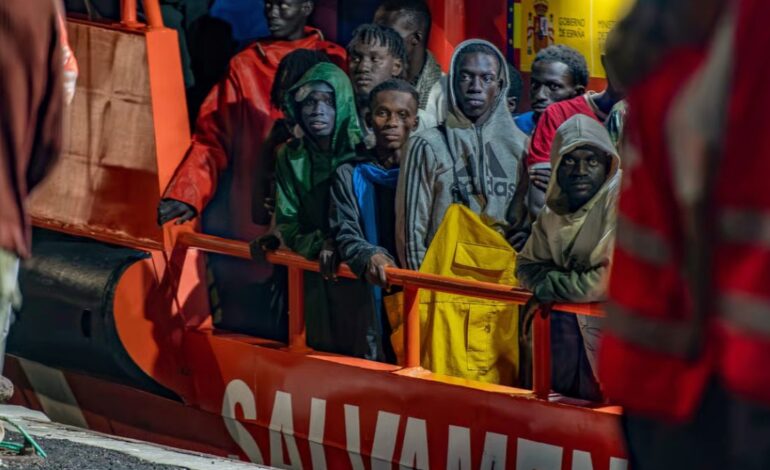

The European Union is moving toward a fundamental shift in how it handles asylum and deportation. New migration measures under consideration would allow the opening of processing centers outside EU borders. Rejected asylum applicants could be sent to these centers while their cases are resolved. Penalties for migrants who refuse to leave would become harsher. The debate reveals deep divisions within Europe about immigration policy and raises critical questions about human rights.
What the New Proposal Includes
The package under consideration would introduce several significant changes to EU immigration policy. First, it would establish so called return hubs outside EU territory. These centers would process migrants whose asylum applications have been rejected. Rather than remaining in Europe during appeals, rejected applicants would be transferred to these external centers.
Second, penalties for migrants who refuse to leave would increase substantially. This includes longer detention periods and entry bans that would prevent future attempts to enter the bloc. The measures aim to discourage irregular migration and increase actual deportations.
Third, authorities would gain expanded search powers to identify and locate irregular migrants. This aspect remains a point of contention, with negotiations likely to focus on determining the exact scope of these powers.
The proposal was introduced by the European Commission last year. It gained support from center right and far right lawmakers in a preliminary parliamentary vote. EU member states approved it in December. A final parliamentary vote is expected, with negotiations between lawmakers and member states to follow.
The Return Hub Concept
Return hubs represent an attempt to address what European governments see as a critical problem: most rejected asylum applicants never actually leave Europe. Currently, only about 20 percent of people ordered to leave are actually returned to their countries of origin.
Proponents argue that external processing centers could improve this situation. By locating facilities outside EU territory, they suggest these centers could act as a deterrent. Potential migrants, knowing rejection would mean transfer to an external center, might reconsider attempting the journey. Additionally, external locations might simplify deportation procedures by removing rejected applicants from EU jurisdiction.
A small group of countries including Denmark, Austria, Greece, Germany, and the Netherlands are exploring options for setting up these centers. However, the EU has not yet determined where these would be located or how they would operate.
The concept remains controversial, with fundamental questions about legality, practicality, and humanitarian concerns unresolved.
The Opposition
Critics raise serious concerns about the proposal. Human rights organizations have described the return hubs as legal black holes. The International Rescue Committee warns that centers located outside EU territory would be beyond European oversight. This means policymakers cannot guarantee that people’s rights will be upheld.
A coalition of 70 rights groups warned that the measures would permit what they call ice style immigration enforcement, referencing the heavy handed practices of Immigration and Customs Enforcement in the United States. Melissa Camara, a Green Party lawmaker, framed the debate starkly: What kind of Europe do we want? One of rejection, hatred, and imprisonment? Or one that upholds fundamental values?
Some member states including France and Spain have questioned whether return hubs would actually work. They point to the poor track record of similar projects. Britain abandoned a plan to deport undocumented migrants to Rwanda. Italian facilities in Albania designed to process migrants have faced legal challenges and failed to attract significant numbers.
These examples suggest that external processing centers face enormous practical and legal obstacles. Establishing them requires cooperation from third countries willing to host them. It requires international agreements. It requires addressing complex legal questions about jurisdiction and rights.
The Political Context
The shift toward stricter immigration policies reflects broader political changes in Europe. Public opinion on migration has soured significantly. This has fueled electoral gains for far right parties across the continent. Governments, responding to voter concerns, have sought tougher stances on immigration.
The migration issue has become particularly important because of its political salience. While migrant arrivals have actually decreased in 2025, the topic remains highly charged. Politicians across the spectrum feel pressure to demonstrate that they are addressing migration concerns.
The support from center right and far right lawmakers shows that strict immigration policies have become mainstream across significant portions of European politics. Left wing and green parties oppose the measures. But they lack the votes to stop them.
This political dynamic means the proposal is likely to move forward despite concerns from human rights advocates and some member states.
What Comes Next
After the European Parliament vote, negotiations will begin between lawmakers and member states on the final text. These negotiations are likely to focus on a few key issues.
The extent of search powers granted to authorities will probably be debated. How far can police go in identifying and locating irregular migrants? This raises questions about privacy rights and police practices.
The structure and operation of return hubs remains largely undetermined. Where would they be located? Which countries would host them? What would the legal framework be? What rights would people have while in these centers?
These practical questions will need answers before the policy can actually be implemented. And those answers will determine whether the system works, whether it respects human rights, and whether it actually achieves the goal of increasing deportations.
The Fundamental Questions
Beyond the technical details, this debate raises fundamental questions about Europe’s values. How should wealthy, secure nations treat people fleeing poverty and violence? What obligations do countries have to process asylum claims fairly? Where is the line between immigration enforcement and human rights abuse?
The return hub proposal suggests one answer: move the problem outside Europe’s borders. Don’t see the difficult cases. Don’t engage with the complexity. Process them elsewhere, out of sight.
Critics argue this approach contradicts European values. They point out that locating detention centers beyond EU oversight enables abuse. They note that history shows harsh immigration policies rarely achieve the deterrent effect advocates promise.
These competing visions of what Europe should be drive the migration debate. On one side, control and enforcement. On the other, rights and fairness. The outcome will reveal what Europe actually values.
The Practical Reality
Even if the proposal passes, actually implementing it will be difficult. No country has successfully created a functioning external processing center that respects international law and human rights standards.
Britain’s Rwanda scheme collapsed amid legal challenges and public opposition. Albania’s Italian run facilities struggled to attract migrants and faced legal suits. Both examples suggest that countries are reluctant to host these centers, that legal frameworks are complex, and that migrants resist being removed from EU territory.
Europe may discover that tougher policies sound good in theory but prove difficult in practice. Building centers outside EU territory requires finding countries willing to cooperate. It requires establishing legal frameworks that withstand international scrutiny. It requires actually achieving deportations, which has proven extremely difficult.
The real test will come after the laws pass. When the EU actually tries to establish these centers, it will confront the practical obstacles that have defeated similar schemes in the past.
Looking Ahead
The return hub proposal represents a significant shift in European migration policy. It moves away from processing all asylum claims within Europe. It attempts to externalize the problem. It represents a tough stance that appeals to voters concerned about immigration.
Whether it will actually work, whether it will respect human rights, and whether it will prove politically sustainable remain open questions. What is clear is that Europe is attempting a fundamental rethinking of asylum policy. The outcome will shape migration patterns and policies for years to come.
For migrants, asylum seekers, and human rights advocates, the stakes are extraordinarily high. The decisions made in Brussels over the coming months will determine how Europe treats vulnerable people seeking refuge. That is a test of the continent’s values and its commitment to the international norms it claims to uphold.
Also Read:
Beauty Myths vs Facts: Smart Ways to Care for Your Skin
Why Experience Still Matters in Manufacturing Despite AI Predictions