



How Iranian Americans Are Marking Persian New Year During Challenging Times
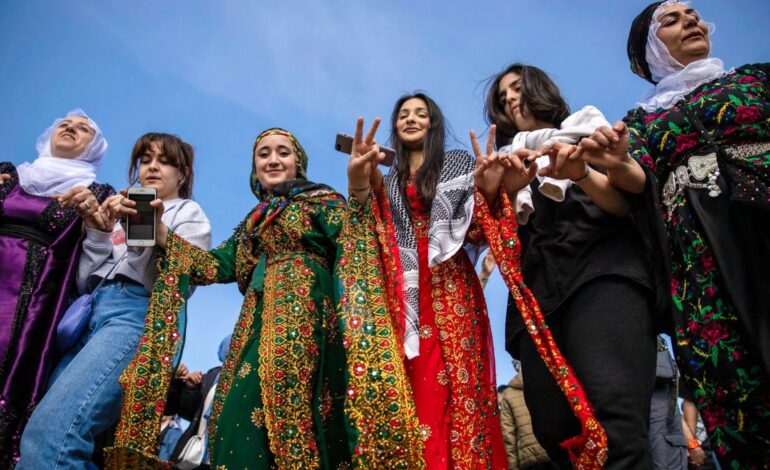

Iranian Americans are observing Nowruz, the ancient Persian New Year celebration, this year with a somber blend of tradition and mourning following January’s deadly crackdown on protesters and recent military conflict in the region.
The holiday, rooted in Zoroastrian tradition and celebrated for millennia, coincides with the spring equinox. It arrives less than a month after US-Israeli forces attacked Iran, killing Supreme Leader Ayatollah Ali Khamenei, and as conflict spreads throughout the Middle East.
Many Iranian American communities have cancelled their usual festivities. In New York, elderly women who traditionally host celebrations at a suburban shopping mall decided against it this year. “People are not in the mood to celebrate the New Year,” said Marjan Khalili, president of the Long Island Ladies Association. “That’s what Nowruz is — we welcome the New Year, and now we really don’t have much to welcome.”
The Orange County Iranian American Chamber of Commerce scrapped its annual party and partnered with a mental health clinic to support community members struggling with the conflict’s stress and inability to reach family in Iran.
Others opted for modified observances. In Los Angeles, organizer Shima Razavi Gacek held a vigil displaying photos of slain protesters. Attendees lit candles and participated in Chaharshanbe Suri, a traditional fire-jumping ceremony, creating a quieter version of the usually boisterous celebration.
At New York University, the Persian Cultural Society held a vigil with speeches and poetry instead of its annual party, asking attendees to wear black rather than festive colors. In Los Angeles, organizers replaced a festival that normally draws thousands with a concert titled “Light Always Prevails,” featuring an Iranian female vocalist barred from singing since the 1979 Islamic Revolution.
Some community leaders view continued celebration as an act of resistance against the Iranian government. Organizer Hedi Yousefi displayed a memorial wall listing names of approximately 3,000 people killed in January’s crackdown at a Manhattan Nowruz bazaar. “They want us to be quiet. But we have to talk about our culture and keep our tradition alive,” she said.
In Nashville, home to the nation’s largest Kurdish community, organizers planned an event showing solidarity across the war-torn region, determined it would be neither purely grief nor celebration.
At a Los Angeles park gathering, families shared meals and participated in traditional fire-jumping rituals while honoring those who died. For many, the ceremonies reflected a desire to maintain cultural identity during turbulent times.
Also Read:
US Farmers Face Rising Fertilizer Costs Amid Iran War Tensions
Ukraine Urges India to Free Citizens Held in Myanmar Drone Activity Case