





Why Customers Dislike Your AI Chatbot: A Wake-Up Call for Small Businesses
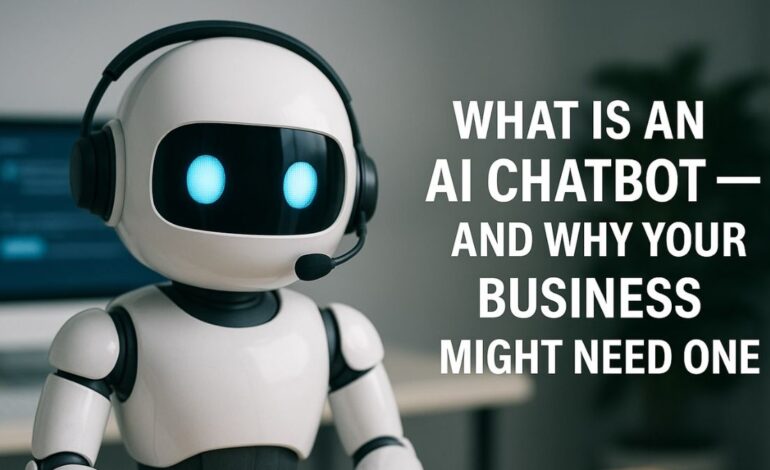

Small businesses are embracing automated customer service systems at an unprecedented rate, but there’s a growing problem: customers hate them. The disconnect between the promise of 24/7 support and the reality of frustrated customers navigating endless loops of generic responses is becoming impossible to ignore.
The issue isn’t that chatbots are inherently bad. It’s that most are implemented poorly.
When Technology Misses the Mark
The complaints are consistent. Customers approach businesses with complex, specific problems expecting personalized help. Instead, they encounter rigid systems that don’t understand context or nuance. When a chatbot offers a generic response that misses the actual question, it doesn’t simplify the experience—it frustrates it.
Consider the typical scenario: A customer with a legitimate issue gets stuck in an automated response loop, unable to escalate to a human without starting over. What should take minutes takes hours. That’s not innovation. That’s a barrier to service.
The Cost of Losing the Human Element
People value empathy, understanding, and genuine connection. Chatbots can simulate conversation but they cannot replicate trust. When customers feel they’re talking to a machine rather than a person who cares about their problem, it erodes loyalty.
This is especially risky for small businesses, which traditionally compete on personal relationships and community trust. By replacing human interaction entirely with automated systems, businesses risk losing their greatest advantage.
Automation Without Balance
The most effective customer service enhances the experience rather than replaces it. Yet many small businesses fall into the trap of complete automation—using chatbots as the only point of contact without providing easy access to human support.
The result? Frustrated customers feeling trapped in an endless cycle of automated responses. Over time, this frustration drives them away entirely.
Three Critical Mistakes
First, businesses often fail to implement seamless escalation. The transition from chatbot to human agent should be smooth, with no need to repeat information. When it’s not, customers feel their time is being wasted.
Second, businesses neglect personalization. Modern customers expect systems to remember past interactions and provide relevant recommendations. Generic responses feel outdated and disconnected.
Third, businesses prioritize cost savings over customer satisfaction. While automation can reduce expenses, a negative experience has long-term financial consequences—lost loyalty, negative word-of-mouth, and reduced customer lifetime value.
What Actually Works
Successful businesses treat chatbots as a first line of support for simple queries, not a replacement for human service. They invest in systems that understand customer data and tailor responses accordingly. They’re transparent about what customers are dealing with—no pretending the chatbot is human. And they actively collect feedback to continuously improve.
Most importantly, they remember that the goal is to enhance human interaction, not eliminate it.
An Opportunity Disguised as a Problem
The widespread customer dissatisfaction with poorly designed systems presents an opening. Small businesses that get this right—that balance efficiency with genuine care—can differentiate themselves from competitors who’ve over-invested in automation at the expense of service quality.
The wake-up call is clear: Your chatbot should work for your customers, not against them. If it’s currently frustrating people instead of helping them, it’s time to rethink the strategy.
Also Read:
Ukraine Sees New Defense Opportunities as Japan Eases Arms Export Rules
Elon Musk Speaks Out in OpenAI Trial Over Alleged Charity Misuse