




Why Indian Pilots Are Pushing for a Fresh Probe into Air India Disaster
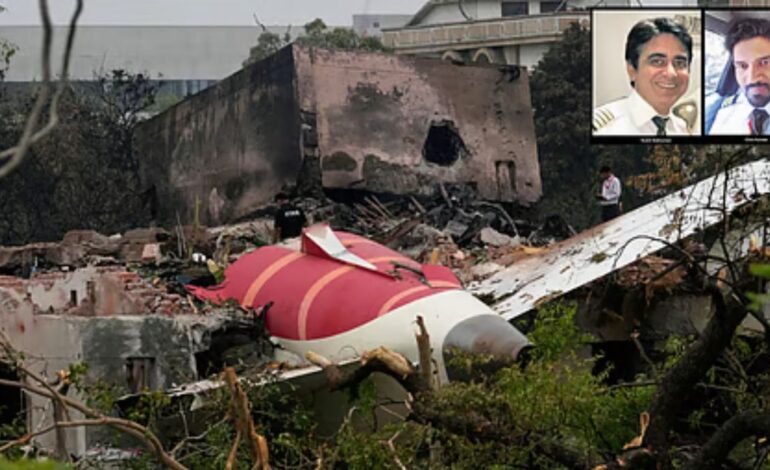

India’s Federation of Indian Pilots has submitted a letter to the aviation ministry proposing an alternative explanation for last year’s devastating Air India crash, arguing that electrical failure rather than pilot action may have caused the disaster that killed 260 people.
The submission comes ahead of the expected final investigation report into the Boeing 787-8 Dreamliner crash on June 12, 2025. The aircraft exploded into flames shortly after takeoff from Ahmedabad in western India, prompting a comprehensive investigation by India’s Aircraft Accident Investigation Bureau.
The AAIB published a preliminary report on July 12, one month after the disaster, as required by international protocol. The 15-page document identified that fuel supply to the jet’s engines was cut off moments before impact but did not conclusively determine whether pilot action caused the fuel switches to shut off or if mechanical malfunction was responsible.
The Federation of Indian Pilots, representing over 5,000 members, argues that media coverage has focused heavily on pilot action as the likely cause. However, the pilot group contends that international aviation standards require investigators to first rule out all credible technical explanations before attributing blame to human error.
The federation’s letter presents what it calls a “technical note” offering an alternative hypothesis: “A prelift-off electrical disturbance could have caused unintended relay operation and dual engine fuel cut-off without pilot input.” This scenario would fundamentally change the investigation’s direction by suggesting an equipment malfunction rather than crew error.
The pilot group emphasizes that International Civil Aviation Organization requirements mandate exhaustive examination of technical causes before concluding that pilot action caused the accident. They argue that detailed electrical analysis must be conducted to test whether such a disturbance could have produced the documented engine fuel cut-off.
The federation’s submission requests that this alternative theory be treated as “a testable hypothesis” requiring thorough investigation. They stress that technical causes cannot be ruled out until comprehensive electrical system analysis is completed, potentially extending the investigation timeline.
The final investigation report is expected within a month, completing the formal one-year investigation period following the crash. The timing of the pilot group’s submission, just weeks before the final report’s publication, suggests ongoing disagreement about preliminary findings within India’s aviation community.
The crash represents one of India’s deadliest aviation disasters. Beyond the tragic loss of 260 lives, the incident has raised questions about aircraft maintenance, crew training, and safety protocols for Boeing aircraft operating in Indian airspace.
The preliminary report’s ambiguous findings regarding the cause of fuel system failure left room for multiple interpretations. The pilot group’s intervention suggests that aviation professionals believe the investigation may be prematurely focusing on human error when mechanical explanations deserve further examination.
The federation’s technical argument reflects standard aviation investigation practice: exhaustively ruling out equipment failures, maintenance issues, and system malfunctions before concluding that crew action caused an accident. Their insistence on detailed electrical analysis represents a legitimate call for thoroughness in determining what caused one of India’s most tragic aviation incidents.
The final report will likely either validate the preliminary findings, support the pilot group’s alternative theory, or present conclusions incorporating elements of both perspectives. Either way, the investigation demonstrates how complex aircraft accidents require multidisciplinary analysis and often generate professional disagreement about causation.
Also Read:
Bumble Reveals How AI Integration Transformed Its Research and Engagement
Understanding The Risky Trade of Selling Prosperity in Global Business