
CIA Tracked Iranian Leaders for Months Before 3 Strikes in 60 Seconds
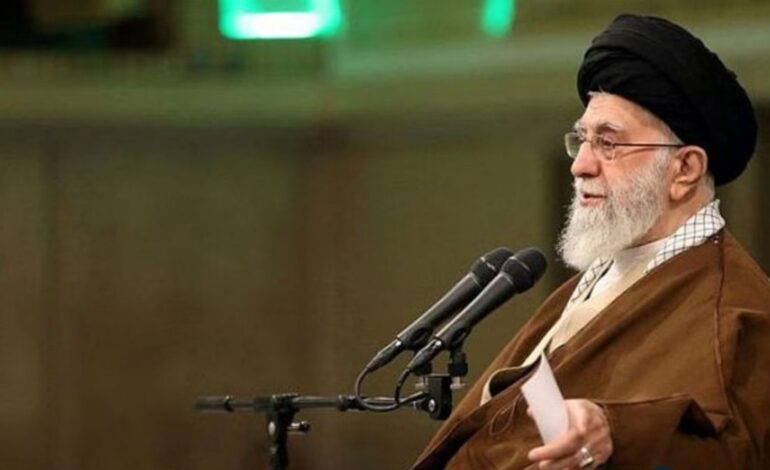

WASHINGTON — For months, the CIA watched. Analysts studied patterns, memorized routines, logged every movement of the men who ran the Islamic Republic. They tracked the Supreme Leader’s comings and goings, the Revolutionary Guard commander’s habits, the defense minister’s schedule. They built a picture of Iranian leadership down to the minute.
Then, in a single minute, they acted on it.
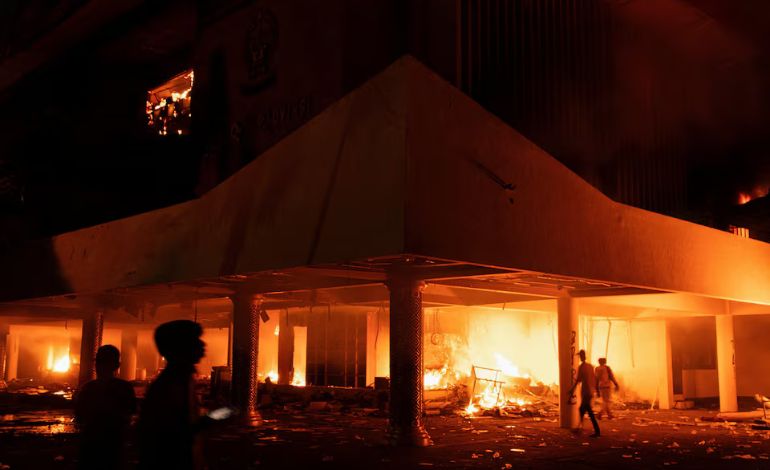
The operation that killed Iranian Supreme Leader Ayatollah Ali Khamenei and approximately 40 senior figures on Saturday was not a stroke of luck or a battlefield opportunit,y. According to Israeli and American officials speaking on condition of anonymity, it was the culmination of months of painstaking intelligence work, weeks of real-time monitoring, and a strike plan executed with breathtaking precision.
Three Strikes, Sixty Seconds
The numbers are staggering. Three separate locations. Three simultaneous strikes. All within a single minute.
An Israeli military official described the planning behind the operation: a “golden opportunity” emerged when intelligence indicated that key targets would be gathered together. The timing was adjusted based on real-time information about the leaders’ locations, shared between the CIA and Israeli intelligence services.
The strikes came by daylight—an unusual choice that added an element of surprise. Who expects an assassination attempt on a supreme leader in broad daylight? The official noted that the rapid, simultaneous nature of the attacks was critical. If the first strike had come alone, survivors would have scattered. By hitting everywhere at once, the operation ensured that fleeing was not an option.
Among the dead, according to the Israeli military official: Khamenei himself, the head of the Revolutionary Guard, and Iran’s defense minister. The entire command structure of the Islamic Republic, decimated in the time it takes to brew a cup of coffee.
The Intelligence Trail
The CIA’s role in the operation was fundamental. For months, the agency had tracked senior Iranian leaders, including the Supreme Leader. This was not passive surveillance. It was active, persistent monitoring designed to understand patterns and predict movements.
The intelligence was shared with Israeli counterparts, who used it to plan and refine the strike. The partnership between the CIA and Mossad, Israel’s spy agency, has long been one of the most sensitive and effective intelligence relationships in the world. Virginia Senator Mark Warner, the senior Democrat on the Intelligence Committee, described it as “really strong.”
That strength was on full display this weekend. The intelligence did not just identify targets—it identified the precise moment to strike, the exact window when the maximum number of senior figures would be in place.
The Military Execution
While intelligence identified the targets, the US military provided the muscle. Central Command confirmed that B-2 stealth bombers participated in the strikes, dropping 2,000-pound bombs on hardened Iranian missile facilities. The approach mirrored a June operation that targeted Iranian nuclear sites.
President Trump described the scope of the attack: hundreds of targets hit, including Revolutionary Guard facilities, air defense systems, and nine Iranian warships—”all in a matter of literally minutes.”
The B-2 is America’s most advanced bomber, designed to penetrate sophisticated air defenses and strike heavily fortified targets. Its use against Iran sends a clear message: no facility is too deep, no bunker too protected.
What Comes Next
With the leadership structure shattered, Iran faces an uncertain future. A temporary council has assumed the Supreme Leader’s duties, but the regime has never confronted a crisis of this magnitude.
Iran has signaled openness to talks, according to a senior White House official. The “new potential leadership” has suggested a willingness to engage with Washington, and Trump has indicated he would eventually speak with them—but only after the military operation achieves its objectives.
What those objectives are, the President has not said. But Senator Tom Cotton, chairman of the Intelligence Committee, made clear that tracking adversarial leaders remains a top priority. And Senator Warner, while acknowledging that “no tears will be shed over their leadership being eliminated,” posed the essential question: “OK, what next?”
For now, the operation continues. The bombers are still flying. The strikes are still falling. And in Langley and Tel Aviv, the analysts who spent months tracking Iranian leaders are probably already watching for the next target set.
Sixty seconds changed the Middle East. The reverberations will last much longer.
Also Read:
Trump’s Cuba Statement Sparks Debate After High-Level Talks in Havana
Blood Red Moon on Tuesday: A Total Lunar Eclipse to Light Up the Night Sky