
Kim Jong Un Wins Another Term as Party Chief, Nuclear Program in Spotlight
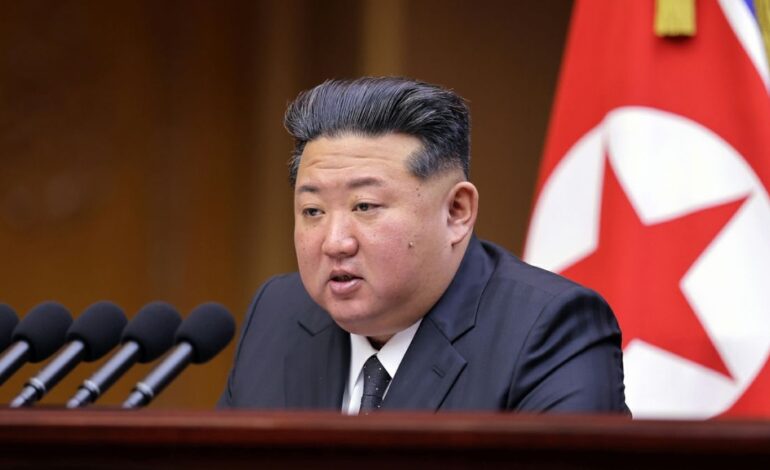

North Korean leader Kim Jong Un has been reelected as general secretary of the ruling Workers’ Party, state media reported Monday, with delegates crediting him for bolstering the country’s nuclear arsenal and strengthening its regional standing.
The party congress, which began last Thursday, serves as a platform for Kim to outline his key political and military goals for the next five years. Analysts expect him to double down on accelerating a military nuclear program already equipped with missiles capable of threatening Asian US allies and the American mainland.
A Growing Assertiveness
The congress comes as Kim grows increasingly assertive in regional politics. An aggressive expansion of North Korea’s nuclear arsenal, combined with closer ties to Russia forged through joint efforts in the Ukraine war, has deepened his standoffs with Washington and Seoul.
North Korea’s official Korean Central News Agency said Kim was reelected with the “unshakable will and unanimous desire” of thousands of delegates on the fourth day of meetings Sunday. Under party rules, the congress elects the general secretary every five years to serve as the party’s top representative and leader.
Kim, 42, has held the party’s top post throughout his rule, though the title has evolved—from first secretary to chairman in 2016, and then to general secretary in 2021.
Nuclear Achievements Celebrated
The party credited Kim with building nuclear forces capable of handling “any threat of aggression” and “any form of war.” His leadership, the statement said, has “reliably guaranteed” the country’s future and “boosted the pride and self-esteem” of North Koreans.
KCNA reported that the congress adopted revisions to party rules during Sunday’s meeting but did not immediately provide details. Experts had anticipated that Kim might use the occasion to entrench his hard-line stance toward South Korea, possibly rewriting party rules to codify his characterization of inter-Korean relations as between two “hostile” states.
So far, state media haven’t mentioned any comments by Kim directly addressing relations with Washington and Seoul.
A Diplomatic Standoff
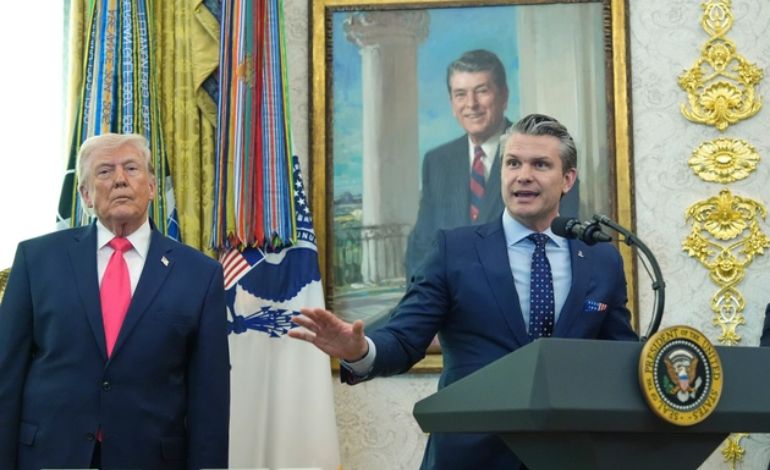
North Korea has suspended all meaningful diplomacy with the United States and South Korea since the collapse of a 2019 summit between Kim and President Donald Trump. The breakdown occurred over disagreements about exchanging sanctions relief for steps to wind down Kim’s nuclear and missile program.
Kim’s government has rejected dialogue offers from Trump since the president began his second term, urging Washington to drop its demand for North Korea’s denuclearization as a precondition for talks. Inter-Korean relations further deteriorated in 2024 when Kim abandoned the North’s long-standing goal of peaceful reunification and declared the war-divided South a permanent enemy.
Economic Dimensions
Beyond military and diplomatic messaging, analysts say Kim will likely use the congress to unveil new economic goals. These may include strengthening conventional forces and integrating them with nuclear capabilities, while reemphasizing a campaign for economic “self-reliance” through mass mobilization.
Gradual post-pandemic gains, fueled by rebounding trade with China and arms exports to Russia, provide some foundation for these ambitions—though North Korea’s economy remains under heavy international sanctions.
What It Means
Kim’s reelection was never in doubt, but the messaging surrounding it matters. By framing his leadership around nuclear achievements and regional standing, the party reinforces the centrality of military power to North Korea’s identity and strategy.
For the international community, the message is clear: denuclearization remains off the table, and North Korea intends to continue strengthening its nuclear forces regardless of diplomatic overtures from Washington or Seoul.
For North Koreans, the congress offers reaffirmation of the leadership that has guided them through sanctions, isolation, and now a gradual reopening to the world. Whether that guidance leads to better lives or simply more of the same remains to be seen.
As Kim begins his next five-year term, the nuclear program that defines his rule—and his confrontation with the West—remains firmly in the spotlight.
Also Read:
GCC’s Growing PPP Market: A Secure Opportunity for Long-Term Investors
What the New 10% Global Tariff Means for Businesses and Consumers