
How Sustainable Development Goals Are Shaping Modern Business
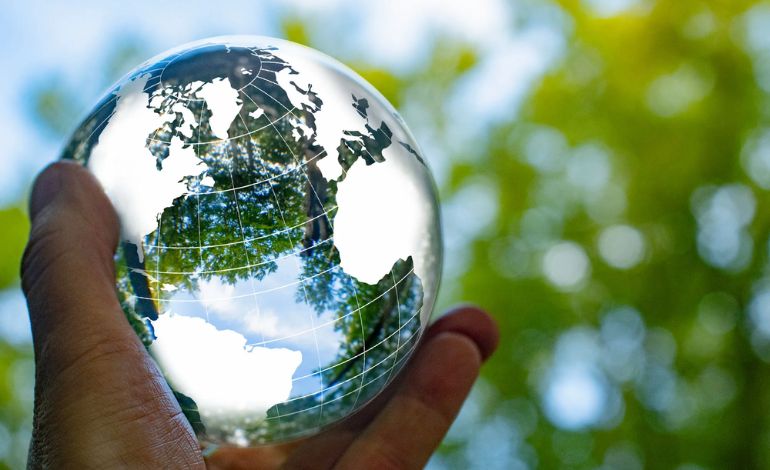

Every generation faces its own set of defining challenges. Where past generations focused on rebuilding economies, expanding education and improving public health, today’s world is grappling with a more tangled set of problems: climate change, resource scarcity, biodiversity loss, inequality, rapid urbanization and sweeping technological change. These issues cross borders and industries alike, and addressing them calls for coordinated action on a scale rarely seen before.
That recognition led the United Nations to adopt the Sustainable Development Goals in 2015, a set of 17 global targets offering a shared vision for a more sustainable future. Built on the premise that no single government, company or community can drive lasting progress alone, the goals tackle some of the world’s most pressing environmental, social and economic challenges together rather than in isolation.
What makes the framework powerful isn’t just the individual goals themselves, but the thinking behind them. Sustainability, in this view, isn’t purely an environmental issue, nor solely economic or social. Clean energy shapes economic resilience. Responsible consumption affects biodiversity. Quality education fuels innovation. Strong governance strengthens communities. Progress in one area tends to reinforce progress in another, forming a system where long-term prosperity depends on balancing environmental care, social inclusion and economic growth together.
For businesses, that shift has changed how success gets measured. Companies are increasingly expected to understand how their choices ripple out to employees, communities, supply chains and the environment. Investors now weigh environmental, social and governance performance alongside financial results, customers are gravitating toward responsible brands, regulators are tightening sustainability requirements, and employees are looking to work for organizations whose values match their own. What started as a UN initiative has effectively become a common language businesses use to align their strategies with global priorities and show real, measurable impact.
At Galadari Brothers, the goals help guide the company’s broader sustainability approach, aligning business priorities with internationally recognized principles. The company focuses on the goals most closely tied to its operations, including clean energy, responsible consumption, climate action, health and wellbeing, quality education, and partnerships, embedding these priorities into its sustainability strategy through measurable initiatives covering energy efficiency, renewable energy, waste management, greenhouse gas emissions, employee wellbeing, sustainability awareness and community engagement. Progress is tracked throughout the year and shared through the company’s annual sustainability report, keeping sustainability woven into everyday business decisions while contributing to wider global development goals.
With only a few years left until 2030, the goals shouldn’t be treated as a countdown to some finish line. Sustainable development is an ongoing effort that will continue well past the current framework’s deadline. Their real strength lies less in the specific targets than in the mindset they encourage, one that recognizes lasting success depends on balancing economic growth with environmental responsibility and social progress. When organizations align their decisions with those broader priorities, they create value that reaches far beyond their own operations, which is ultimately the point: turning individual actions into collective progress.
Also Read:
Iran Conflict Fuels Tensions Within Iranian Diaspora in America














4 Comments
[…] How Sustainable Development Goals Are Shaping Modern Business […]
[…] How Sustainable Development Goals Are Shaping Modern Business […]
[…] How Sustainable Development Goals Are Shaping Modern Business […]
[…] How Sustainable Development Goals Are Shaping Modern Business […]