
How Arab Artists Are Redefining Contemporary Art at Diriyah Biennale
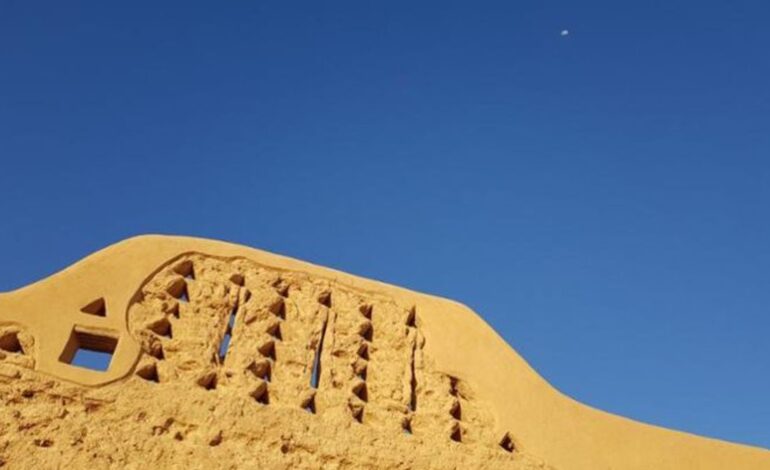

The Diriyah Biennale is showcasing a new era of Arab artistic expression. Running until May 2, the exhibition features regional artists pushing boundaries, blending tradition with modernity, and drawing from deeply personal experiences to create compelling contemporary work.
The five artists on display represent the diversity and depth of the Arab art scene—from pioneering figures to emerging voices, each bringing a distinct perspective shaped by their heritage and lived experience.
Color, Geometry, and Environmental Forms
Lebanese-American artist Etel Adnan, who passed away in 2021 at age 96, remains influential through her vibrant approach to composition. An untitled ceramic mural featured at the biennale, based on a sketch she created in 2020, demonstrates her lifelong dialogue between painting and architecture. “Architecture contains everything: form, color, social concerns,” Adnan once observed—a philosophy evident in her bold, colorful geometric fields that merge abstraction with environmental consciousness.
Capturing Moments Between Clarity and Blur
Taysir Batniji’s “Remnants” series confronts the disorientation of consuming news from a distance. The Gaza-born, Paris-based artist began these oil paintings in 2024, inspired by the lag between events and their documentation on social media. His blurred, abstract forms freeze moments of anticipation, creating what the biennale catalogue describes as both “shield and wound”—protecting viewers from unbearable imagery while insisting they acknowledge it.
Tradition Meets Transformation
Emirati artist Afra Al-Dhaheri explores rapid cultural change through her installation work. Her piece “Dining East or West?” centers on a plexiglass table supported by cinder blocks, with glass and cement casts of feet evoking the tension between modern dining customs and traditional floor-based communion. Glass fragments scattered throughout suggest both hands and vessels, occupying what the artist calls “an uneasy in-between state of cultural hybridity.”
Weaving Stories Into Pattern
Moroccan artist Amina Saoudi Ait Khay contributes five wool tapestries rooted in Amazigh traditions. Her intricate patterns tell stories of her people’s cultural history, channeling desert landscapes and ancient symbols. “It’s not me who chooses the colors; they call to me,” she says. Her work recalls both geometric Amazigh symbols and the shifting formations of wind-traced sand.
Pioneering Personal Cartography
Abdullah Al-Saadi, a pioneer of avant-garde art in the UAE, presents “The Slipper’s Journey,” a series of dozens of stones from Khor Fakkan inscribed with marks, symbols, and acrylic paint. Each rock functions as a diary page, mapping the artist’s movements across his native landscape. The work reflects Al-Saadi’s philosophy of attentive observation, where each gesture encompasses time, movement, and place.
A Reflection of Regional Identity
What connects these artists is their commitment to meaningful storytelling rooted in place and memory. Rather than chasing global trends, they draw from regional heritage, personal experience, and environmental consciousness. The Diriyah Biennale platform celebrates this authentic expression, proving that contemporary Arab art is not following the world stage—it’s defining its own narrative with confidence and vision.
Also Read:
Eastern Pacific Incident: US Military Strike Leaves Two Dead
Hormuz Strait Mine Clearance Timeline: Six Months of Global Risk Ahead