
The Human Impact of AI Takes Center Stage in Riyadh
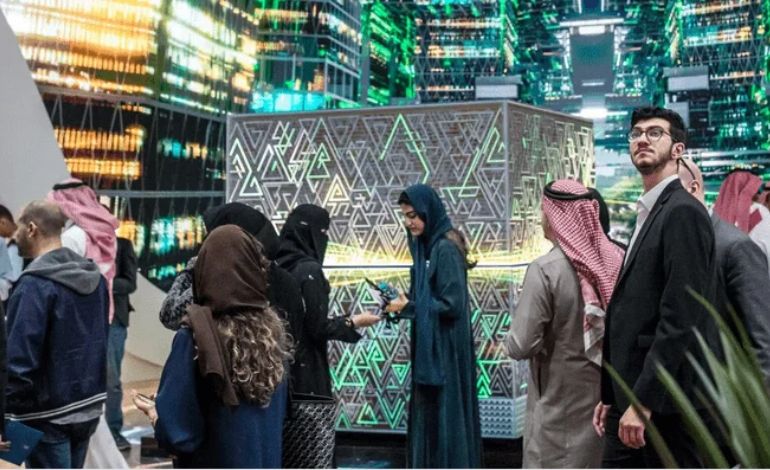

As artificial intelligence becomes woven into daily life, conversations in Riyadh are shifting away from what the technology can do and toward how it should be built and used, with well-being, cultural diversity and human connection emerging as central concerns.
At LEAP and UNESCO’s AI Ethics Forum, technology leaders, policymakers and ethicists examined challenges tied to the rapid pace of development, including worries over prolonged user engagement, emotional dependence, and how different cultures and languages are represented in these systems.
At the recently concluded LEAP conference, Hani Chihabi, CEO and co-founder of Thaura.ai, argued for smaller platforms built around a different set of priorities than larger companies, one placing greater weight on genuine engagement, cultural diversity and mental health. He told Arab News that the guiding principle behind Thaura.ai is that the technology should serve people rather than the other way around. Founded by Chihabi and his brother Said, the company positions itself as an alternative to mainstream platforms, building on existing open-source models rather than training its own from scratch, and describes its approach as a kind of constitution meant to align those models’ responses with its own principles. One focus is avoiding prolonged interactions designed primarily to keep users engaged, with Chihabi explaining that the platform aims to deliver value and stop there, rather than trying to keep people hooked.
Cultural representation matters too, according to Chihabi, who said Thaura.ai’s substantial user base in the Arab world reflects its focus on building technology rooted in the region rather than relying solely on international platforms, adding that the goal is to build local infrastructure rather than depend entirely on Western technology.
Those concerns extend well beyond individual business models. Dr. Dafna Feinholz, UNESCO’s chief of bioethics and ethics of science and technology, told Arab News at the forum that the design of many AI systems can encourage excessive engagement, describing what she called addictive programming that is really trying to keep people engaged as a genuine concern. She said prolonged interaction with AI chatbots risks pulling users away from conventional forms of social connection, and cautioned against letting these tools substitute for real emotional support, arguing that using them for conversation or emotional comfort falls short, since genuine emotional support and friendship involve much more than that.
For Feinholz, an ethical framework for AI needs to ask whether the technology preserves human rights, supports well-being and avoids causing harm, principles she said should apply equally to large companies and small ones. As the industry debates how quickly increasingly capable models are being developed and released, she said just as much attention should go toward how those systems are built and tested in the first place. She also stressed the importance of representing multiple cultures and languages rather than defaulting to just one.
The discussion carries particular weight in Saudi Arabia, which is developing its own AI ecosystem, including efforts to strengthen Arabic-language capabilities and cultural representation in emerging technologies such as Humain. Taken together, the conversations in Riyadh made clear that the broader debate around AI is expanding well beyond speed and innovation, toward questions of human well-being, cultural diversity and responsible development that will shape how the technology fits into everyday life.
Also Read:
Alibaba’s Shares Jump 5% Following Fresh AI Developments
Crude Prices Slip $1 on Supply Optimism and Prospects for US-Iran Talks