
Fatal Building Collapse Underscores Dangerous Conditions in Gaza Strip
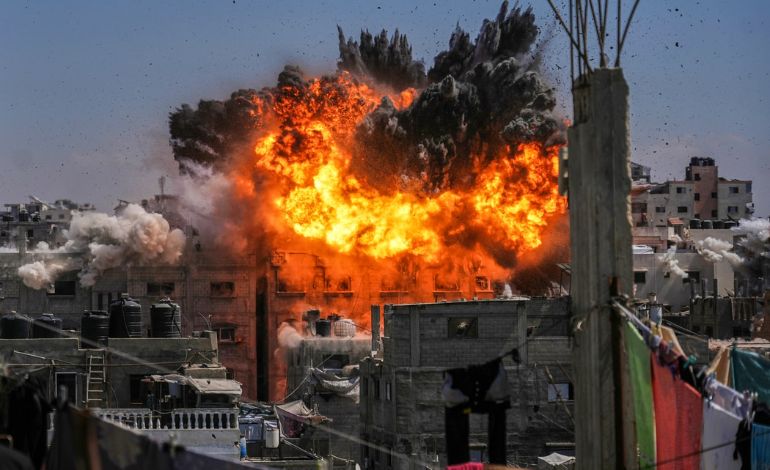

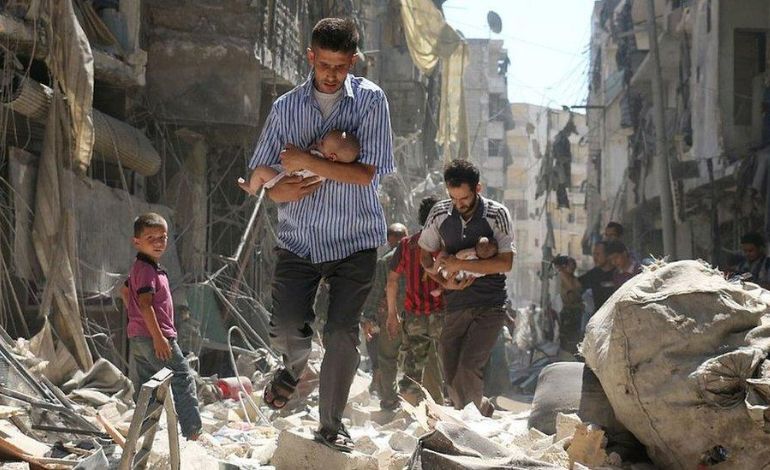
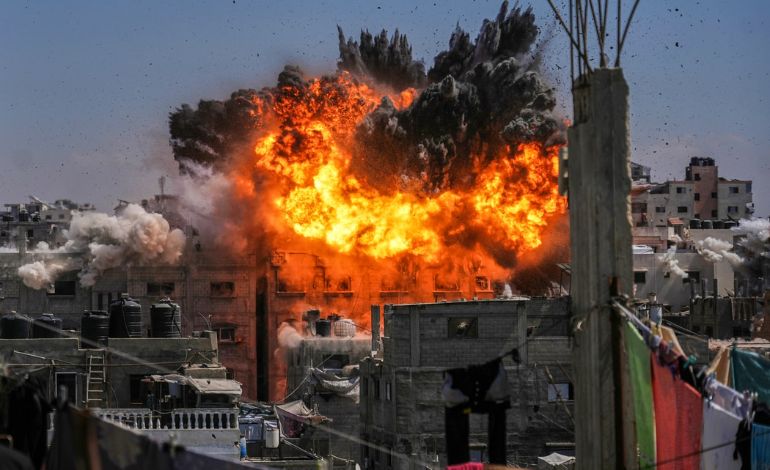
The collapse of a multi-story building in Gaza City this week has drawn fresh attention to the precarious conditions many Palestinians continue to face nearly a year after a ceasefire between Israel and Hamas raised hopes for reconstruction that have yet to materialize.
Gaza’s Health Ministry said 21 people were killed when the building came down Wednesday. Two days later, the roof of another building in Gaza City caved in after a brief spell of rain, lightly injuring four children, according to the local civil defense force. Um Mohammed Adas, whose relatives were among those killed in Wednesday’s collapse, said the survivors are now lying in the street homeless with absolutely nothing, adding that even the clothes they’re wearing were borrowed.
Rebuilding has stalled as talks between Israel and Hamas have faltered, and Israel continues to bar the entry of nearly all construction materials into Gaza, making even basic repairs difficult. Despite the risks, many residents have moved back into homes weakened by the war, often because they see no other option. Ahmad Arafat, standing on a rubble-strewn street near his home, said his family simply doesn’t have the money to go elsewhere or to buy a tent like others have managed to do. Alam Zakout, living with his family in a damaged building in Gaza City, said people are forced into these spaces because there’s genuinely no alternative shelter, no tents, and no basic necessities available, adding that he has nowhere else to go.
This week’s collapse wasn’t the first involving unsafe housing in Gaza, but the death toll highlighted just how widespread the danger has become in a territory where most people still lack adequate shelter. The UN Office for the Coordination of Humanitarian Affairs reported five shelter collapses during the first week of September alone, a category that includes both standalone homes and units within larger buildings. Gaza’s Ministry of Public Works said more than 2,000 additional buildings remain at risk of collapse.
Israel has said it will not permit reconstruction in Gaza until Hamas disarms, leaving more than a million people living in unsafe conditions, according to a joint damage assessment released in April by the World Bank and the United Nations. Many are packed into sprawling tent camps lacking basic sanitation, and the assessment found that 76 percent of residential units in Gaza had been damaged or destroyed, calling the loss of housing stock catastrophic.
Shaina Low, a spokesperson for the Norwegian Refugee Council, said people are choosing to remain in dangerous buildings largely because the idea of living in a tent is worse, especially with so few tent supplies available for those who might want to leave. She said essentially no tent materials are currently making it into Gaza, leaving residents willing to accept the risk because there’s no suitable alternative. The council, among several aid groups that have long warned about Gaza’s shelter crisis, reported last month that nearly three years of war have damaged more than 320,000 homes, affecting 1.7 million of the territory’s 2.1 million residents. Its surveys found that 72 percent of people are staying in buildings that have sustained some damage, and in one sampled Gaza City neighborhood, 22 percent of buildings were found to be at risk of imminent collapse.
Engineers and humanitarian groups warn these structures are especially vulnerable during bad weather, when rain can seep through cracked concrete and exposed rebar, further weakening already compromised buildings. The Norwegian Refugee Council’s report found that 71 percent of those surveyed had experienced flooding, whether in tents or buildings, since the start of last winter.
Aid organizations have repeatedly called on Israel to allow more shelter and reconstruction materials into Gaza, including timber, emergency shelter kits, excavators and other equipment needed to clear dangerous debris, noting that Israel rejected shipments of timber and emergency shelter kits on security grounds in late August and early September. Israel has long restricted materials it considers dual-use, arguing they could be diverted and used by militant groups.
Also Read:
Iran Conflict Fuels Tensions Within Iranian Diaspora in America