




Myanmar Voices Frustration Over Exclusion Within ASEAN Bloc
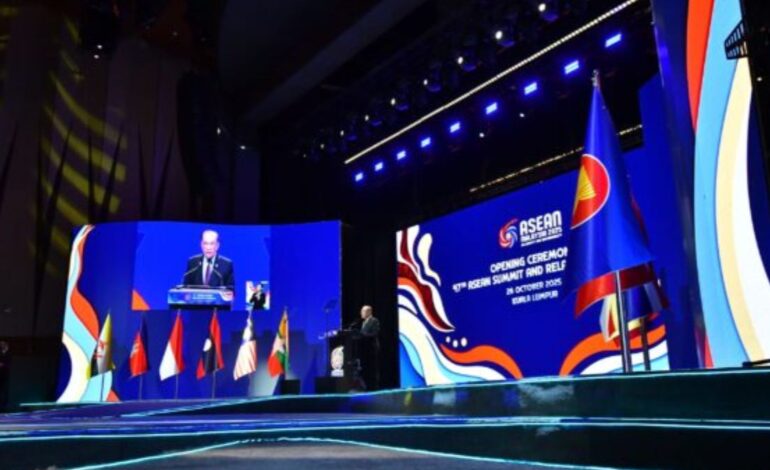

Myanmar has accused the Association of Southeast Asian Nations of applying “discriminatory measures” after the organization’s summit last week reaffirmed the exclusion of the country’s military-backed government from full participation in bloc activities.
The dispute reflects deepening fractures within ASEAN over how to handle Myanmar following the 2021 military coup that ousted democratically elected leader Aung San Suu Kyi. The tension has intensified following Myanmar’s March election—widely criticized as unfair by international observers—in which coup leader Min Aung Hlaing assumed the presidency as a civilian.
A Bloc Divided on Myanmar
ASEAN’s consensus on Myanmar has fractured fundamentally. The Philippines’ President Ferdinand Marcos, hosting last week’s summit, stated bluntly that Myanmar has shown “no progress,” justifying the organization’s continued restrictions on the country’s participation.
Myanmar’s foreign ministry responded with a defiant statement, claiming “positive developments” in the country have been “well recognized by the majority of ASEAN Member States.” The ministry accused unnamed countries of maintaining “restrictions, discriminatory measures, and the exclusion of the Myanmar Government from equal representation.”
A Split Between ASEAN Members
The bloc itself is deeply divided on how to respond to Myanmar’s current government. Thailand, sharing a border with Myanmar, took a notably different stance by congratulating Min Aung Hlaing at his inauguration and pledging to strengthen bilateral cooperation to stabilize their shared frontier.
By contrast, Malaysia’s Foreign Minister Mohamad Hasan articulated the position of a coalition of concerned nations, stating that Myanmar “is not ready to reclaim a seat at the table because atrocities toward their own citizens are still occurring.” Malaysia is believed to have the support of Indonesia and Singapore—which will assume ASEAN’s rotating leadership next year—in maintaining pressure on Myanmar.
Contested Elections and Human Rights Concerns
Myanmar’s March election intensified criticism from democracy advocates and several ASEAN members. International observers documented severe restrictions on dissent, the exclusion of opposition parties, and inability for voters in rebel-held territories to participate. Rather than demonstrating Myanmar’s return to democracy, critics view the election as a mechanism for cementing military control under a civilian veneer.
These concerns extend beyond ASEAN disagreements. East Timor, the bloc’s newest member, has opened a war crimes case against Min Aung Hlaing in its courts. Indonesia, a Muslim-majority nation deeply concerned about the treatment of the Rohingya minority, has seen its own civil rights advocates file complaints with the attorney general alleging genocide and other atrocities committed under military rule.
Myanmar’s Defense and Counter-Accusations
Myanmar’s government has rejected characterizations of its election as undemocratic, asserting instead that citizens “exercised their democratic rights” and that the “genuine will of the Myanmar people” should be recognized. The country accused some ASEAN members of “non-constructive engagement” that “disregards” this purported democratic mandate.
The statement also indirectly criticized countries it accused of “interfering in Myanmar’s internal affairs through criticism and pressure”—language that reflected frustration with both ASEAN scrutiny and the war crimes case filed by East Timor.
The Civil War Context
Myanmar’s internal conflict provides crucial context. A civil war has raged since the 2021 coup, with armed opposition groups controlling territory and conducting sustained resistance to military rule. ASEAN’s peace plan for resolving this conflict has made virtually no progress, a reality that explains much of the organization’s continued frustration with Myanmar’s government.
Straining ASEAN Unity
The Myanmar dispute represents one of ASEAN’s most serious challenges to its consensus-based decision-making model. The organization has historically prided itself on non-interference in members’ internal affairs, yet Myanmar’s case has forced difficult questions about when human rights concerns and regional stability override that principle.
Thailand’s approach—normalizing relations and pledging cooperation—stands in direct tension with Malaysia, Indonesia, and Singapore’s insistence on continued pressure. This split threatens to fragment ASEAN consensus at a moment when the organization faces multiple regional challenges.
Myanmar’s latest statement, claiming five years of “unequal treatment” and “patience,” signals that the military-backed government views ASEAN restrictions as unjust and temporary. Whether continued pressure from concerned member states will eventually produce democratic reform or instead further alienate Myanmar from the organization remains deeply uncertain.
Also Read:
B2B Buyers Are Making Decisions Before Vendor Engagement
The Psychology Behind Specsavers Ads: Why Humour Drives Customer Attention