


Top CEOs and World Leaders Attend India’s Important AI Summit
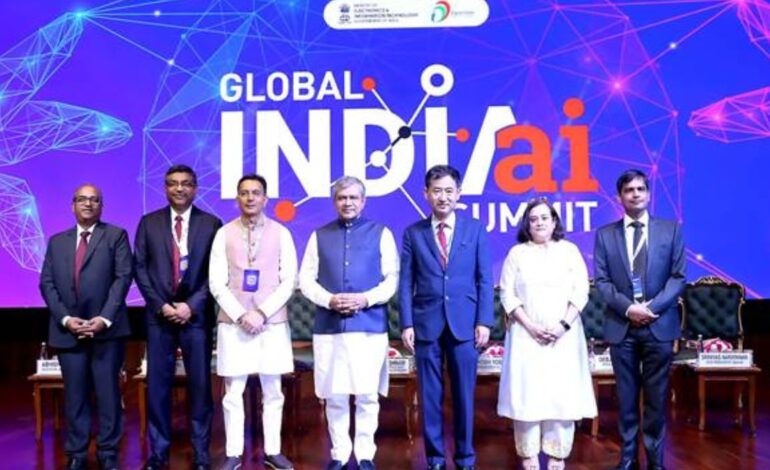

New Delhi has become the epicenter of global artificial intelligence discussions this week, as India hosts a five-day summit bringing together heads of state, senior officials, and technology executives from around the world. The India AI Impact Summit marks the first time such a gathering has been held in the Global South, signaling the country’s ambition to shape the development of a technology currently dominated by wealthy nations and their corporations.
A Pivotal Moment
The summit arrives as artificial intelligence rapidly transforms economies, reshapes labor markets, and raises profound questions about regulation, security, and ethics. From generative tools that can produce text and images to advanced systems used in defense, health care, and climate modeling, AI has become a central focus for governments and corporations worldwide.
“The goal is clear: AI should be used for shaping humanity, inclusive growth and a sustainable future,” India’s Minister for Electronics and Information Technology Ashwini Vaishnaw said.
Who’s in the Room
The attendee list reflects the summit’s elevated status. Twenty heads of state and government are participating, including French President Emmanuel Macron and Brazilian President Luiz Inácio Lula da Silva. India’s Prime Minister Narendra Modi will address a session on Thursday.
The corporate presence is equally impressive. Google CEO Sundar Pichai, Qualcomm CEO Cristiano Amon, OpenAI CEO Sam Altman, Microsoft President Brad Smith, and AI pioneer Yann LeCun are all expected to attend—a concentration of technology leadership rarely seen outside Silicon Valley.
India’s Ambition
For India, the world’s most populous nation and one of its fastest-growing digital markets, the summit represents an opportunity to project itself as a bridge between advanced economies and the Global South. Officials point to the country’s experience in building large-scale digital public infrastructure—including digital identity and payment platforms—as a model for deploying AI at scale while keeping costs low.
“As India continues on the journey to become a developed nation by 2047, AI has a critical role to play in strengthening large scale systems, from energy and manufacturing to public infrastructure,” said Sumant Sinha, CEO of NASDAQ-listed clean energy company ReNew.
Evolution of the Summit
The India gathering represents the latest iteration of a meeting series that has evolved significantly since its inception. The first AI Safety Summit, held in November 2023 at Britain’s Bletchley Park, brought together official delegations from 28 countries and a small number of executives and researchers. The focus was narrow: keeping AI safe and containing potentially catastrophic risks.
Subsequent meetings in Paris and Seoul broadened the agenda. Last year’s Paris AI Action Summit was dominated by U.S. Vice President JD Vance’s warning against “excessive regulation” that could hobble the growing industry. This year’s gathering has expanded further, encompassing everything from economic development to workforce training.
What to Expect
Like previous editions, the India summit is not expected to produce a binding political agreement. More likely is a non-binding pledge or declaration outlining shared goals for AI development. Ahead of the meeting, a panel of experts released a second annual safety report on risks posed by advanced AI systems, including misuse, malfunctions, and so-called systemic risks.
“The whole point of this report is to build an international consensus on the state of the science regarding the emerging risks of AI,” said Yoshua Bengio, a prominent scientist known as one of the “Godfathers of AI” who led the study. “It’s really important that the world will continue to have a strong independent scientific evaluation of the risks.”
The Jobs Question
In India, as elsewhere, concerns about AI’s effect on employment are never far from the surface. Experts point to reskilling as the key to managing the transition.
“There is a lot of genuine concern around this theme, and I don’t want to underestimate this impact,” said Sangeeta Gupta, senior vice president at Nasscom, a prominent body representing India’s technology industry. “But, from an Indian lens, emphasis is on re-skilling programs and as AI becomes much more mainstream, you will also see newer job roles coming up.”
For 22-year-old Anirudh Singh, a master’s student in social work at Delhi University, the technology already plays a practical role. “I think AI is just reducing the tedious work that students generally had to do,” he said.
The Road Ahead
As the summit unfolds, the conversations in New Delhi will ripple outward. Leaders will discuss governance frameworks, security concerns, and economic opportunities. Companies will showcase their latest offerings and court potential partners. Countries of the Global South will press for a voice in decisions that will shape their futures.
No single meeting can resolve the complex questions AI presents. But the India AI Impact Summit represents something significant: recognition that these questions cannot be answered by wealthy nations alone. The world’s most populous country is now at the table, and its voice will be heard.
Also Read:
Calls for Action Grow as Reports of Worker Exploitation Surface in Croatia