
South Lebanon Students Resume Classes in Strike-Damaged School
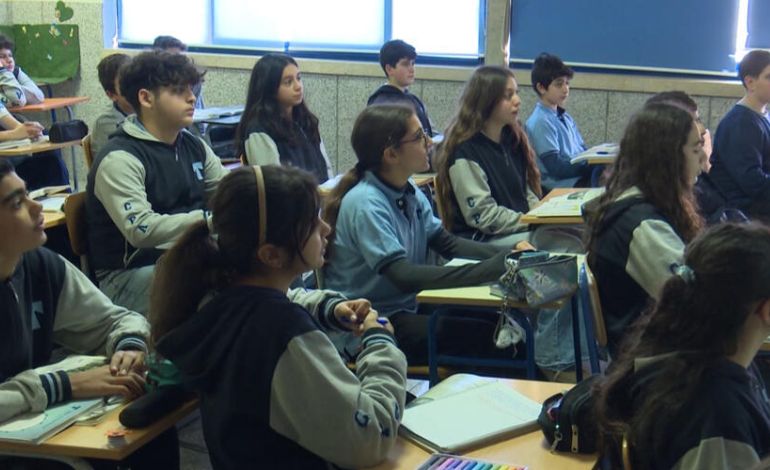

In the southern Lebanese village of Burj Qalaway, eight-year-old Yara Ajami began the new school year this week in a classroom without doors or windows, after her school was struck by an Israeli airstrike in May, two months after Hezbollah’s attack on Israel pulled Lebanon into the wider Middle East war.
Once known locally for its academic standing, the elementary school in Burj Qalaway now sits partly in ruins. Ajami, climbing a bare concrete staircase, said she and her classmates are happy to be back but were happier before, since there are no longer desks or chairs, and the drawing and play that once filled their days are gone. Rather than returning to their damaged building, students were redirected this week to a nearby structure still under construction, originally meant to house preschoolers, where sunlight streamed through unglazed windows into unfinished classrooms while children followed their lessons, twisted rebar jutting from the ground outside where walls once stood.
Most of the school’s students come from areas heavily affected by Israeli strikes and were displaced during the war, with some, like Ajami, returning home to find it damaged or destroyed. Principal May Mehdi told AFP from the courtyard that there is sadness in the eyes of every one of her students, each carrying their own story, though she said she is glad they are here at all, showing photos on her phone of what the school used to look like before the damage. Mehdi currently has no office in the temporary building, which doesn’t even have a teachers’ lounge. Around 250 students are now enrolled at the 24-classroom school, down from roughly 600 before fighting escalated in March, when Hezbollah struck Israel in solidarity with Iran following earlier US-Israeli strikes on the country.
Israel responded with major airstrikes and a ground invasion that killed more than 4,300 people, including 261 children, according to Lebanese authorities. More than a million people were displaced at the height of the conflict, though over 800,000 have since returned following a US-Iran memorandum of understanding and a Lebanon-Israel framework agreement in June that significantly reduced the violence. In some southern schools converted into shelters, displaced families and returning students now share the same space, divided by floor. The Israeli military has repeatedly accused Hezbollah of using civilian buildings, including schools, to launch attacks or conceal weapons, an allegation Hezbollah denies, while rights groups have accused Israel of possible war crimes during the conflict, and Lebanese authorities say Israel systematically destroyed villages across the south, including homes, schools, places of worship and water and electricity infrastructure.
Many children in Burj Qalaway were unable to start the school year at all, either still displaced or too afraid to return to a town less than a kilometer from Israeli troops occupying part of the south. On Thursday, an Israeli strike hit the nearby village of Qantara. Earlier this month, UNICEF said nearly 100,000 students across Lebanon were unable to return to school this year due to damage, destruction, insecurity or displacement, with 436 schools damaged by the war and 37 completely destroyed. The Burj Qalaway school once had its own laboratory, computer room and interactive learning space; government-funded prefabricated units are now being installed on the grounds where rubble has yet to be cleared.
Teacher Hoda Najdi, 42, has continued urging her students to stay focused on their education despite the circumstances, telling AFP that her own home was destroyed along with the school, but that the students themselves give her the strength to keep going. Student Mohammed Mozannar, who was displaced repeatedly within Beirut during the war and had no books, phone or internet access to follow lessons remotely, said he’s happy to be back to make up for the lost year, adding simply that he wants to make his father proud.
For others, returning to school stirred painful memories. Fourteen-year-old Rawan Fakih said she remembered the activities the class used to do, the stress of exams, and a friend who was killed in an Israeli strike.
Also Read:
National Bank of Egypt Set to Acquire Banque Misr UAE Branches