
The Story of Geoffrey Hinton, the Godfather of Deep Learning
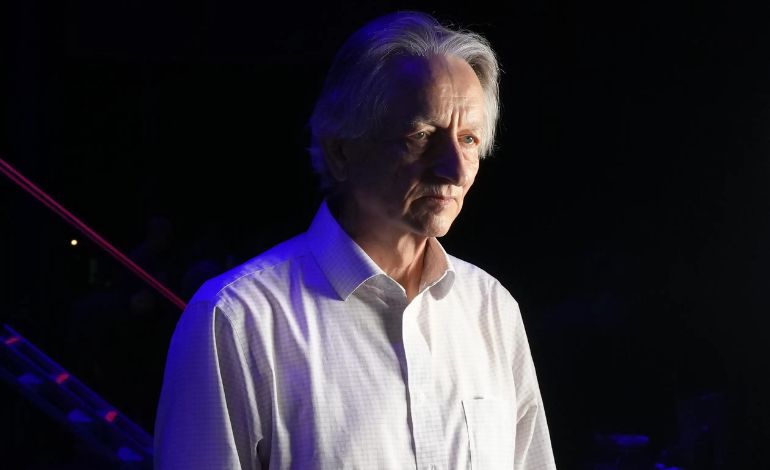

Few researchers have shaped the modern technology landscape as much as Geoffrey Hinton, the British-Canadian computer scientist and cognitive psychologist whose decades of work on neural networks laid much of the groundwork for today’s machine learning systems.
Hinton spent much of his career studying how computers might learn from data the way the human brain does, at a time when neural networks were widely dismissed as impractical within the broader field. He kept refining the approach anyway, and his persistence eventually paid off as growing computing power, larger datasets and specialized hardware made these systems dramatically more effective.
His central contribution was showing that neural networks could learn increasingly sophisticated patterns on their own, layer by layer, rather than depending on rules manually programmed by engineers. In an image, for instance, early layers might pick out simple edges while later layers combine them into shapes and eventually recognize whole objects. That idea, that systems can learn their own representations instead of relying on hand-built features, became a defining principle behind much of what followed.
A turning point came in 2012, when Hinton and two of his students, Alex Krizhevsky and Ilya Sutskever, built AlexNet, a deep convolutional network that dramatically outperformed rivals in the ImageNet image recognition competition. The result helped spark a wave of research and investment into neural networks that continues today.
Hinton’s contributions have been recognized with some of science’s highest honors. In 2018, he shared the ACM Turing Award with Yann LeCun and Yoshua Bengio for breakthroughs that made deep neural networks central to modern computing. In 2024, he was awarded the Nobel Prize in Physics alongside John Hopfield for foundational work enabling machine learning through artificial neural networks.
He’s often called one of the “Godfathers” of the field, though he’s quick to note that many other researchers, including LeCun, Bengio, Hopfield, David Rumelhart and Ronald Williams, contributed essential ideas along the way.
In 2023, Hinton left Google after more than a decade there, saying he wanted the freedom to speak openly about the risks of increasingly powerful systems. His concerns include the spread of misinformation, disruption to jobs, autonomous weapons, and the possibility that future systems could become difficult for people to understand or control. Notably, his message isn’t that development should stop, but that researchers, governments and society need to take these risks seriously as the technology keeps advancing.
Hinton’s legacy sits at an unusual intersection: he helped build the foundation of a technology that now touches image recognition, language processing and generative tools of all kinds, while also becoming one of its most prominent voices of caution. His career is a reminder that pushing a technology forward and thinking carefully about its consequences aren’t mutually exclusive.
Also Read:
Global Oil Prices Climb Toward $100 Amid Fresh Middle East Strikes
Industrial Investment in Qatar Reaches $68 Billion Amid 6.6% Rise in Registrations