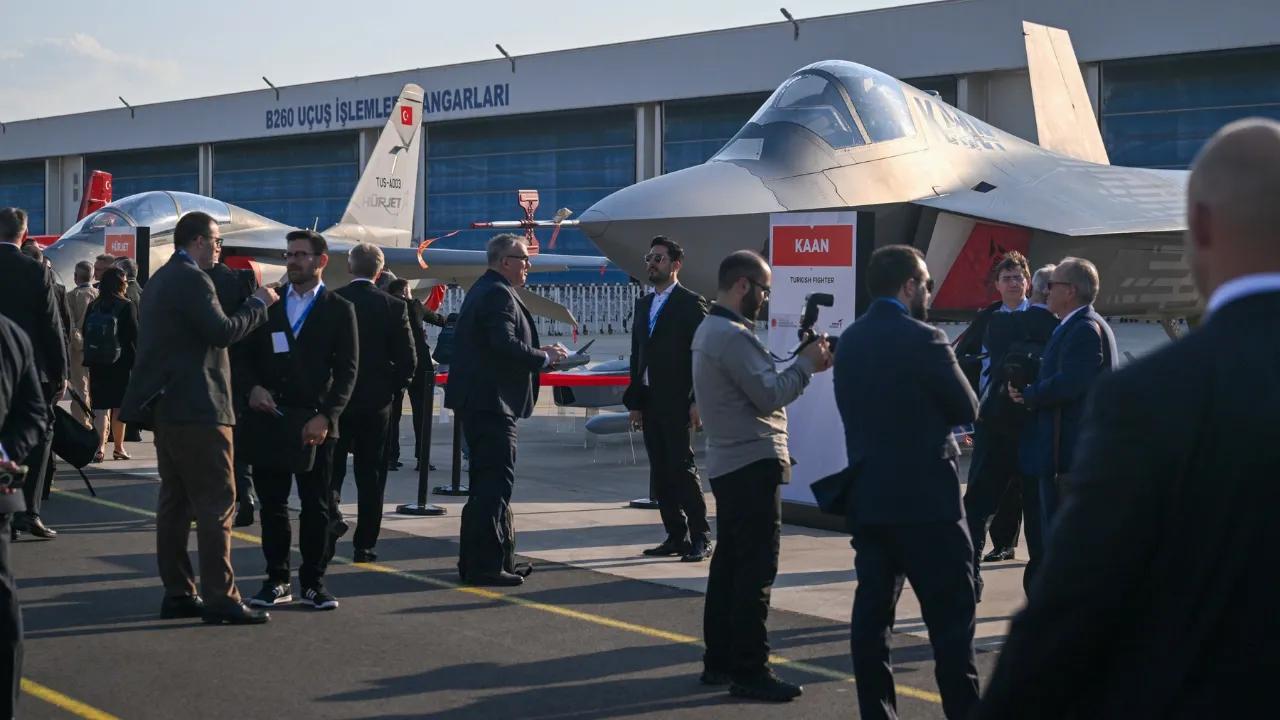
IZMIR: Turkiye’s defence industry, long ignored by its NATO allies, seems to have found its place among the heavyweights of the military alliance with a top-driven program that has big goals.
Turnover of Turkish armaments makers grew fifteen-fold between 2002 and 2023, according to defence specialist website TurDef, while exports jumped from roughly $800 million in 2010 to $7.1 billion in 2024.
If you said the Turkish defence industry 10 years ago, people would laugh. “Not anymore,” adds TurDef creator Ozgur Eksi.
Turkiye designs, develops and produces a large part of its own defence equipment,” says Patrice Moyeuvre, a retired French brigadier general and head of defence and security at consultancy Advantis.
AFP quoted him as saying it "has paid its dues and you can see that, especially in its export success".
Things started to change in 1974, when the US put an arms embargo on Turkey after it invaded northern Cyprus.
The action exposed Turkiye's isolation and fragility in a dangerous region spanning the Caucasus, the disintegrating Soviet Union and the Middle East.
In the years that followed, Turkiye built enterprises that have become giants: defence electronics behemoth Aselsan; defence software and systems specialist Havelsan; aircraft producer TUSAS; missile and rocket manufacturer Roketsan and others.
Then in 2004, Ankara stopped purchasing off-the-shelf equipment from overseas and brought weapons development in-house, putting the whole industry under the state Defence Industry Agency (SSB) that reports directly to the president.
Given Turkiye’s geostrategic location, the need for a cohesive and forward-looking national strategy is obvious,” says Ugur Tarcin, a professor at Istanbul’s Marmara University.