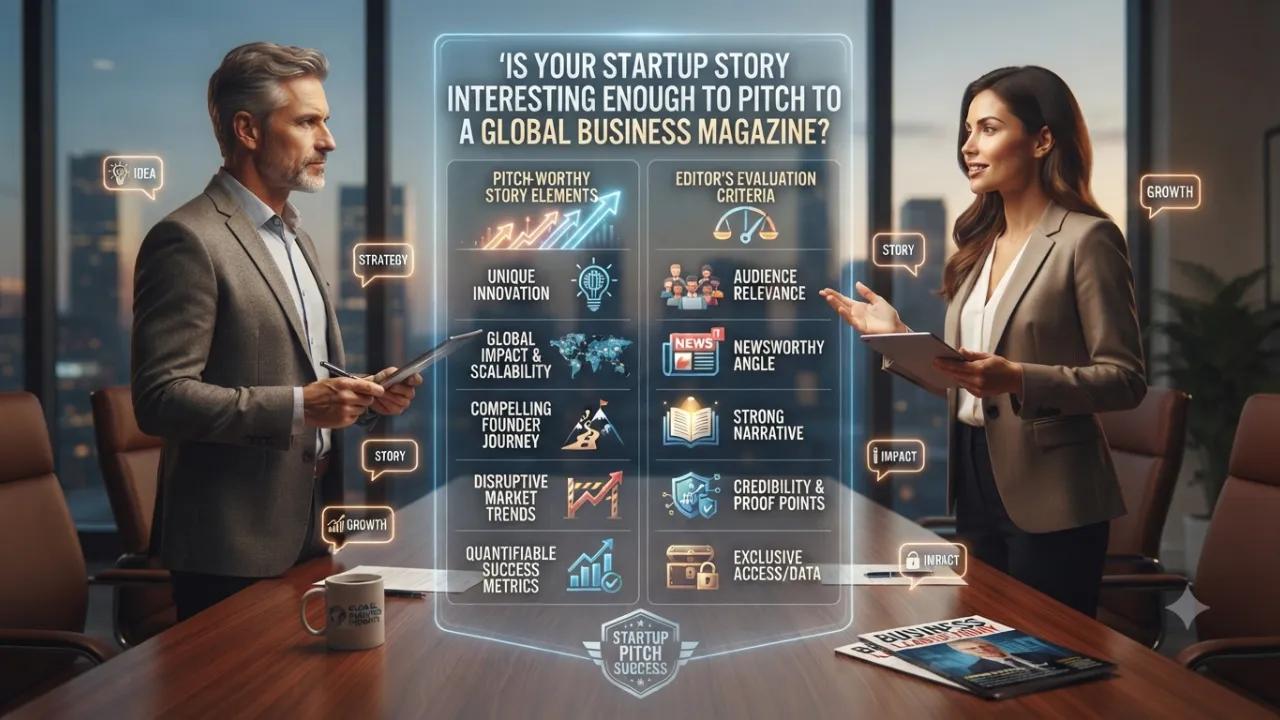
Many founders wonder if their story is big enough for a global business magazine. The truth is that editors do not only look for huge funding rounds or famous names. They look for a clear, honest story that readers will care about. Here is how to check if yours is ready.
What Makes a Startup Story Worth Telling
Editors read hundreds of pitches, so your story needs a reason to stand out.
A strong startup story usually has three things: a real problem, a fresh way of solving it, and a human angle behind it. Maybe you built your company after facing a problem yourself, or you are solving something in a way nobody tried before. Size matters less than clarity. A small company with a sharp, honest story often beats a bigger one with nothing new to say.
Find Your Angle Before You Pitch
A good pitch is built around one clear angle, not your whole company history.
Ask yourself what makes your story different right now. It could be a surprising result, a trend you are part of, or a bold opinion on where your industry is heading. Editors love stories tied to something timely, so connect your journey to a bigger conversation in the market. If you can explain your angle in one or two lines, you are on the right track.
Quick Checks to Test Your Story
Run your story through these points before you send anything.
Is it new? Does it offer a fresh view, or is it something editors have already covered many times?
Is it proven? Can you back it up with real numbers, customer results or milestones?
Is it relevant to readers? Will a global audience learn something useful from it?
Prove You Are Ready for the Spotlight
Global magazines want to know you can deliver a good interview and stand behind your claims.
Keep a short media page or founder profile ready, with a clear bio, key facts, and a few quotes. Editors also check your website, LinkedIn, and past media coverage to judge your brand credibility. If you have already been featured in smaller outlets, mention it, because it shows others have trusted your story. Being prepared makes the editor's job easier, and that often decides whether they reply.
How to Pitch Without Sounding Like an Ad
The way you write the pitch matters as much as the story itself.
Keep your email short, ideally under 200 words. Start with the angle, add two or three strong facts, and explain why it suits that magazine's readers. Avoid buzzwords and big claims like "revolutionary" or "world-changing." Address the editor by name, mention something you enjoyed from their recent work, and offer to share more details. A polite, clear pitch feels human, and that is what gets noticed in a busy inbox. Strong PR outreach is simple, honest, and well-timed.
FAQs
1. Do I need big funding to be featured in a global business magazine?
No. Editors care more about a fresh idea and a strong story than the size of your funding round.
2. How long should I wait before following up on a pitch?
Wait about a week, then send one short, polite follow-up. If there is no reply after that, move on to the next outlet.
3. Should I start with smaller publications first?
It often helps. Smaller features give you proof, practice and a stronger base when you approach bigger magazines.
4. What if my startup is in a boring industry?
Boring industries often have the best untold stories. Focus on the people, the problem and the real results.
5. Can I pitch more than one magazine at the same time?
Yes, but tailor each pitch to the outlet. Do not send the same email to everyone.
Every startup has a story, but only a clear and honest one gets picked. Know your angle, back it up with facts, and pitch with confidence. That is how a small startup earns a place in a big magazine.