

Nepal Wants to Unite India and China Against Climate Threats, But They Are Not Friends
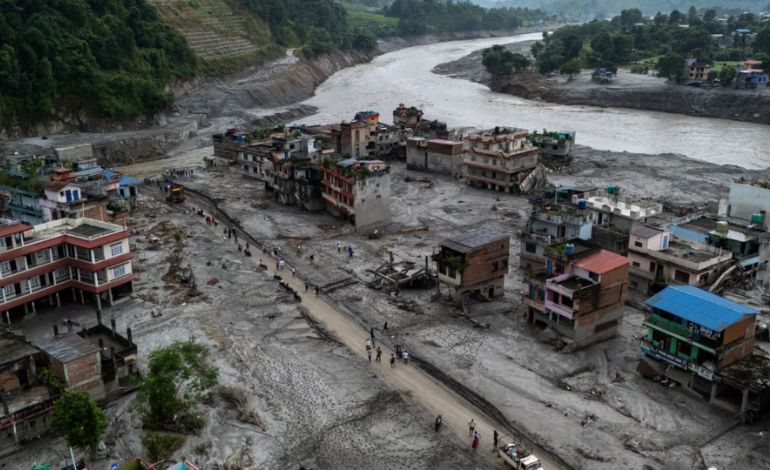

Nepal Prime Minister Balendra Shah spent much of his address to the recent UN General Assembly warning of the increased danger of climate-related disasters in the Himalayas, citing the disastrous debris floods that ravaged his country in August.
But his bold proposal to bring together regional adversaries India and China, along with Nepal, to confront these common concerns received special attention.
Shah asked for a Himalayan Climate Resilience Mechanism to be set up to improve cross-border disaster response and sharing of scientific data and knowledge in one of the world’s most environmentally vulnerable and geopolitically sensitive regions. “Let the Himalayas be a laboratory of international co-operation, and not a frontier of fragmentary information, he added.
The plan was still in its early stages, a senior official at Nepal’s foreign ministry said on condition of anonymity. The PM’s proposal has provided a political orientation. Our ministry is working with other relevant agencies to bring out a preliminary framework that can serve as the basis for creating shared understanding, the official added.
India and China have not replied officially to the suggestion. The BBC has approached their foreign ministries for comment. But can Nepal really convince the two regional powers to come together to face a shared climate issue in an area where they have long been involved in violent territorial disputes?
Temperatures in the Himalayan region are rising faster than the global average, driving glacier retreat and permafrost thaw and contributing to increasing risks of landslides, rockfalls, avalanches and glacial lake outburst floods.
Also Read:
Musk Says US Govt May Be Behind Delays in Ukraine Drone Speeds
UAE Offers $1m AI Challenge at WEF Global Opportunities Centre