




Zelensky Meets Macron to Strengthen Ukraine Support as Trump Signals Optimism
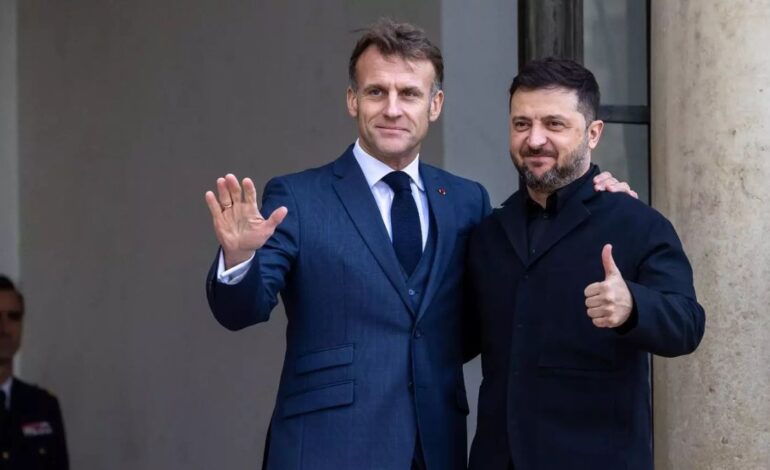

PARIS — Ukrainian President Volodymyr Zelensky met French leader Emmanuel Macron in Paris on Monday, aiming to solidify European backing amid renewed diplomatic efforts to end the war with Russia. The talks follow what U.S. and Ukrainian negotiators described as “productive” discussions in Florida over the weekend, with President Donald Trump voicing optimism about a potential peace deal.
The high-level diplomacy unfolds as Ukraine contends with sustained military pressure and a domestic corruption scandal that recently led Zelensky to dismiss his chief of staff, Andriy Yermak. Yermak had been a central figure in previous negotiations with Russia.
French Foreign Minister Jean-Noel Barrot emphasized that Monday’s meeting between Zelensky and Macron aimed “to move the negotiations forward.” He added, “Peace is within reach, if Vladimir Putin abandons his delusional hope of reconstituting the Soviet empire by first subjugating Ukraine.”
U.S. envoy Steve Witkoff is scheduled to meet Russian President Vladimir Putin in Moscow on Tuesday, continuing talks that began in Geneva earlier this month. Washington has revised an initial 28-point peace proposal after criticism from Kyiv and European allies, though the updated terms remain undisclosed.
Over the weekend, Ukrainian and American negotiators held lengthy discussions in Florida. Ukraine’s security council secretary, Rustem Umerov, who led Kyiv’s delegation, reported “substantial progress” and briefed Zelensky on the outcome. President Trump told reporters aboard Air Force One, “I think that there’s a good chance we can make a deal,” while acknowledging Ukraine’s “difficult little problems,” an apparent reference to recent political turbulence.
Secretary of State Marco Rubio described the Florida talks as “very productive” but noted that “more work” is needed, especially with Witkoff’s upcoming visit to Moscow.
Before meeting Macron, Zelensky held calls with Finnish President Alexander Stubb, European Commission President Ursula von der Leyen, and NATO Secretary-General Mark Rutte, calling the moment “important days, and much can change.”
The diplomatic push continues against a backdrop of ongoing violence. Russian forces launched deadly airstrikes on Kyiv and surrounding regions over the weekend, while Ukraine is believed to be behind recent attacks on two oil tankers in the Black Sea and a drone strike on a Russian oil terminal, actions Kyiv views as essential to weakening Moscow’s war economy.