




Why UK’s Starmer Says China Is a Security Threat While Still Pushing for Business Ties
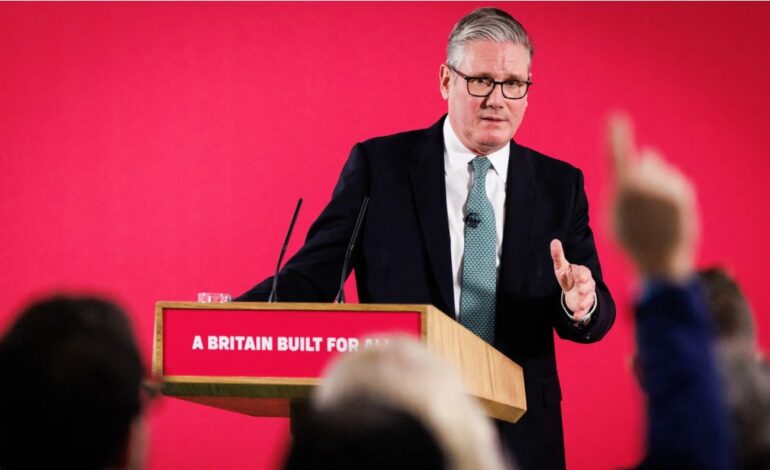

LONDON — In a carefully worded address to business leaders in London’s financial district on Monday, Prime Minister Keir Starmer outlined a dual-track strategy toward China—calling the country a “national security threat” while simultaneously promoting deeper trade and investment ties. The speech marks his clearest attempt yet to define a post-“golden era” relationship that balances risk with economic opportunity.
A Delicate Balance
Starmer acknowledged that Britain’s approach to China has swung dramatically over the past decade—from the “golden era” of engagement under former Prime Minister David Cameron to a period of frosty criticism under recent Conservative governments. His administration, he said, intends to chart a more consistent and pragmatic course.
“It’s time for a serious approach, to reject the simplistic binary choice, neither golden era nor ice age, and recognize the plain fact that you can work and trade with a country while still protecting yourself,” Starmer stated.
Security First, Trade Follows
The Prime Minister was unequivocal on security, describing the protection of British interests as “non-negotiable—our first duty.” His remarks come after the collapse of a high-profile espionage trial in September, where prosecutors said the government had refused to formally label China a security threat, undermining the case.
Starmer’s explicit reference to “national security threats” appears to close that gap and signals a tougher rhetorical line, even as his government prepares for increased diplomatic engagement.
At the same time, Starmer criticized the previous government’s limited high-level contact with Beijing. Since 2018, French and German leaders have made multiple visits to China, while the last British prime minister to travel there was Theresa May in 2018. Starmer himself is expected to visit China next year, following trips by several of his cabinet ministers.
Economic Opportunity in Focus
Where security risks are manageable, Starmer made clear he will encourage British businesses to pursue opportunities in China. He highlighted sectors such as financial and professional services, creative industries, pharmaceuticals, and luxury goods as areas with “huge” export potential.
“In areas like these—great British success stories—the export opportunities are huge and we will back you to seize them,” he told the audience.
This two-pronged strategy—firm on security, open for business—reflects the complex reality of U.K.-China relations. It acknowledges the risks of espionage and geopolitical competition while recognizing China’s role as a major trading partner and global economic actor.
Looking Ahead
Starmer’s approach attempts to move beyond what he called the previous government’s “dereliction of duty” in disengaging from China. By decoupling security concerns from economic diplomacy, he aims to create a stable, predictable framework for relations—one where Britain can safeguard its interests without isolating itself from one of the world’s largest economies.
How this balancing act unfolds will depend on both Beijing’s response and London’s ability to maintain unity among allies who may view China with varying degrees of caution.
Also Read:
Zelensky Meets Macron to Strengthen Ukraine Support as Trump Signals Optimism
Communication Jam Reported as Filipino Forces Resupply Philippines-Held Shoal