

Why Macron’s Visit to China Matters for Global Trade and Peace
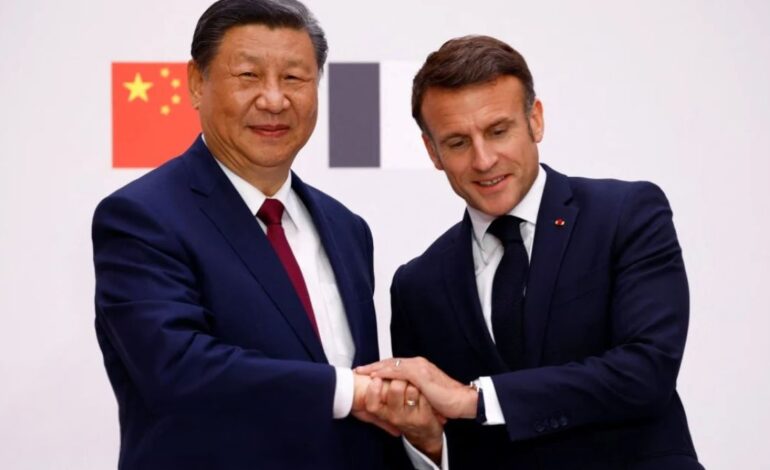

As French President Emmanuel Macron embarks on a three-day state visit to China this week, the international community is watching closely. This is not merely a diplomatic formality; it is a strategic engagement at a time when global trade tensions are rising and the war in Ukraine continues to destabilize Europe. The stakes for both economic stability and peace could hardly be higher.
At the heart of the agenda lies a delicate balancing act. Macron arrives with a clear mandate to advocate for “fair and reciprocal market access” between the European Union and China. The numbers explain the urgency: the EU’s trade deficit with China surpassed €300 billion last year, with nearly half of France’s own trade deficit attributable to China alone. Recent friction—from an EU probe into Chinese electric vehicle subsidies to China’s investigations into European brandy and pork—underscores a relationship at a crossroads. The visit aims to recalibrate this partnership, with several agreements in energy, aviation, and the food industry expected to be signed. For France, a key objective is to attract Chinese investment while securing stronger footholds for French exports in the Chinese market.
Yet, the significance of this trip extends far beyond trade figures. Perhaps its most critical dimension is diplomacy concerning Ukraine. Macron comes directly from Paris, where he met with Ukrainian President Volodymyr Zelensky to discuss potential pathways to a ceasefire. In Beijing, he will seek to enlist China’s influence to pressure Russia toward ending the conflict. French officials have stated they hope China can “convince and influence Russia to move toward a ceasefire as quickly as possible” and to refrain from providing any material support for Russia’s war effort. China’s stated commitment to “dialogue and negotiation” will be put to the test. Macron’s ability to navigate this dialogue—respecting China’s stance while advocating firmly for European security—will be a pivotal measure of the visit’s success.
Symbolism will also play a role. The itinerary—from the restored Qianlong Garden in the Forbidden City to the ancient Dujiangyan irrigation system—speaks to a respect for shared civilizational heritage and long-term thinking. The stop in Chengdu, home to panda conservation efforts and a symbol of Sino-French cooperation on environmental stewardship, further reinforces themes of future-oriented partnership.
In a world increasingly fractured by competition, Macron’s mission represents a necessary, if challenging, endeavor. It is an attempt to engage a “systemic rival” as an indispensable partner on issues from climate change to global security. The outcomes will send a powerful signal: can major powers manage profound disagreements on trade and geopolitics through sustained dialogue, or are we heading toward a more divided and volatile international order? The answers may well shape the trajectory of global trade and the prospects for peace in Europe for years to come.
Also Read:
How a 15-Year-Old Pin Became a Symbol of Saudi-China Cultural Friendship