


Venezuela Moves Closer to Political Freedom with New Amnesty Bill
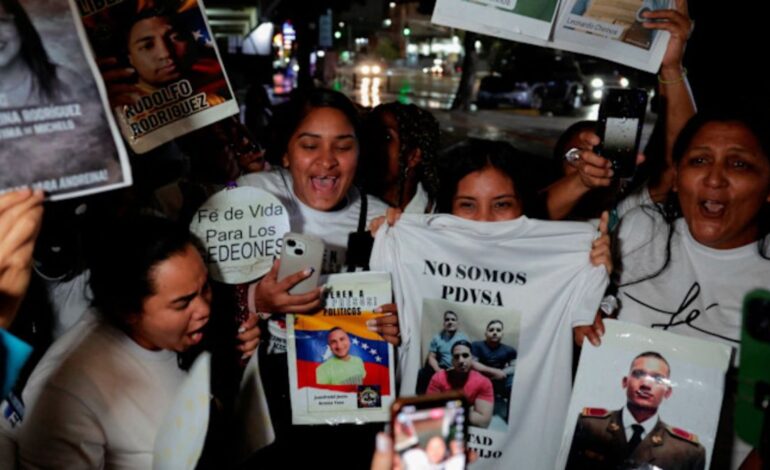

In a significant political development, Venezuela’s National Assembly has advanced an amnesty bill that could pave the way for the release of hundreds of opposition figures, journalists, and human rights activists detained on political grounds. The proposed legislation, introduced by Acting President Delcy Rodríguez, represents a potential turning point for a nation long polarized by political repression.
The bill, which passed a first legislative debate on Thursday, addresses a central demand of the opposition and international human rights organizations. In a televised address last month, Rodríguez framed the measure as an instrument of national healing, stating, “May this law serve to heal the wounds left by the political confrontation fueled by violence and extremism… May it serve to redirect coexistence among Venezuelans.”
Cautious Optimism Amid Uncertainty
While the move has been met with hope, reactions are tempered by caution. A critical point of concern is that the full text of the bill has not been made public. Rights groups, including the Venezuelan Program for Education-Action in Human Rights (PROVEA), are urgently calling for transparency. They stress that the details will determine the measure’s true impact on victims and society.
Based on preliminary reports, the amnesty would cover acts dating back to 1999, spanning the administrations of the late Hugo Chávez and his successor, Nicolás Maduro, up to this year. The legislation is said to exclude those convicted of grave crimes such as murder, drug trafficking, and serious human rights violations.
A Long Road Ahead
The bill is not yet law. It requires a second debate in the legislature—which has not been scheduled—and must ultimately be signed by Acting President Rodríguez. The process unfolds in the complex political landscape that followed the U.S. military capture of Maduro just weeks ago, with Rodríguez leading an interim government.
For the families of political prisoners and a nation yearning for dialogue, this legislative step is a fragile beacon. A genuinely inclusive and transparent amnesty could mark the beginning of a difficult reconciliation process. However, if the final law contains vague criteria or broad exclusions, it risks perpetuating the very divisions it aims to mend.
The world now watches as Venezuela moves closer to a decision that could either unlock prison cells and open a door to political dialogue or become another chapter in its protracted crisis. The coming days, and the details yet to be revealed, will determine whether this bill represents a true gesture of peace or a politically calculated maneuver.
Also Read:
Ithra Celebrates Spain’s Colorful Culture Through Fashion
Amira Al-Zuhair Starts 2026 in Style with Jacquemus Fashion Show