
Venezuela Looks to Raise Oil Output Despite Ongoing Restrictions
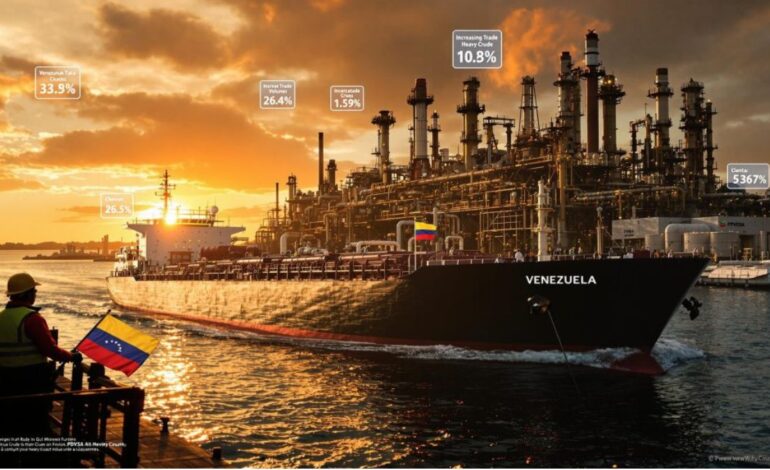

At the World Government Summit in Dubai, Venezuela’s Vice President for Economy, Calixto Ortega Sanchez, laid out a stark vision for his nation’s future: a desperate need for foreign capital and the removal of international sanctions to resurrect its crippled oil industry and economy.
Sanchez articulated a clear ambition to transform the country’s global identity. “We know that the reference for Venezuela is that (it is) the country with the biggest oil reserves, and we want to stop being known for this, and we want to be known as one of the countries with the highest production levels,” he stated. This shift, however, remains a distant dream without external intervention.
The Central Obstacle: U.S. Sanctions
The cornerstone of Sanchez’s address was a direct appeal regarding U.S. sanctions. He described them as the “most pertinent issue” facing Venezuela, acknowledging that while they failed to achieve their political objective of regime change, they successfully “stifled the economy from growing.” He framed the United States as a “natural partner” for Venezuela and expressed a desire to reestablish the relationship, even while referring to the capture of former President Nicolás Maduro as a “dark day” for the nation.
Reforms and Promises of Legal Safety
To attract the “vast foreign investment” he deems essential, Sanchez outlined steps taken by the interim government of President Delcy Rodríguez. The first move, he said, was to seek reforms to the hydrocarbon law in the National Assembly. The goal of this reform is to provide “favorable conditions” and “legal assurance” for international oil companies, attempting to assuage long-standing fears about investment risk in the country.
“The economy is ready for investment. The economy is ready for the private sector; it is ready to build up a better future for the Venezuelan people,” Sanchez asserted, projecting an image of a nation open for business.
A Government Asserting Control and Seeking Access
Pushing back against suggestions that the government lacks authority, Sanchez insisted the administration remains in control. He pointed to the establishment of two sovereign funds designed to channel oil revenues directly into social welfare programs. His plea was simple yet profound: “Allow us to have access to our own assets … we don’t have access to our own money.”
The underlying message was a promise of potential. Sanchez argued that with normalized financial access and the inflow of foreign expertise and capital, Venezuela could unleash its vast hydrocarbon potential. “If you allow us to function like a regular country,” he concluded, “Venezuela will show extraordinary improvement and growth.”
The appeal from Dubai is a calculated diplomatic and economic overture. It positions the current Venezuelan leadership as pragmatic reformers ready to engage with the global market, placing the ball firmly in the court of foreign investors and, most critically, in the hands of Washington policymakers. The world is left to weigh the promise of one of the world’s largest oil reserves against the profound political and economic risks that have defined Venezuela for over a decade.
Also Read:
US Envoy Witkoff Set to Meet Israeli Leaders During Israel Visit
British Killer Known as Suffolk Strangler Pleads Guilty in Cold Case