


US Strike on Venezuela May Boost China’s Territorial Claims, Analysts Say
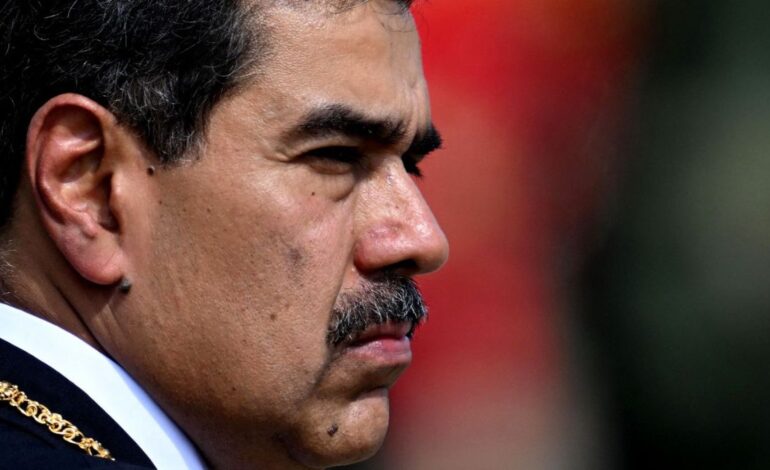

The reverberations from Saturday’s dramatic US military operation in Venezuela extend far beyond Latin America. While American special forces were extracting Nicolás Maduro from Caracas to face narco-terrorism charges in New York, analysts across the Pacific were already calculating how Beijing might exploit this unprecedented action to advance its own territorial ambitions.
An Unexpected Gift to Chinese Diplomacy
The audacious strike that captured Venezuela’s leader has handed China what observers are calling “cheap ammunition” in its ongoing disputes with Washington over Taiwan, the South China Sea, and other contested territories. The irony is hard to miss: the United States, which has long positioned itself as the defender of international law and rules-based order, just conducted a military operation that Beijing immediately condemned as violating both.
“Washington’s consistent, long-standing arguments are always that the Chinese actions are violating international law but they are now damaging that,” explained William Yang, an analyst at the International Crisis Group. “It’s really creating a lot of openings and cheap ammunition for the Chinese to push back against the US in the future.”
China’s state-run Xinhua news agency wasted no time seizing this opening, calling the operation “naked hegemonic behavior” and arguing that it exposed the so-called rules-based international order as merely “a predatory order based on US interests.”
The Taiwan Question Looms Large
China claims Taiwan as its own territory—a position Taiwan’s democratically elected government firmly rejects. Beijing has steadily intensified pressure on the island, most recently conducting extensive military exercises that encircled Taiwan in a show of force designed to demonstrate its ability to isolate the island during any potential conflict.
Given this context, some have wondered whether the Venezuela operation might embolden China to accelerate its timeline for action against Taiwan. The consensus among analysts, however, is decidedly no.
“Taking over Taiwan depends on China’s developing but still insufficient capability rather than what Trump did in a distant continent,” said Shi Yinhong, a professor of international relations at Renmin University in Beijing. The implication is clear: China’s approach to Taiwan is driven primarily by its own military readiness and domestic political considerations, not by opportunistic mimicry of American actions.
Neil Thomas, a fellow on Chinese politics at the Asia Society, offered another perspective on why China won’t use Venezuela as a template for Taiwan: “Beijing will want a clear contrast with Washington to trumpet its claims to stand for peace, development and moral leadership.”
Taiwan’s Response: Defiant but Cautious
From Taipei, the response has been characteristically defiant. Wang Ting-yu, a senior lawmaker from Taiwan’s ruling party who serves on the parliament’s foreign affairs and defense committee, dismissed comparisons between the two situations entirely.
“China has never lacked hostility toward Taiwan, but it genuinely lacks the feasible means,” Wang wrote on Facebook. “China is not the United States, and Taiwan is certainly not Venezuela. If China could actually pull it off, it would have done so long ago!”
Yet beneath this bravado lies a more complex reality. Taiwan now faces delicate diplomatic calculations. The island has not yet issued an official statement on the Venezuela operation, likely weighing how to respond without antagonizing the Trump administration upon which it depends for security guarantees and weapons sales.
Lev Nachman, a political science professor at National Taiwan University, expects Taiwan will eventually express carefully worded support for American action. However, he worries about longer-term consequences: “What I do think Trump’s actions could do is to help Xi Jinping’s narrative in the future to create more justification for action against Taiwan.”
Beyond Taiwan: The Broader Territorial Disputes
Taiwan isn’t the only flashpoint where China might leverage the Venezuela operation. Beijing claims almost the entire South China Sea, putting it at odds with multiple Southeast Asian nations that also assert rights over portions of this vital trade route. China similarly maintains positions on Tibet and islands in the East China Sea that other nations contest.
In each of these disputes, the United States has historically argued that China’s behavior violates international norms. Now, Beijing can point to Venezuela and ask: whose behavior actually threatens the rules-based order?
This rhetorical advantage may prove more valuable in the near term than any direct military application. China has already demonstrated skill at using international forums and diplomatic channels to advance its positions. The Venezuela operation provides fresh material for this ongoing campaign.
The Timing Factor
The timing of the US strike adds another layer of complexity. Hours before his capture, Maduro met with a high-level Chinese delegation in Caracas, including China’s special representative for Latin American and Caribbean affairs. The whereabouts and status of this delegation following the operation remain unclear, adding diplomatic awkwardness to Beijing’s response.
Meanwhile, on Chinese social media platform Weibo, discussions of the US attack trended heavily, with several users suggesting Beijing should learn from Trump’s decisive action. This public sentiment, while not necessarily reflecting official policy, indicates the operation has captured Chinese attention and sparked debate about acceptable uses of military force.
A Long Game, Not a Quick Strike
Despite the tactical advantages the Venezuela situation offers China, experts agree that President Xi Jinping’s calculations about Taiwan remain largely unchanged. These decisions depend on complex factors including military preparedness, domestic political considerations, economic costs, and international reaction—not fleeting opportunities presented by American actions in Latin America.
As Neil Thomas noted, Xi “does not care about Venezuela more than he cares about China. He’ll be hoping that it turns into a quagmire for the United States.”
That assessment captures Beijing’s likely approach: use the Venezuela operation to score diplomatic points, undermine American moral authority, and strengthen China’s position in ongoing territorial disputes—but don’t rush into military adventures based on someone else’s playbook.
The real impact of the Venezuela strike on China’s territorial claims will unfold over months and years, not days. It becomes another data point in Beijing’s calculation of American unpredictability, another talking point in its challenge to US-led international norms, and another element in the complex equation determining whether and when China might move decisively on Taiwan.
For now, the world watches both situations nervously, aware that precedents set in one region rarely stay confined there.
Also Read:
Trump Signals Military Response After Venezuela Raid Involving Colombia
Bangladesh Sends 750,000 Workers to Saudi Arabia, Sets New Record