


UN Faces Serious Money Crisis as Secretary-General Raises Alarm
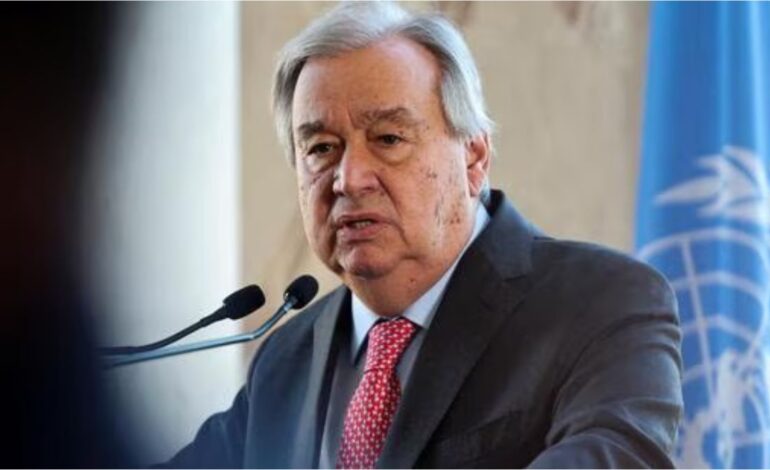

The gears of global diplomacy are grinding to a halt, not from political disagreement alone, but from a stark lack of cash. United Nations Secretary-General Antonio Guterres issued a dire warning this week: the world body is teetering on the edge of financial collapse and could run out of money by July.
This isn’t a hypothetical budget shortfall; it is a chronic, systemic crisis threatening to paralyze the primary organization tasked with maintaining international peace, delivering humanitarian aid, and upholding global norms.
A “Kafkaesque” Financial Trap
In a frank letter to member states, Guterres laid out an “untenable” reality. The UN ended 2025 with a staggering $1.6 billion in unpaid mandatory contributions, more than double the previous year’s arrears. While over 150 nations have paid their dues, the holdouts—particularly the largest contributors—create a crippling deficit.
The situation has become absurdly dysfunctional. The UN is now forced to consider reimbursing countries for unspent funds while it itself lacks the cash to operate. “We are trapped in a Kafkaesque cycle; expected to give back cash that does not exist,” Guterres wrote.
The Roots of the Crisis
The immediate cause is clear: some member states are not paying their assessed contributions in full or on time. The spotlight falls heavily on the United States, the UN’s largest funder. The Trump administration has actively reduced funding to UN agencies, delayed mandatory payments, and repeatedly questioned the organization’s relevance. The recent launch of a U.S.-centric “Board of Peace” is widely seen as an attempt to create a rival platform.
This financial stranglehold coincides with deep political paralysis. The Security Council, the UN’s most powerful body, is frequently deadlocked by tensions between its permanent, veto-wielding members—the U.S., Russia, and China. This makes coordinated action on global crises increasingly difficult, even as the need for it grows.
The Human and Operational Cost
This is not just an accounting problem. A cash-starved UN means:
- Hiring freezes and cutbacks in critical departments.
- An inability to fully execute its 2026 program budget, which includes peacekeeping, climate work, and refugee support.
- Delayed or scaled-back humanitarian operations in regions facing famine, conflict, and disaster.
- A weakened capacity to monitor human rights and international law.
As Guterres noted in his final annual priorities speech, the world is already riven by “self-defeating geopolitical divides” and “brazen violations of international law.” A financially crippled UN only deepens these fractures.
A Fundamental Choice
Guterres has presented member states with a blunt, binary choice: “Either all Member States honor their obligations to pay in full and on time — or Member States must fundamentally overhaul our financial rules.”
The path forward is a test of global commitment. Will nations uphold the multilateral system they built, or will they allow it to atrophy through neglect and unilateral action? The July deadline is not just a fiscal cliff; it is a deadline for deciding what kind of world we want. A world with a functional, if imperfect, forum for dialogue and collective action, or a world where the machinery of global cooperation simply stops working.
The money is a metaphor. The unpaid bills represent a wavering belief in the very idea of common ground and shared responsibility. The coming months will reveal whether that belief can be restored, or if the world is willing to let its central pillar crumble.
Also Read:
Americans May Soon Visit Venezuela as Flights Set to Resume, Says Trump
Extreme Winter Conditions Hit Russia with Snowfall Not Seen in 200 Years