


UAE Activates Air Defense Systems After Iranian Missile and Drone Threat
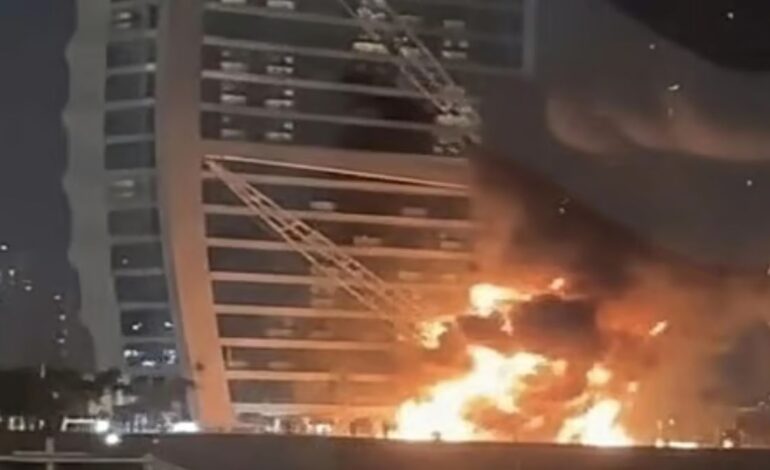

The morning that began like any other in one of the world’s busiest aviation hubs ended with a stark, unwelcome reality: Dubai’s skies were under attack. Explosions echoed across the emirate. Alarm systems wailed. Residents received urgent mobile alerts commanding them to seek shelter. The Emirates airline suspended all flights in and out of the city. Dubai International Airport, one of the world’s largest transportation nexuses, halted operations.
For a brief window, the machinery of modern commerce ground to a halt. The flow of goods, people, and capital that defines Dubai and the Gulf—the circulatory system of a region built on international trade—simply stopped.
This is what it looks like when regional conflict moves from the military sphere into the lived experience of millions of ordinary people going about their daily lives.
The Sounds of War in a Modern City
The explosions heard in Dubai on Saturday were not distant rumbles from a faraway battlefield. They were close enough to be felt. Close enough to be frightening. Two separate blasts shook the emirate. In Bahrain’s capital, Manama, warning sirens sounded—that distinctive wail designed to send every instinct into self-preservation mode.
These sounds carry meaning. They announce danger. They interrupt routine. They force people to make instant calculations: Where is safety? How quickly can I get there? What are my family and loved ones doing right now?
For residents of Dubai—a city that has built its identity around stability, modernity, and the promise of uninterrupted commercial activity—such moments are disorienting. This is a place constructed on the assumption that normalcy is guaranteed. Explosions and air raid warnings do not fit the narrative of a gleaming international city.
Yet on Saturday, they became the reality.
The Defense Response
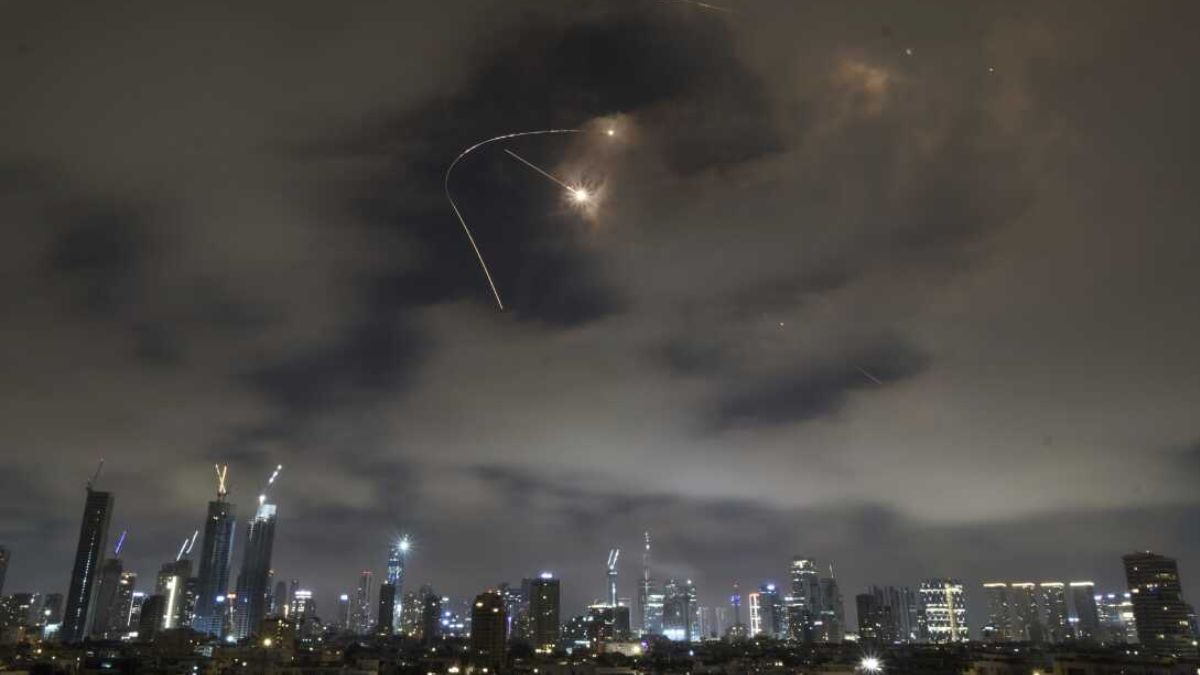
The UAE’s defense ministry moved swiftly with an explanation: “MOD asserts that the sounds heard are the result of the Air Defence Systems intercepting missiles and drones.”
This is technically reassuring. It means the threats did not reach their targets. It means the air defense systems worked. It means the city was protected. But it also means that missiles were launched. Drones were sent. A hostile power attempted to strike the emirate, and only the intervention of sophisticated military systems prevented catastrophic consequences.
The nature of modern air defense creates a strange paradox: success is announced by explosions and noise. The system stops incoming threats by destroying them in the sky. The debris falls. The noise reverberates. The public hears these interceptions and must be reassured that what sounds like an attack is actually a successful defense.
It is a difficult message to communicate in a moment of fear. A mobile alert was sent to residents: “Citizens and residents are urged to remain calm and head to the nearest safe place.” The tone is measured. The instruction is clear. But the underlying reality is stark: there is danger from the sky, and you need to find shelter.
The Economic Disruption
The moment air defense systems are activated, the moment explosions are heard, the moment civilians are told to seek shelter, the consequences ripple outward in ways both immediate and severe.
Emirates airline, a global carrier connecting the world to the Middle East, suspended all flights to and from Dubai. For a brief moment, the skies that usually carry hundreds of aircraft per day went silent. The suspension was lifted shortly afterward, but those minutes of complete halt represented an enormous economic disruption.
Dubai International Airport, which handles over 80 million passengers annually, suspended operations. Flights were grounded. Connections were broken. Tourists were stranded. Business travelers were delayed. The carefully choreographed dance of modern aviation—where thousands of flights move through the skies in precisely coordinated patterns—was abruptly interrupted.
These are not small matters. They are not abstract concerns. For the global economy, for the millions of people dependent on aviation for their livelihoods, for businesses relying on on-time delivery of goods and personnel, an airport suspension is a serious blow.
The fact that these suspensions were brief—operations resumed shortly after—speaks to the UAE’s assessment that the threat was contained. But it also reveals how precarious the situation is. Modern society’s complex infrastructure depends on the assumption of stability and safety. That assumption was tested on Saturday.
The Scale of What Is Being Defended Against
One week into Iran’s retaliatory attacks on targets around the Gulf, the sheer volume of incoming threats has become staggering. The UAE alone has reported intercepting over 125 drones and 6 ballistic missiles in the last 24 hours.
Let that number sink in. One hundred twenty-five drones. Not one or two. Not even a dozen. Over a hundred unmanned aircraft, each one a weapon, each one capable of carrying explosives, each one requiring interception.
The air defense systems have stopped them. But for how long can this continue? How many more waves of drones can be launched and intercepted? At what point does the sheer volume overwhelm the capacity to defend?
Residents in Dubai, hearing the explosions, understanding that these represent successful interceptions, are being forced to confront an unsettling truth: their safety depends entirely on the continued function of military systems. If those systems fail. If one drone gets through. If one missile reaches its target. The consequences would be immediate and severe.
The Battle for Information
In moments of crisis, information becomes a contested commodity. Social media fills with rumors, speculation, unverified reports. Some claim the airport suffered damage. Others report different impacts. The noise of confusion competes with the official channels of information.
Dubai’s Media Office moved quickly to address these rumors: “A minor incident caused by debris after a successful interception has been contained and with no reported injuries.” They also denied reports about incidents at Dubai International Airport.
This is the modern crisis communication challenge. Official agencies must communicate quickly enough to prevent panic but carefully enough to be accurate. They must address rumors without amplifying them. They must assure the public without appearing to minimize genuine danger.
The fact that the Dubai Media Office felt compelled to deny airport incidents suggests that rumors were circulating. In a moment when explosions are being heard and evacuations are being ordered, trust in official information is strained. Speculation fills the gap.
The Normalization of Crisis
A week into Iran’s attacks. That phrase, repeated in the reporting, carries weight. This is not a single incident being responded to with appropriate alarm. This is an ongoing campaign. This is a new normal—at least temporarily—of regular attacks and defensive responses.
For residents of Dubai, for workers at the airport, for passengers whose flights are suspended, this represents a stark shift in expectations. The city that marketed itself as a haven of stability in a region of turmoil is now experiencing firsthand the costs of that region’s conflicts.
How long can this continue? How long before the attacks cease or the defenses are overwhelmed? There is no clear answer. There is only the daily calculus of risk, the reliance on military systems, the hope that today’s successful interceptions will be repeated tomorrow.
What This Moment Represents
The suspension of flights at Dubai International Airport, the activation of air defense systems, the mobile alerts sent to residents, the explosions heard across the emirate—these are not merely military incidents. They are reminders of the fragility of modern life in a region under military stress.
Dubai has built itself on the promise of being removed from regional conflict, an oasis of international commerce and stability in the Middle East. Yet on Saturday, that promise was tested. The city was reminded that geography cannot be escaped, that regional tensions have local consequences, that no amount of modern infrastructure can guarantee immunity from the conflicts surrounding it.
The air defenses worked. The missiles were stopped. The drones were intercepted. Normalcy resumed—flights were restored, airport operations resumed. But the underlying vulnerability remains. The threat persists. And millions of residents and workers in Dubai must now conduct their daily lives with the knowledge that at any moment, alarms might sound again, calling them once more to shelter while the systems that protect them work to stop what comes from the sky.
For now, the systems hold. The question is how long they will continue to do so.
Also Read:
Who Is Pete Hegseth? The Man Leading Donald Trump’s Hardline Approach Against Iran
Kyiv’s Drone Technology Gains Global Attention as Russia-Ukraine Talks Stall