

Trump Orders Blockade on Sanctioned Venezuelan Oil Tankers
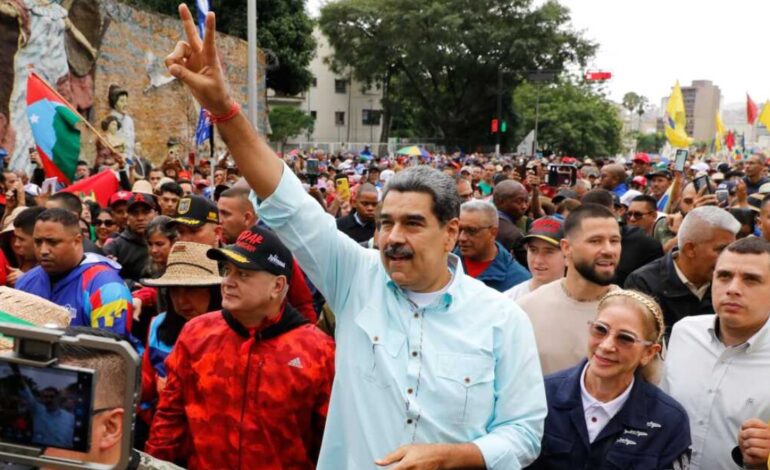

In a dramatic late-night post on Truth Social, President Donald Trump announced a decisive and aggressive new step in his administration’s long-running pressure campaign against Venezuela. “A TOTAL AND COMPLETE BLOCKADE OF ALL SANCTIONED OIL TANKERS,” he declared, targeting vessels heading to and from the crisis-stricken nation.
This move marks a sharp escalation from sanctions to an active military enforcement strategy, fundamentally raising the stakes in Washington’s bid to oust leftist leader Nicolás Maduro.
The “Largest Armada” in South American History
Trump’s announcement did not come from a vacuum. For months, the United States has been amassing a formidable naval presence in the Caribbean under the banner of combating drug trafficking. The President boasted that Venezuela is now “completely surrounded by the largest Armada ever assembled in the History of South America,” a force spearheaded by a massive aircraft carrier strike group.
While officially targeting narcotics networks, the deployment has been widely perceived as a direct threat to the Maduro government. The blockade order now gives this armada a clear, new mission: intercept and turn away any oil tanker the U.S. has placed under sanctions, aiming to cripple the lifeblood of the Venezuelan economy.
The Dual Aim: Strangling Revenue and Reclaiming “Stolen” Assets
Venezuela possesses the world’s largest proven oil reserves, but its production has collapsed under years of economic mismanagement, corruption, and U.S. sanctions. The country has survived by selling discounted crude on black markets, primarily to China.
This blockade seeks to sever that final financial artery. Experts warn it could precipitate a profound humanitarian crisis, collapsing imports of already-scarce food and medicine.
But Trump’s statement revealed a second, historical objective: reclaiming “all of the Oil, Land, and other Assets that they previously stole from us.” This appears to reference the nationalization of Venezuela’s oil industry, which began in the 1970s and intensified under the late President Hugo Chávez, when foreign firms were forced to cede control to the state-owned PDVSA. The demand reframes the conflict not just about democracy, but about proprietary rights to resources.
A Regime Branded “Terrorist”
To justify such a severe military and economic action, the administration has layered its rationale. The Pentagon has labeled certain drug cartels as Foreign Terrorist Organizations (FTOs). Extending that framework, Trump’s post designated the “Venezuelan Regime” itself as an FTO, accusing it of terrorism, drug smuggling, and human trafficking.
This legal designation provides a broader mandate for aggressive action, potentially beyond interdiction at sea. The U.S. has already conducted lethal strikes on boats it accused of drug trafficking, actions critics call extrajudicial killings. Branding the entire government as terrorist opens the door for further escalation.
Caracas Digs In, the World Watches
Venezuela’s response was swift and defiant, condemning the blockade as an attempt to “steal the riches that belong to our homeland.” The move solidifies the standoff, leaving little room for diplomatic off-ramps.
Meanwhile, the few remaining international players in Venezuela’s oil sector, like Chevron which operates under a U.S. waiver, are watching nervously. The company stated its operations continue unimpeded, but the tightening naval noose creates a volatile environment for any remaining trade.
This blockade is more than a sanctions enforcement; it is an active siege. It threatens to plunge Venezuela’s suffering population deeper into despair while testing the limits of international law and maritime sovereignty. As the largest armada in regional history patrols the coast, the world is left to wonder whether this pressure will finally fracture the regime or ignite a more dangerous and direct conflict.
Also Read:
Top 10 Global CEOs Driving Digital Transformation
Spain Fines Airbnb €64 Million for Listing Banned Rental Properties