




Several Soldiers Killed as Militants Launch Drone-Assisted Assault in Nigeria
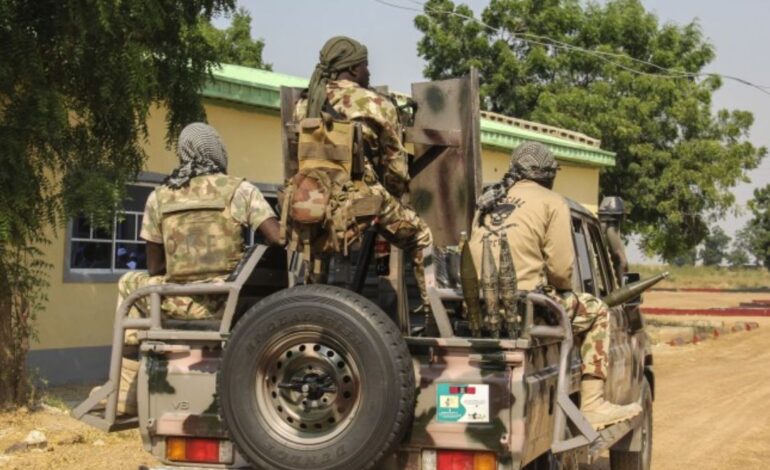

In the pre-dawn darkness of Thursday, a familiar threat in northeastern Nigeria unveiled a terrifying new dimension. Islamist militants launched a coordinated assault on the Sabon Gari army base in Borno state, employing armed drone bombardments to support a ground raid. The attack, claimed by the Islamic State West Africa Province (Daesh-WAP), left several Nigerian soldiers dead, marking a severe escalation in a relentless 17-year insurgency.
The Attack: A New Tactical Frontier
According to military spokesman Lieutenant Colonel Sani Uba, the militants stormed the base’s perimeter, briefly breaching the facility. While troops engaged the attackers on the ground, drones operated by the militants hovered above, unleashing precise strikes. The aerial bombardment destroyed key military assets, including vehicles and an excavator.
This integration of drone technology represents a significant and alarming shift. For years, the conflict has been characterized by guerrilla ambushes and suicide bombings. The use of armed drones suggests a leap in the militants’ tactical capabilities, granting them aerial surveillance and stand-off attack options that challenge traditional military defenses.
The Human Cost
The military confirmed that soldiers and members of the allied Civilian Joint Task Force “paid the supreme price,” using the traditional phrasing for those killed in action. While official numbers were not immediately released, security sources indicated a toll of at least nine soldiers and two task force members, with approximately sixteen others wounded. Each number represents a profound loss for families and communities, and a blow to the forces holding the line in a volatile region.
A Persistent Insurgency Amid Renewed Offensives
This assault is the second reported in Borno this week, underscoring the persistent resilience of militant groups despite a renewed Nigerian military offensive. The army has pushed deeper into insurgent strongholds this year, yet groups like Boko Haram and Daesh-WAP continue to mount large-scale attacks.
They exploit the region’s difficult terrain, porous borders, and limited state presence to maintain their insurgency. Borno state remains the epicenter of this violence, with civilians and military convoys facing constant threat.
The Road Ahead
The successful repelling of the attack, after reinforcements arrived, demonstrates the military’s continued resolve. However, the introduction of enemy drones changes the battlefield calculus. It signals that militants are adapting, acquiring more sophisticated tools to wage their campaign.
This event is a stark reminder that the conflict, now in its second decade, is evolving rather than ending. Protecting bases and convoys from both ground and aerial threats will require new strategies, resources, and vigilance. For the people of northeast Nigeria, the drone’s buzz now joins the list of feared sounds, symbolizing an ever-more dangerous and complex war that shows no sign of abating.
Also Read:
Why the US Has Increased Airstrikes in Somalia
Streets of Minneapolis Stay Tense Despite Trump’s Call for Calm