





Russia Plans to Build a Nuclear Power Plant on the Moon Within 10 Years
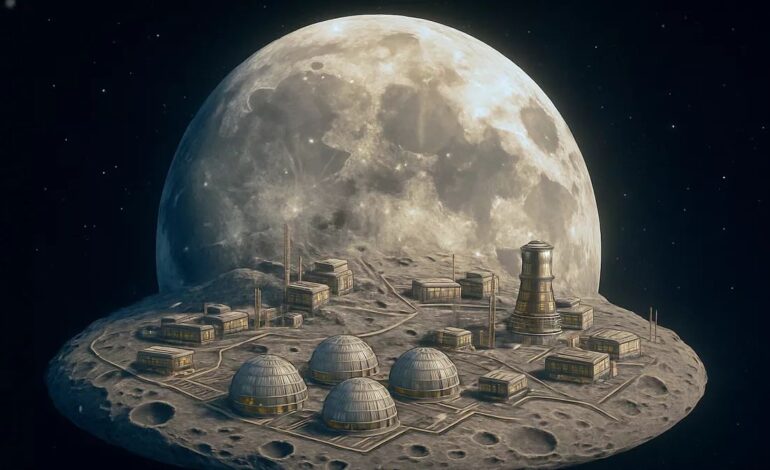

In a bold declaration that seeks to reclaim its status as a spacefaring superpower, Russia has announced plans to construct a nuclear power plant on the lunar surface within the next decade. This ambitious project aims to supply energy for its national lunar program and the joint Russian-Chinese International Lunar Research Station, marking a significant escalation in the new race to establish a permanent presence on Earth’s only natural satellite.
The state space corporation, Roscosmos, stated its intention to build the lunar power facility by 2036. It has signed a contract with the Lavochkin Association aerospace company to spearhead the effort. While Roscosmos did not explicitly label the plant “nuclear,” the involvement of Russia’s state nuclear corporation, Rosatom, and the premier Kurchatov Institute nuclear research center leaves little doubt about the proposed power source.
A Return to Cosmic Prominence?
For Russia, this project carries the weight of historical legacy and recent setbacks. Since Yuri Gagarin’s pioneering 1961 flight, Russia has prided itself on leading space exploration. However, recent decades have seen its influence wane, overshadowed by the United States and the rapid rise of China. A devastating blow came in August 2023 when Russia’s unmanned Luna-25 mission crashed during a moon landing attempt. Meanwhile, figures like Elon Musk have revolutionized space launch technology—once a definitive Russian specialty.
The lunar nuclear plant is framed as a pivotal step to move beyond sporadic missions. “The project is an important step toward the creation of a permanently functioning scientific lunar station and the transition from one-time missions to a long-term lunar exploration program,” Roscosmos declared. The envisioned power would support rovers, observatories, and the infrastructure for the joint Sino-Russian station, aiming to enable sustained scientific and exploratory work.
The Geopolitical and Technical Frontier
This announcement underscores the intensifying geopolitical competition in space, where major powers are vying for strategic and scientific advantage. Establishing a reliable, high-capacity power source like nuclear energy is seen as essential for any long-term habitat or research base, as it could provide continuous electricity through the long lunar nights, which last about 14 Earth days.
Roscosmos head Dmitry Bakanov had previously outlined this goal in June, alongside ambitions to explore Venus. The lunar project now appears to be moving from concept to initial planning stages.
However, the challenges are monumental. Beyond the immense technical hurdles of safely delivering, assembling, and operating a nuclear reactor in the moon’s harsh, airless environment, the plan will inevitably raise questions and concerns regarding safety, radioactive contamination, and the governance of nuclear materials in space. The international community is likely to scrutinize the project closely under existing space treaties.
As Russia pushes forward with this vision, the world watches. The endeavor is more than a technical milestone; it is a statement of intent. It declares Russia’s determination to not just visit the moon, but to power a new chapter of occupation, in partnership with China, setting the stage for the next era of lunar exploration—one that may be illuminated by nuclear light.
Also Read:
French Postal Service Faces Cyberattack Claims by Pro-Russian Hackers
South Korea Approves Law Against False Information Amid Censorship Concerns