

Russia Criticizes Western Proposal to Send Peacekeepers to Ukraine
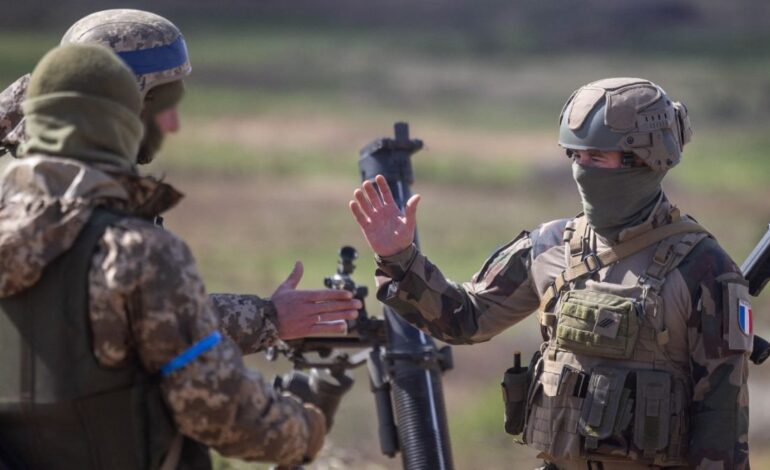

In a sharp escalation of rhetoric, Russia has condemned a Western proposal to deploy European peacekeepers to Ukraine as a “dangerous” and “destructive” scheme, dubbing Kyiv and its allies an “axis of war.” This rejection dashes hopes that recent diplomatic efforts could pave a way toward ending the nearly four-year conflict.
The condemnation, delivered by Russian Foreign Ministry spokeswoman Maria Zakharova, marks Moscow’s first response to a summit held earlier this week in Paris. At that meeting, Ukraine’s allies, including key European nations and U.S. envoys, agreed on a framework for post-war security guarantees. A cornerstone of the plan is a European multinational force intended to be deployed as a stabilizing presence should a ceasefire take hold.
Zakharova’s statement left no room for ambiguity. “All such units and facilities will be considered legitimate military targets for the Russian Armed Forces,” she declared, echoing a longstanding threat from President Vladimir Putin against any NATO member troops on Ukrainian soil.
This hardline position creates a formidable obstacle for U.S.-led shuttle diplomacy. President Donald Trump has been actively mediating between Kyiv and Moscow, pushing for a deal to halt the fighting. An initial 28-point draft, seen as leaning toward Russian demands, was previously criticized by Ukraine and Europe. Now, the Western counter-proposal for security guarantees has been met with outright hostility from the Kremlin.
The Ukrainian Dilemma: Seeking Certainty Amid Chaos
For Ukraine, these security guarantees are non-negotiable. President Volodymyr Zelensky has argued that legally binding assurances from allies are essential to deter Russia from renewing an assault after any potential ceasefire. He confirmed this week that a bilateral security agreement with Washington is “essentially ready for finalization.”
However, critical details remain shrouded in ambiguity. The specific composition, rules of engagement, and trigger mechanisms for the proposed European force have not been made public. Zelensky has pointedly stated he has yet to receive an “unequivocal” answer on what his allies would concretely do if Russia attacks again.
This diplomatic stalemate unfolds against a backdrop of relentless violence. As diplomats talked in Paris, Russian strikes targeted energy infrastructure in Ukraine’s Dnipropetrovsk and Zaporizhzhia regions, plunging hundreds of thousands into darkness and cutting off heat in freezing temperatures. The mayor of Dnipro described a “national level emergency,” with hospitals running on generators and school holidays extended.
Zelensky framed these attacks as a clear signal of Moscow’s intent. The assault, he said, “clearly don’t indicate that Russia is reconsidering its priorities.”
An Impasse with Global Repercussions
The current impasse reveals a fundamental chasm. The West views a robust, external security mechanism as a prerequisite for a durable peace, designed to protect Ukrainian sovereignty after any settlement. Russia sees the same mechanism as an existential threat and a direct provocation, vowing to treat it as an invasion force.
With Russia pressing ground attacks in the east and continuing strikes on civilian infrastructure, and with the most difficult issues—like the status of occupied territories—still unresolved, the path to peace appears more distant than ever. The “axis of war” accusation from Moscow does not merely reject a plan; it signals a deepening conviction that the conflict will be resolved by force, not by foreign peacekeepers. The coming weeks will test whether diplomacy can survive such a conviction.
Also Read:
White House Says US Military Is Always an Option as Trump Discusses Greenland
Russia Deploys Submarine to Escort Tanker Sought by US Near Venezuela