


Qiddiya Bullet Train to Reduce Riyadh Travel Time from 2 Hours to Just 30 Minutes
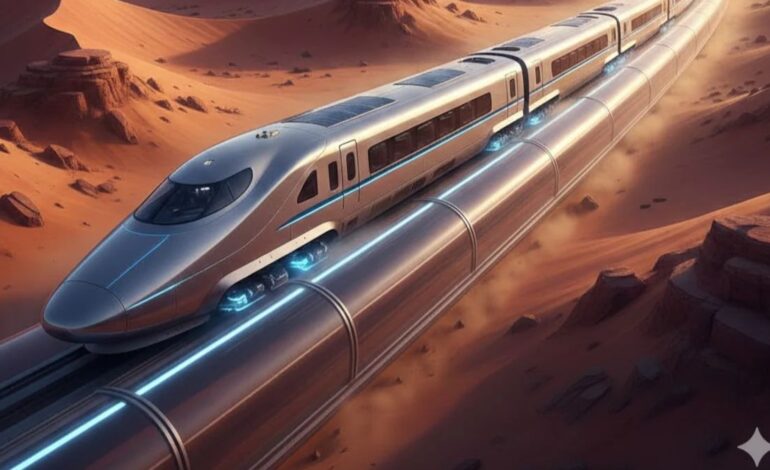

Riyadh’s already ambitious transportation network is about to get a transformative addition. Plans for the Qiddiya Bullet Train promise to slash travel time between King Salman International Airport and the entertainment megaproject from nearly two hours to just 30 minutes—a 75 percent reduction in commuting time.
The project, reported by Asharq Al Awsat, will link Qiddiya to the King Abdullah Financial District as well, with operational speeds expected to reach 250 kilometers per hour. According to the Royal Commission for Riyadh City, the railway forms part of a broader transport strategy aimed at improving connectivity across the capital as population growth and urban expansion reshape western and southwestern Riyadh.
More Than a Train
The bullet train is one piece of a larger mobility puzzle. In a related development, the commission announced the awarding of the Red Line extension of the Riyadh Metro to Diriyah. The expansion includes 7.1 kilometers of tunnel and 1.3 kilometers of elevated track, with stations at King Saud University and Diriyah—the latter expected to serve as a future interchange with planned Line 7.
Officials estimate the project could remove around 150,000 cars from daily traffic, improving access to tourist destinations such as Bujairi Terrace and Wadi Safar while supporting more sustainable mobility patterns.
Real Estate Implications
Bandar Al-Saadoun, vice chairman of Khaleejiah Holding, told Asharq Al-Awsat that extending the Red Line along King Abdullah Road to Diriyah would generate strong real estate demand. The rail network will integrate routes from King Salman International Airport through KAFD, Diriyah, and the New Murabba development—connecting some of Riyadh’s most significant projects.
Al-Saadoun noted that roughly 30 projects have been announced in Qiddiya, raising the prospect of gradual real estate growth along corridors connected to the rail line. Links to Expo 2030 Riyadh, New Murabba, The Avenues, and the airport—expected to become one of the world’s largest by 2030—are likely to reinforce demand.
Real estate analyst Khaled Almobid said large-scale transport projects such as the Qiddiya Bullet Train do more than lift prices; they reshape market structure and asset values over the medium and long term. Historically, properties within one to three kilometers of transport stations see capital appreciation and rising investment demand, particularly for undeveloped “white land,” which often transitions into higher-density projects.
Almobid expects a dual impact: redistribution of demand within Riyadh and genuine market expansion driven by what he called “manufactured demand” from Qiddiya, which is projected to attract 17 million visitors and generate 325,000 jobs. He also anticipates a population shift toward western Riyadh and areas surrounding the new stations.
Market Signals
Land prices near Qiddiya have already risen between 30 and 40 percent since 2023, reflecting early market anticipation. Almobid predicts more sustainable growth once operations begin and prices align with the tangible value of cutting travel time to 30 minutes between the airport, KAFD, and Qiddiya.
Residential and tourism-related real estate are likely to lead the next phase, supported by Saudi Arabia’s goal of raising homeownership to 70 percent and attracting 150 million annual visitors by 2030. Mixed-use locations along the rail corridor are expected to draw the strongest investment interest.
A Vision Connecting
The Qiddiya Bullet Train represents more than transportation infrastructure. It embodies the connective tissue binding together Saudi Arabia’s Vision 2030 megaprojects—linking airport to entertainment district, financial center to cultural destination, population centers to employment hubs.
When the train begins operations, the journey that once took two hours will take 30 minutes. For residents, that means more time at their destinations and less time in transit. For investors, it means properties along the corridor gain value. For the city, it means a more connected, accessible, and sustainable future.
The tracks are being laid. The stations are planned. And in Riyadh, a city already in motion, the next chapter of mobility is taking shape.
Also Read:
Russia Targets Telegram Founder Pavel Durov in New Legal Case