

Religio-Political Party in Bangladesh Open to National Unity Government
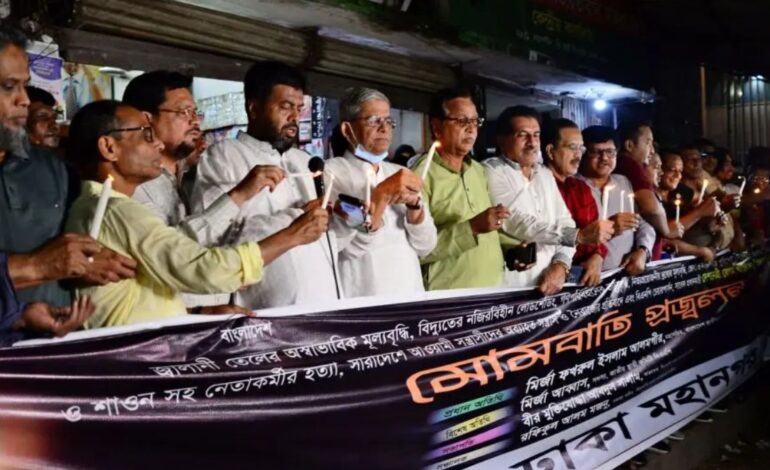

DHAKA: In a significant shift within Bangladesh’s political landscape, the once-banned Jamaat-e-Islami has signaled its readiness to join a national unity government following next month’s pivotal election. This move marks a dramatic chapter in the party’s return to mainstream politics after nearly two decades on the sidelines.
A Resurgent Force
With opinion polls projecting Jamaat to secure a strong second-place finish in the February 12 parliamentary vote—its first contested election in almost 17 years—the party is positioning itself as a key political player. Its resurgence is closely tied to the seismic political shift of August 2024, which saw the ousting of long-time Prime Minister Sheikh Hasina following a youth-led uprising.
Speaking from his Dhaka office, Jamaat chief Shafiqur Rahman outlined a vision for coalition-building. “We want to see a stable nation for at least five years. If the parties come together, we’ll run the government together,” he stated. This sentiment follows recent buzz generated by the party’s alliance with a Gen-Z political group, hinting at a strategy to bridge generational divides.
Coalition Calculus and Core Agenda
Jamaat last served in government as a junior partner to the Bangladesh Nationalist Party (BNP) between 2001 and 2006, and Rahman expressed openness to renewing that partnership. However, he emphasized that any unity government must share a common fight against corruption.
On the critical question of leadership, Rahman noted that the prime minister would rightly come from the party securing the most seats. Should Jamaat achieve an unexpected victory, he said the party would then decide on his own candidacy for the role.
Navigating Diplomatic Strains
The interview also touched on sensitive foreign policy matters. Rahman expressed concern over former Prime Minister Hasina’s continued stay in India, noting that bilateral ties have deteriorated to a decades-low since her departure. When questioned about Jamaat’s historical links to Pakistan, he offered a diplomatic response: “We maintain relations in a balanced way with all.”
Internal Tensions Linger
Domestically, challenges loom for any coalition involving Jamaat. Rahman indicated that a government including his party would “not feel comfortable” with President Mohammed Shahabuddin, who was elected unopposed with the backing of Hasina’s Awami League in 2023. This points to potential institutional friction ahead.
A Crossroads Moment
As Bangladesh approaches a landmark election, Jamaat-e-Islami’s re-emergence and its push for a unity government introduce new variables into an already complex political equation. The party’s performance, its ability to forge stable alliances, and its stance on governance will be closely watched by citizens and observers alike. The coming weeks will reveal whether this religio-political group can translate its resurgence into a defining role in shaping the nation’s future.
Also Read:
Severe Winter Weather Alert: Snow and Strong Winds to Hit Great Lakes and Northeast
Legal Setback for White House as US Judge Blocks Plan to End South Sudan Migrant Protections