





When Ramadan Meets Lunar New Year: A Rare Celebration for Chinese Muslims
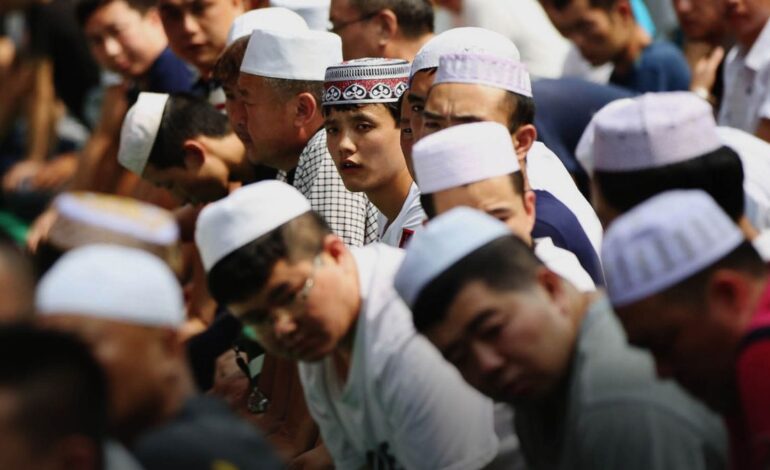

For most of the world, Lunar New Year and Ramadan arrive in separate seasons, their celebrations distinct and distant. But this year, in a rare alignment not seen since 1995, the two occasions have converged—creating a unique moment for Chinese Muslim communities to honor both their ethnic heritage and their faith.
In Indonesia, where an estimated 3 percent of the population claims Chinese descent, families like Febriani’s are celebrating both within the same week. Thursday marked the beginning of Ramadan, while Lunar New Year celebrations, which started Feb. 17, continue for another two weeks.
“I’m very happy and grateful that Lunar New Year and Ramadan are celebrated so closely,” Febriani told Arab News. “I observe both every year, so it’s truly special.”
Two Traditions, Shared Values
For Febriani, 25, the convergence highlights the common threads running through both observances. “The two celebrations teach us to strengthen bonds, to share with one another, and to become closer to family,” she said. “They are both important to me because they happen only once every year and they’re always an occasion to gather with the extended family. It is also a chance to self-reflect and strengthen relationships with your loved ones.”
The Lunar New Year, believed to date back to China’s Shang Dynasty in the 14th century B.C., traditionally marks the harvest season. Celebrations typically involve elaborate feasts, giving children money in red envelopes, and watching dragon dance parades. Ramadan, the Muslim holy month, brings daily fasting from dawn to sunset, increased prayer, and evening gatherings to break the fast.
Fusion on the Table
In Central Java’s Cepu district, Naga Kunadi’s family spent the week preparing a New Year’s feast that reflected their blended identity. The menu featured claypot tofu, meatball soup, and shumai—steamed dumplings—all prepared with halal ingredients.
“To celebrate Chinese New Year, we prepared halal Chinese food at home,” Kunadi said. “It’s also a way to introduce to my children the traditions from our Chinese side, but there’s a bit of a fusion because my wife is Javanese.”
Kunadi, an Islamic teacher at the Lautze Mosque in Jakarta, sees both celebrations as opportunities to teach his two children important life values. Upholding Chinese New Year traditions preserves ethnic heritage. “We want to preserve cultural values as long as it does not clash with our religion,” he explained. “If we leave our culture behind, we might lose our identity, so this is something I want to teach my children.”
Ramadan’s Lessons
The approaching holy month brings its own focus. For Kunadi, Ramadan is a time to teach and practice honesty—a value tested daily when fasting.
“I want to focus on the religious and moral aspects during the holy month of Ramadan, when we practice honesty on a personal level,” he said. “There’s always an opportunity to eat or snack in secret without anybody knowing, but we train ourselves not to do that. For me, Ramadan is a time for everyone to put honesty into practice, including myself and my children.”
A Rare Alignment
The convergence of Lunar New Year and Ramadan occurs only when the lunar calendars that govern both observances align in specific ways. The last such meeting was in 1995. The next may be decades away.
For Chinese Muslim families, the rare overlap creates a season of doubled meaning—a time to honor ancestors and faith, to gather with family and community, to reflect on identity and values. The red envelopes of Lunar New Year and the fasting of Ramadan belong to different traditions, but in homes like Febriani’s and Kunadi’s, they coexist naturally, each enriching the other.
“It’s truly special,” Febriani said. And for those observing both, it is.
Also Read:
France and Algeria Agree to Resume Security Cooperation, Says Minister