



Political Reactions After Peter Mandelson Arrest in Jeffrey Epstein Inquiry
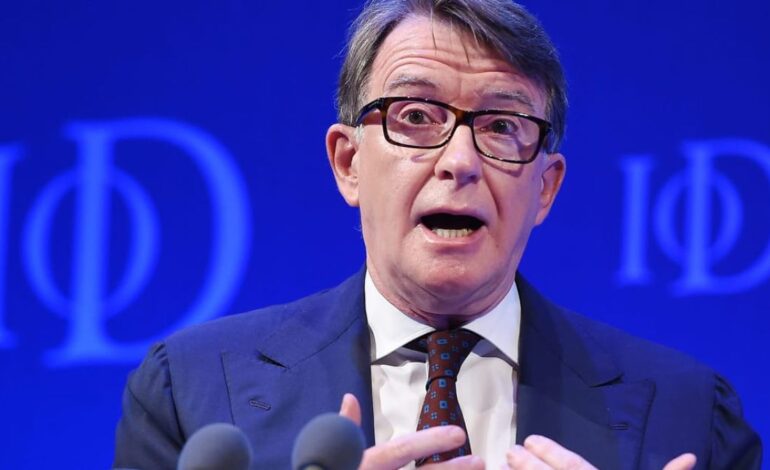

When the “Prince of Darkness” Faces the Law
The arrest of Peter Mandelson on Monday sent shockwaves through Westminster and beyond, marking one of the most dramatic political upheavals in recent British history. The former UK ambassador to the United States, once the architect of New Labour’s dominance, was detained on suspicion of misconduct in public office—a charge that strikes at the very heart of how Britain’s political establishment operates.
The timing could hardly be worse for Prime Minister Keir Starmer, whose decision to appoint Mandelson in 2024 has become a defining liability for his fledgling administration.
From Teflon to Testimony
For nearly four decades, Mandelson seemed untouchable. The grandson of a Labour Cabinet minister, he reinvented the party in the 1980s and 1990s, transforming it from the ideological wilderness into a machine capable of winning elections. His skill at political manipulation—the talent that earned him the sobriquet “Prince of Darkness”—appeared to inoculate him against the scandals that might topple lesser figures.
But the Epstein files changed everything.
When the U.S. Justice Department released millions of pages of documents late January, the scope and intimacy of Mandelson’s relationship with the disgraced financier became impossible to dismiss. Emails from 2008 and beyond revealed a friendship far deeper than previously acknowledged. More damaging still were suggestions that Mandelson had shared sensitive government information with Epstein during the 2008 financial crisis—information about banking policy, tax measures, and economic bailouts.
The revelations transformed Mandelson from elder statesman to liability overnight.
A Prime Minister Under Pressure
Starmer’s position has grown increasingly precarious. His initial confidence in Mandelson—the decision to bring him back from the political shadows as ambassador—now appears catastrophically misjudged. Labour MPs have grown openly critical, with some suggesting that underperformance in the May local elections could trigger a leadership challenge.
The government’s line that Mandelson was more “economical with the truth” during the vetting process than deliberately dishonest has worn thin with each new revelation. When Starmer fired Mandelson in September 2025, he called the emails “reprehensible.” By February 2026, as police collected search warrants and announced formal investigations, even that language seemed inadequate.
What began as a poor judgment call has metastasized into a full-blown crisis of political judgment at the top of government.
The Royal Precedent
Mandelson’s arrest came just four days after Andrew Mountbatten-Windsor, the former Prince Andrew, was arrested on the same charge. The synchronicity is notable—both men find themselves under investigation for allegedly passing confidential government information to Epstein while serving as senior public officials.
Andrew was released after 11 hours in custody, though the investigation continues. His arrest marked a remarkable moment in British constitutional life: a senior royal detained by police for questioning. Yet it paled beside the political earthquake that followed Mandelson’s detention.
Where Andrew’s arrest highlighted the scope of Epstein’s infiltration into British power structures, Mandelson’s arrest speaks to questions of political judgment, institutional vetting, and the selective memory of the country’s elite.
What the Charges Mean
The offense of “misconduct in public office” is notoriously difficult to prosecute successfully. Under English law, it requires prosecutors to demonstrate serious and willful abuse or neglect of power—and to prove the accused acted without reasonable justification. The bar is high, which is precisely why the Crown Prosecution Service has been cautious in bringing such cases.
The fact that police moved to arrest Mandelson suggests they believe the evidence of information sharing is substantial. The documents themselves—emails, memos, and correspondence—provide a paper trail that previous eras of political scandal might have been able to obscure or deny.
But the legal path ahead is unclear. Mandelson maintains that he was truthful throughout the vetting process. His team points to his resignation from the House of Lords and from the Labour Party as evidence of remorse. Yet the investigation appears to hinge on specific acts of information sharing, not moral character or contrition.
The Larger Reckoning
Mandelson’s arrest must be understood within a broader context. The Epstein files have exposed the compromised judgment of dozens of prominent figures across business, politics, and philanthropy. The damage to institutions—the Foreign Office, the Palace, the Labour Party—has been substantial and ongoing.
For Labour in particular, the fallout carries special sting. Here was a man who had helped define the party’s modern identity, who represented its transformation from a working-class institution to a globalist, centrist party comfortable with the wealthy and powerful. His association with Epstein, and the questions now swirling around whether he leveraged his government position for personal or financial benefit, raises uncomfortable questions about the party’s values and standards.
What Comes Next
The investigation will take weeks or months to resolve. Mandelson could ultimately be charged, released under investigation, or cleared entirely. The 72-year-old Labour grandee has already been stripped of honors and titles. His House of Lords seat is gone. His reputation is in tatters.
What remains to be seen is whether the legal system will find that he crossed the line from poor judgment into criminal conduct—and whether his arrest will finally grant some measure of accountability to the many victims of Epstein whose suffering has been overshadowed by the political machinations of the powerful.
For now, Westminster watches and waits. The Prince of Darkness has fallen from power before and recovered. This time, the law may have other ideas.
Also Read:
How the US-Mexico Partnership Is Intensifying the Hunt for El Mencho
Kim Jong Un Wins Another Term as Party Chief, Nuclear Program in Spotlight