



North Korea Flexes Military Muscle with Hypersonic Missile Tests
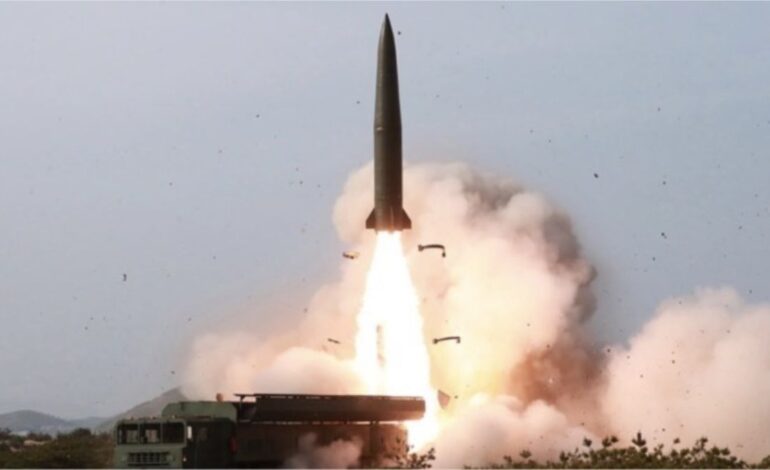

North Korea has once again commanded international attention with its latest display of military capability. Leader Kim Jong Un personally oversaw test-flights of hypersonic missiles on Sunday, emphasizing the country’s determination to strengthen what it calls its nuclear war deterrent. The timing of these tests—just hours before South Korean President Lee Jae Myung’s departure for Beijing—appears deliberate and laden with political significance.
A Show of Force at a Critical Moment
The Korean Central News Agency reported that Sunday’s drill focused on testing a hypersonic weapon system’s readiness while sharpening the operational skills of missile troops. For those unfamiliar with the terminology, hypersonic weapons travel at speeds exceeding five times the speed of sound and can maneuver unpredictably during flight, making them exceptionally difficult to intercept.
Kim’s comments following the tests were unambiguous: “We must continuously upgrade the military means, especially offensive weapon systems.” He framed the test as confirmation that “a very important technology task for national defense has been carried out.”
If North Korea has genuinely developed a functioning hypersonic weapon—and that remains a significant question mark among international observers—it would represent a serious challenge to the missile defense systems employed by the United States and South Korea. However, many foreign experts remain skeptical about whether Pyongyang’s tested missiles have actually achieved the speed and maneuverability that define true hypersonic capabilities.
Building Momentum Toward a Political Milestone
These latest tests fit into a broader pattern of heightened military activity from North Korea in recent weeks. The country has launched what it describes as long-range strategic cruise missiles and new anti-air missiles. Perhaps most notably, it has released photographs suggesting substantial progress in constructing its first nuclear-powered submarine—a development that would significantly extend its naval strike capabilities.
The underlying motivation appears clear: North Korea is building a portfolio of military accomplishments ahead of the ruling Workers’ Party congress, scheduled to convene soon. This will be the party’s first congress in five years, making it a politically significant event where Kim may unveil new policy directions, particularly regarding relations with the United States and the possibility of resuming dormant diplomatic talks.
The Shadow of Recent Events
Kim’s justification for accelerating weapons development referenced “the recent geopolitical crisis and complicated international events.” While he didn’t specify which events, the timing is suggestive. The missile tests occurred just days after a dramatic US military operation that removed Venezuelan leader Nicolás Maduro from power and brought him to face narco-terrorism charges in the United States.
North Korea’s state media condemned that operation as proof of “the rogue and brutal nature of the US.” Many experts believe this incident has reinforced Kim’s conviction that only a robust nuclear arsenal can guarantee his regime’s survival and protect state sovereignty against what Pyongyang perceives as American hostility.
This worldview—where military strength serves as the ultimate insurance policy—has consistently driven North Korea’s weapons programs, regardless of international sanctions or diplomatic pressure.
Diplomatic Implications
The missile tests have immediate diplomatic ramifications. South Korea and its neighbors detected the multiple ballistic missile launches and swiftly condemned them as provocations. The timing, coinciding with President Lee’s departure for China, sent an unmistakable message to both Seoul and Beijing.
North Korea’s nuclear program is expected to feature prominently in discussions when Lee meets with Chinese President Xi Jinping. Lee’s office has indicated he will urge China—North Korea’s primary ally and economic lifeline—to “take a constructive role” in promoting peace on the Korean Peninsula.
However, getting China to apply meaningful pressure on Pyongyang has historically proven challenging. Beijing values North Korea as a strategic buffer and worries that aggressive pressure could destabilize the regime, potentially leading to outcomes China finds even less palatable, such as regime collapse or Korean reunification under Seoul’s leadership.
The Ongoing Dilemma
North Korea’s continued weapons development presents the international community with a persistent dilemma. Sanctions have failed to halt the programs. Diplomatic engagement has repeatedly stalled. Military options carry catastrophic risks given North Korea’s conventional forces and proximity to Seoul, not to mention its growing nuclear capabilities.
Meanwhile, Pyongyang shows no signs of slowing its military modernization. Each test brings technical lessons, even if individual launches don’t fully succeed. The cumulative effect gradually advances North Korea’s capabilities, making its threats more credible over time.
As the Workers’ Party congress approaches, the world will be watching closely for signals about Kim’s intentions. Will he pivot toward renewed diplomacy, or double down on military development? Sunday’s hypersonic missile tests, conducted under his personal observation, suggest the latter remains his priority.
For South Korea, Japan, and the United States, this means continued vigilance and the uncomfortable reality that deterring North Korea grows more complex with each passing year. The question isn’t whether North Korea will continue developing these weapons—it clearly will—but rather how the international community can manage the risks while leaving space for eventual diplomatic resolution.
The path forward remains unclear, but one thing is certain: North Korea intends to keep the world’s attention firmly fixed on its military capabilities.
Also Read:
Trump Signals Military Response After Venezuela Raid Involving Colombia
Bangladesh Sends 750,000 Workers to Saudi Arabia, Sets New Record