




New York Nurses’ Strike Raises Concerns for Young Cancer Patient’s Care
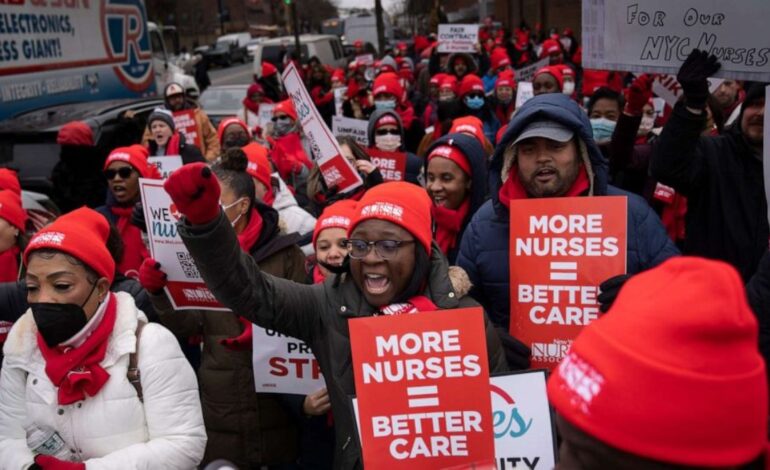

On a tense morning last month, as thousands of New York City nurses walked the picket line in the largest nurses’ strike the city has seen in decades, a small act of courage shone from a hospital window high above. Logan Coyle, a nine-year-old patient in the cancer unit at NewYork-Presbyterian’s children’s hospital, held up a handmade sign for his care team below. It read: “Proud of My Primaries.”
That moment, captured in the midst of a bitter labor dispute, has come to symbolize the human heart caught in the machinery of a stalled negotiation. For Logan, who is in a grueling two-year battle with advanced liver cancer that has included chemotherapy and a triple transplant, the nurses are more than staff—they are lifelines, companions, and familiar faces in an unfamiliar fight.
“We are the collateral damage”
Now, nearly a month into the strike, more than 4,000 nurses at NewYork-Presbyterian remain off the job, even as tentative agreements were reached this week with other major hospital systems like Mount Sinai and Montefiore. For families like the Coyles, the prolonged walkout has moved from an inconvenience to a crisis.
“Every single day that this drags on is a severe impact to us,” says Jeff Coyle, Logan’s father. “We are the collateral damage of this strike.”
Logan recently returned home to Port Washington after surgery to remove a tumor near his spine. He noticed the difference in care immediately. Routine procedures took longer. The comforting, familiar presence of his primary nurses was replaced by temporary staff cycling in and out. “I wouldn’t want to be back there for another month without them,” Logan shared from his home. “I would feel more safer if they were all back.”
His mother, Rebecca, describes sleepless nights at his bedside, vigilant over every medication and procedure. “I felt like I had to be so vigilant,” she says, a sentiment echoing across families who rely on the deep, trusting relationships built with long-term care teams.
A Union Vote, A Hospital’s Stance
Late Tuesday, the nurses’ union called on its NewYork-Presbyterian members to vote on a proposal—already accepted by hospital administrators but rejected by the union’s bargaining committee—that includes a 12% pay raise over three years. Union leaders say the offer mirrors deals reached elsewhere, but tensions remain high.
“You deserve to vote on it,” union president Nancy Hagans said in a message to nurses. “You have fought so hard to get to this point.”
Meanwhile, Morgan Bieler, one of Logan’s primary nurses, worries daily about her patients. She says some bone marrow transplants and chemotherapy treatments have been delayed or canceled due to staffing challenges. “They’re playing with children’s lives,” Bieler says, “and I can’t imagine how frustrating that is for our community.”
Hospital spokespersons have previously stated that operations are running smoothly, with complex procedures like organ transplants continuing largely uninterrupted. Yet for those in the cancer ward, “smooth” isn’t measured in procedures alone, but in consistency, trust, and the nuanced understanding of a child’s particular struggle.
More Than a Job: A Relationship Built on Trust
For nurses like Bieler, this strike is about more than salaries, staffing levels, or workplace safety—it’s about preserving the quality of care that allows them to make a profound difference. Reflecting on Logan, she says, “He’s always the best version of himself, and he faces everything with a smile. I don’t think I would be the nurse, let alone the person I am today, without him and his family.”
As the vote approaches and picket lines hold, Logan’s handwritten sign serves as a poignant reminder. Behind the headlines about contracts and negotiations are vulnerable patients and the dedicated professionals who fight for them—both inside the hospital and out on the street. Their shared hope is for a resolution that heals not just the rift at the bargaining table, but the disruption in care that leaves a brave little boy, and so many others, waiting for the return of the faces they know and trust.
Also Read:
Thousands Protest in Australia During President Herzog’s Visit
Italian Man at Center of Bosnia’s Weekend Sniper Killings Probe