


Kazakhstan President Set to Become Member of Donald Trump’s ‘Board of Peace’
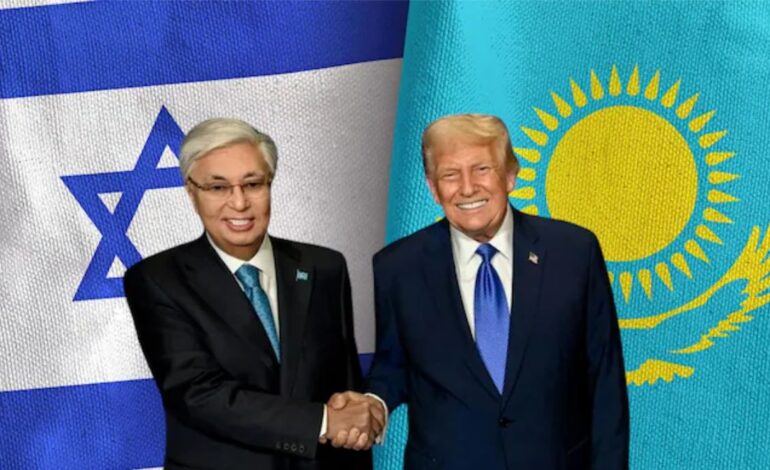

In a move set to redefine geopolitical alliances and peace-making, Kazakhstan’s President Kassym-Jomart Tokayev has accepted an invitation to join a proposed “Board of Peace,” a new international body spearheaded by US President Donald Trump. According to a statement from Tokayev’s spokesperson, the Kazakh leader is among the first to agree to participate, signaling a desire to contribute to “lasting peace in the Middle East” and global stability.
The initiative, as detailed in documents seen by international media, envisions a powerful, centralized council. President Trump would serve as its chairman for life, with the board’s initial focus set on the Gaza conflict before expanding to address other global disputes.
A Premium Price for a Permanent Seat
The structure of the board introduces a striking and unconventional financial dimension. While 60 countries are reported to have received invitations, permanent membership will reportedly cost $1 billion. This creates a tiered system where financial contribution directly correlates with long-term influence within the body, blending statecraft with high-stakes patronage.
Kazakhstan’s Strategic Calculus
For Kazakhstan, a large, resource-rich Central Asian nation that maintains a delicate balance between Russia, China, and the West, the decision to join is strategically significant. It represents a bold step toward a more visible, independent role in global diplomacy, particularly in a region far from its immediate neighborhood. Accepting the invitation aligns with its multi-vector foreign policy, seeking to strengthen ties with the United States while offering a platform to enhance its international standing.
Questions and Implications
The “Board of Peace” concept raises immediate questions about its nature and efficacy. Will it function as a traditional diplomatic forum, or as a private, Trump-led coalition operating outside established international institutions like the United Nations? The $1 billion price tag for permanence introduces a commercial element to conflict resolution that critics may argue could prioritize wealth over genuine peacemaking merit or regional representation.
President Tokayev’s agreement to join provides the nascent board with crucial early momentum from a respected regional leader. However, the ultimate impact of this initiative will depend on which other nations accept the terms, how the substantial funds are utilized, and whether the board can achieve tangible diplomatic breakthroughs where others have struggled.
As the first confirmed member, Kazakhstan is now at the forefront of what could become a revolutionary—or highly controversial—new experiment in global peacemaking. The world will be watching to see if this “Board of Peace” can translate its ambitious charter and financial requirements into genuine stability, or if it remains a novel but ineffective diplomatic proposition.
Also Read:
Search Continues in Indonesia as Plane Carrying 11 People Disappears
Rising Attacks Push Bangladesh Journalists to Demand Safety Measures