

Why Israel’s Interest in Somaliland Is Raising Regional Concerns

On December 26th, a historic signature was exchanged. Israel became the first and only United Nations member state to formally recognize the Republic of Somaliland as an independent nation. For the breakaway region, which declared independence from Somalia in 1991, it was a triumphant moment, a door to the world finally creaking open. But across the Horn of Africa and the wider Arab world, that signature was heard not as a knock of opportunity, but as the unsettling click of a geopolitical trigger being pulled.
This move is far more than a bilateral handshake. It is a deliberate, high-stakes rupture of a decades-old international consensus that has prioritized the fragile territorial integrity of Somalia. The reaction has been one of unified alarm, from Mogadishu to Riyadh, and the reasons reveal why this decision is seen as one of the most dangerous regional plays in recent years.
Shattering a Foundation: The Sovereignty Principle
For over thirty years, Somaliland has existed in a state of de facto independence, complete with its own government, currency, and democratic elections. Yet, no nation had granted it formal recognition. This restraint was rooted in a foundational principle of the African Union and the UN Charter: the inviolability of colonial-era borders. To redraw the map is to invite chaos.
As Ambassador Dya-Eddine Said Bamakhrama of Djibouti warns, unilateral separation “carries profound structural consequences… the deepening of internal divisions… the erosion of the social and political fabric… and the opening of the door to protracted conflicts.” By shattering this precedent, Israel is accused of prioritizing its own strategic calculus over regional stability, potentially lighting a fuse under separatist movements across the continent.
The “Periphery Doctrine” Unveiled
Historically, Israel has at times framed support for non-state groups under the banner of protecting vulnerable minorities. In Somaliland, that veil has dropped. The region is staunchly Muslim, not a religious minority. The rationale is nakedly strategic.
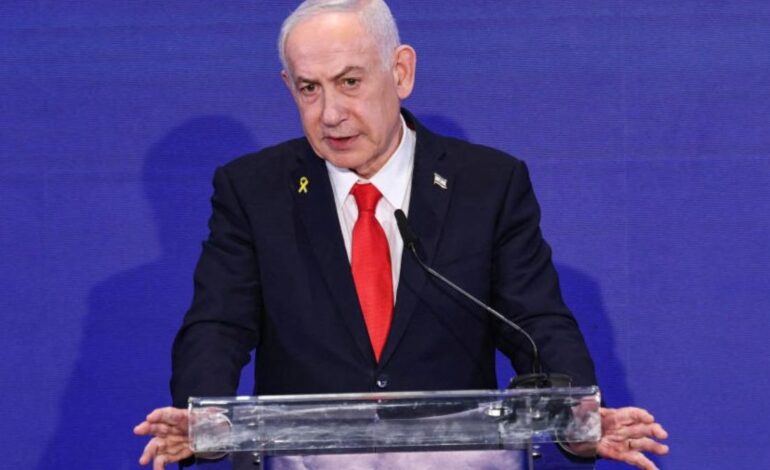
Prime Minister Benjamin Netanyahu explicitly linked the recognition to “the spirit of the Abraham Accords.” The goal is clear: to secure a strategic foothold in the Horn of Africa. Somaliland’s coastline along the Gulf of Aden offers a prime position overlooking the Bab al-Mandab Strait, one of the world’s most critical maritime chokepoints. The prospect of an Israeli military or intelligence presence there, ostensibly to monitor threats from Yemen’s Houthi rebels, is viewed by neighboring states not as a security guarantee, but as a profound provocation.
Ambassador Bamakhrama articulates the fear bluntly: such a presence would “effectively turn the region into a powder keg,” perceived as a strategic gain directed against the Arab and African nations bordering the Red Sea.
A Challenge to Unified Arab Diplomacy
Israel’s move also strikes at the heart of Arab and Islamic diplomatic unity. By offering normalization to Somaliland in exchange for recognition, Israel advances a “Somaliland model” that directly challenges the long-held position of the Arab League and the Organization of Islamic Cooperation (OIC): that normalization with Israel must be tied to a just resolution of the Palestinian conflict.
The backlash has been swift and sweeping. The Arab League, the Gulf Cooperation Council, and the OIC have all condemned the recognition. Notably, even former U.S. President Donald Trump, the architect of the original Abraham Accords, declined to endorse it, highlighting Israel’s diplomatic isolation on this front.
The Powder Keg Effect
Beyond the diplomacy, the immediate danger is one of escalation. Somalia has vowed to defend its sovereignty. The move inflames historical tensions in an already volatile region, where clan politics, militant groups like Al-Shabaab, and competition between major powers already simmer. Injecting the potent element of the Arab-Israeli conflict into this mix is seen as reckless. As regional bodies have warned, it risks “serious repercussions” and has already been forcefully rejected in connection to fears about plans to displace Palestinians.
In essence, Israel’s recognition of Somaliland is a gamble that trades diplomatic norms for a square on the strategic board. While Hargeisa celebrates, seasoned observers see a dangerous precedent that threatens to destabilize a critical corridor of the world, proving that in geopolitics, a door opened for one can be a breach through which chaos enters for all.
Also Read:
How Science Is Changing Early Years Education
Tourist Boat Accident in Indonesia Leaves Spanish Family Missing