



How the ICE Killing in Minneapolis Is Fueling Protests Across the U.S.
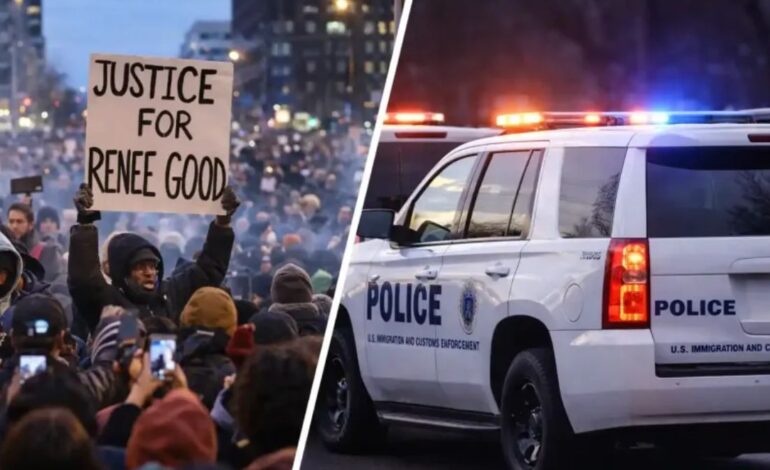

The streets of Minneapolis echoed with a familiar sound this week: the clamor of protest, the cries for justice, and the painful memory of a life lost during an encounter with law enforcement. This time, the agent was federal, and the incident has become a flashpoint in a deeply divided nation, fueling planned demonstrations from coast to coast.
The shooting occurred on Wednesday when Renee Good, a 37-year-old mother of three, was fatally shot by a U.S. Immigration and Customs Enforcement (ICE) officer while behind the wheel of her car. According to family and local activists, Good was participating in a community “neighborhood patrol,” a volunteer effort to monitor and document the activities of federal agents.
Her death came amid the “largest DHS operation ever,” a deployment of roughly 2,000 federal officers to Minneapolis ordered by President Donald Trump. Minnesota Governor Tim Walz, a Democrat, condemned the move as “reckless,” framing it as “governance by reality TV.”
Conflicting Stories, A Nation’s Divide
In the immediate aftermath, two starkly different narratives emerged, reflecting the country’s fractured political landscape.
Federal officials, including Homeland Security Secretary Kristi Noem, labeled Good’s actions as “stalking” and described the shooting as an act of self-defense, claiming she attempted to ram an officer in an “act of domestic terrorism.”
Local leaders and civil liberties advocates pointed to bystander video they say tells a different story. Minneapolis Mayor Jacob Frey dismissed the federal account as a “garbage narrative.” The footage shows masked officers approaching Good’s stopped SUV. As an agent grabs her door handle, the vehicle pulls slowly forward, steering away from the officers. One agent, identified as Jonathan Ross, jumps back and fires three shots into the front of the car as it rolls past.
Crucially, video from the officer’s own body camera captures Good telling him, “That’s fine, dude, I’m not mad at you,” moments before the shots are fired. The car’s bumper appears to pass the agent before he shoots, and he is seen walking afterward, contradicting claims that he was run over.
Protests Mount and Investigations Launch
The conflicting accounts have sparked outrage and action. On Friday night, protesters staged a loud “noise demonstration” outside a hotel housing ICE agents. By Saturday, a coalition of groups including the ACLU, MoveOn, and Voto Latino had organized over 1,000 events nationwide under the banner “ICE Out For Good,” demanding an end to the large-scale federal deployments.
Amid the crisis, Minnesota authorities announced their own criminal investigation into the shooting, separate from the federal FBI probe—a move that prompted immediate pushback from some Trump administration officials who questioned state jurisdiction over federal officers.
The tension is not confined to Minneapolis. A separate shooting by a Border Patrol agent in Portland, Oregon, which left two people wounded, has further inflamed sentiments, with local leaders similarly demanding independent investigations into the government’s version of events.
A City’s Painful History
The location of Good’s killing adds a layer of profound resonance. It occurred just blocks from where George Floyd was murdered by a police officer in 2020, an event that ignited a global movement. For many, this new incident feels like a reopening of a wound and a stark reminder that the struggles over policing, accountability, and state power are far from over.
As thousands prepare to march, the core questions remain unanswered and hotly contested: Was this a justified use of force by an agent under threat, or the unjustified killing of a civilian exercising her right to monitor government activity? The answer depends on who you ask, but the result is unequivocal: a nation once again grappling with violence, authority, and the meaning of justice on its own streets. The protests this weekend are a direct response, a collective demand for transparency, accountability, and a re-examination of the very role of federal immigration enforcement in American communities.
Also Read:
Russian Mass Strike on Ukraine Seen as a Test for Kyiv’s Allies
Opposition Leader Says Greenland Must Speak With the US Independently