



How Trump’s Remarks on Non-White Immigrants Are Shaping Public Debate

- PublishedDecember 11, 2025
Remember 2018? When a reported vulgarity used to describe certain nations sparked a firestorm of denial and debate? That chapter feels almost quaint today. The language once disputed is now proclaimed from the podium, embraced as a badge of bluntness. This shift isn’t just about coarsening discourse; it’s actively reshaping the entire public debate on immigration, identity, and what it means to be American.
From Denial to Declaration: The Rhetorical Escalation
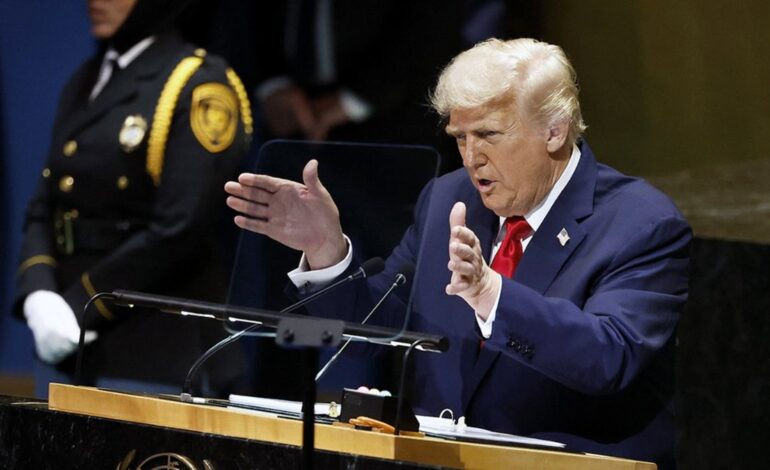
At a recent rally in Pennsylvania, the former and potentially future president didn’t just hint at old controversies—he resurrected and amplified them. Reusing the explicit phrase about “shithole countries,” he contrasted nations like Somalia with preferred origins like Norway or Sweden, layering on descriptors like “filthy, dirty, disgusting, ridden with crime.” This follows previous remarks labeling immigrants as “poisoning the blood” of the country, a statement that drew historical parallels too stark to ignore.
The defense from allies is consistent: he speaks a language “Americans understand.” He is “blunt.” This framing strategically moves the debate away from the content of the words and toward a perceived virtue of plainspokenness. As Professor Carl Bon Tempo notes, while such anti-immigrant sentiment has long thrived in certain circles, “the difference is now it’s coming directly out of the White House.” There is no bigger megaphone in American politics. When that megaphone broadcasts terms like “trash” to describe entire nationalities, it doesn’t just comment on policy—it legitimizes a vocabulary of dehumanization for a broad section of the public.
The “Invented Evil Enemy” and the Search for a Target
Experts point to a calculated purpose behind this rhetoric. Professor Mark Brockway observes that for the speaker, it doesn’t matter if an immigrant is lawful, a business owner, or a long-term resident. “They are caught in the middle of Trump’s fight against an invented evil enemy.” In a time of economic anxiety, with concerns over cost of living and job security, designating a clear “other” as the source of trouble is a powerful political tool.
This is evident in the administration’s actions: a sweeping deportation campaign, the suspension of immigration applications from dozens of the world’s poorest nations, paired curiously with orders to admit white South African farmers based on claims of persecution. The rhetoric provides the justifying narrative for these policies, framing certain groups as inherent threats or burdens.
Echoes of Nativism and “Reverse Migration”
The ideas underpinning this language are not new. Historians hear distinct echoes of the 1920s “nativist” movement, which enshrined a white, Anglo-Saxon, Protestant ideal as the true American identity and crafted immigration policies to match. The core belief is that culture is tied inextricably to origin, and that some cultures are incompatible with—and dangerous to—the national fabric.
This thinking crystallizes in concepts like “Reverse Migration,” a term invoked after a recent violent incident in Washington. Borrowed from European far-right theorists, it advocates for the mass expulsion of those deemed unassimilable. It finds a more polished expression in the writings of advisers like Stephen Miller, who argues that mass migration means “importing societies” and “recreating the conditions, and terrors, of their broken homelands.”
This is the ultimate shift in the debate: it is no longer solely about border security or economic impact. It is now, fundamentally, about identity and civilizational compatibility. The debate is being moved from the realm of policy and into the realm of existential cultural conflict.
The Stakes of the Shift
The result is a public conversation increasingly polarized around foundational questions. Are we a nation defined by a shared set of ideals, open to those who seek them? Or are we a nation defined by a protected cultural and ethnic heritage? When the most powerful megaphone relentlessly promotes the latter view, it pushes the debate’s center of gravity.
The danger, critics argue, is that this language doesn’t just describe a policy preference; it paints a target. It frames millions of people—neighbors, coworkers, community members—as illegitimate, dirty, or poisonous by association. It suggests their presence is itself an act of violence against the nation’s body.
The public debate on immigration has always been complex and heated. But today, with filters removed and historical echoes ringing, it is being shaped by a rhetoric that is explicitly hierarchical, deeply cultural, and intentionally divisive. Where this reshaping leads will depend on whether the public conversation can grapple with the profound and unsettling questions now placed, unvarnished, at its center.
Also Read:
Guinea-Bissau’s Decision to Restrict Transitional Leaders: A Step Toward Fair Governance?
Why Bulgaria’s Court Refused to Extradite the Beirut Blast Shipowner