






How Louvre Thieves Managed a 30-Second Escape: What the Probe Uncovered
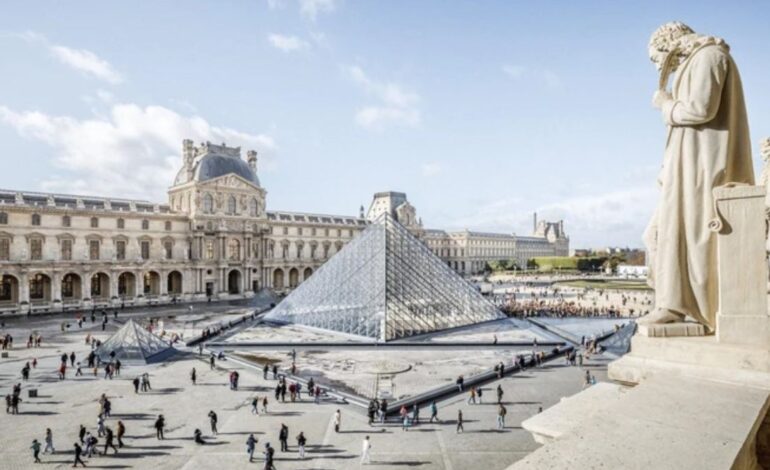

A damning investigation into the audacious October theft of crown jewels from the Louvre has revealed a cascade of security failures so severe that the thieves escaped with a mere 30-second margin. The probe, presented to the French Senate’s Culture Commission, paints a picture of a world-renowned institution plagued by neglected warnings and systemic dysfunction.
On the morning of October 19, intruders used an extendable ladder to reach a riverside balcony—a vulnerability explicitly highlighted in a 2019 security audit commissioned from experts at Van Cleef & Arpels. Once inside, they cut through a door with angle grinders. Crucially, only one of two security cameras near the break-in point was operational, and agents in the control room lacked sufficient screens to monitor feeds in real-time.
When the alarm finally sounded, a lack of coordination sent police initially to the wrong location. By the time they and private Securitas guards arrived at the Apollo Gallery, the robbers had already fled on high-powered motorbikes. “Give or take 30 seconds,” lead investigator Noel Corbin told senators, “the guards or the police… could have prevented the thieves from escaping.” The stolen jewels, valued at an estimated $102 million, remain missing.
The report underscores a profound institutional failure. The 2019 audit’s recommendations, which included reinforcing glass and modernizing surveillance, were never implemented. Corbin noted that Louvre President Laurence des Cars, appointed in 2021, was unaware of the audit, revealing a staggering lack of continuity between government-appointed administrators.
Senior police officer Guy Tubiana, a security advisor to the culture ministry, confessed he was “stunned” by the litany of failures. “I never would have thought the Louvre could have so many malfunctions,” he stated. The findings corroborate a recent state auditor’s report criticizing the museum’s “woefully inadequate pace” of security upgrades, accusing it of prioritizing “high-profile and attractive operations” over core protection.
The scandal intensifies pressure on des Cars, who, along with her predecessor Jean-Luc Martinez, is set to face questioning by senators next week. Meanwhile, Louvre staff have announced a strike for Monday, protesting chronic understaffing and overcrowding at the museum, which welcomed 8.7 million visitors last year.
This heist was not a masterstroke of criminal ingenuity but the exploitation of a museum asleep at the wheel. As the investigation makes clear, the Louvre’s greatest vulnerability was not its physical defenses, but a culture of oversight that allowed known weaknesses to fester—with priceless consequences.
Also Read:
Greek Coast Guard Searches for Missing Migrants After Boat Found Adrift
US Judge Reverses Trump-Era Restrictions on Pro-Palestinian Tufts Student