

Guinea-Bissau’s Decision to Restrict Transitional Leaders: A Step Toward Fair Governance?
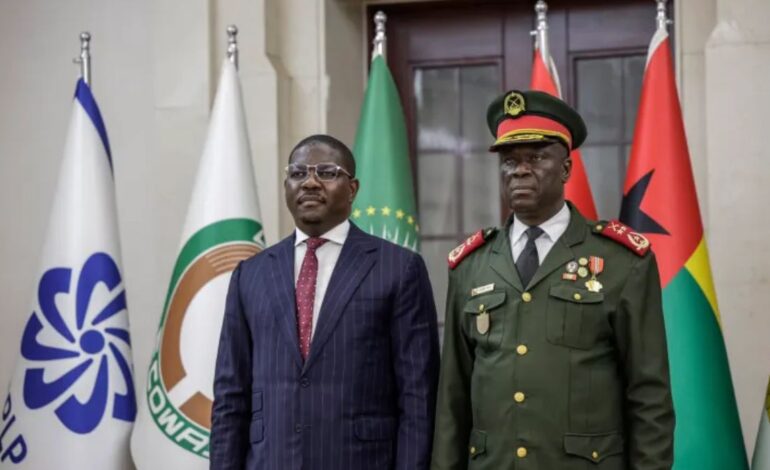

In the aftermath of its latest coup, Guinea-Bissau’s military junta has laid out a 12-month roadmap for a return to civilian rule. Central to the newly published transitional charter is a notable provision: the interim president and prime minister are barred from standing in the elections scheduled at the end of this transitional period. On its surface, this rule appears designed to prevent coup leaders from converting temporary power into permanent authority—a gesture toward fairer governance. But in a nation with a deep history of political instability, the move raises complex questions about intent and precedent.
The charter, adopted by the Military High Command that seized power on November 26, mandates presidential and legislative elections within a year. The date will be set by the interim president, Major General Horta Inta-a, who was installed by the army after ousting President Umaro Sissoco Embalo. Ilidio Vieira Te, a former finance minister, was appointed prime minister.
While banning these transitional figures from running could be seen as a self-limiting measure by the military, critics note that the junta retains significant control over the process. According to the charter, the Military High Command will oversee legal and institutional reforms, including drafting constitutional revisions, establishing a new Constitutional Court, and appointing new electoral officials. A 65-member National Transition Council, which includes 10 senior army officers, will act as the transitional legislature.
This structure places the military firmly at the center of reshaping the political landscape, even as it ostensibly steps back from the ballot box. The concern is whether a truly level playing field can be engineered by those who recently suspended the constitution.
Historical context adds to the skepticism. Guinea-Bissau has seen persistent instability since independence in 1974, with no elected president ever completing a full term. The region also offers a cautionary parallel: neighboring Guinea adopted a similar ban on its coup leader after a 2021 takeover, only to drop the provision in a new constitution earlier this year. That leader, Mamady Doumbouya, is now a candidate in the December 28 election.
Thus, Guinea-Bissau’s transitional ban exists in a fragile space between principle and practice. It can be interpreted as a constructive step toward preventing the entrenchment of military figures in politics. Yet, without genuine neutrality, independent oversight, and a commitment to inclusive dialogue, the rule may simply serve as a temporary façade, deferring rather than resolving the country’s cycle of interrupted democracy.
The true test will be whether this transition leads to credible, inclusive elections—or becomes another chapter in Guinea-Bissau’s long story of unmet democratic promises.
Also Read:
Greek Coast Guard Searches for Missing Migrants After Boat Found Adrift
US Judge Reverses Trump-Era Restrictions on Pro-Palestinian Tufts Student