


Gambia Tells ICJ That Myanmar Targeted Rohingya for Destruction
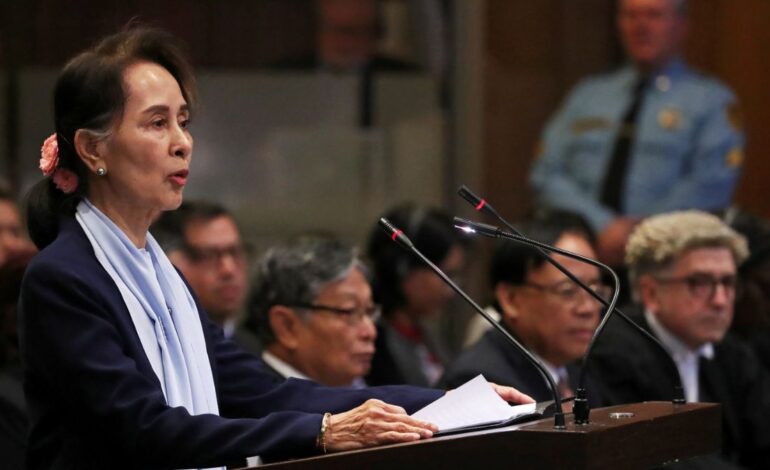

In a powerful and sobering address before the International Court of Justice (ICJ), Gambia’s Justice Minister, Dawda Jallow, delivered a stark accusation against Myanmar on Monday. He asserted that the country’s military deliberately targeted the Rohingya minority with the intent to destroy the community, marking a critical moment in a landmark international legal case.
“It is not about esoteric issues of international law. It is about real people, real stories and a real group of human beings. The Rohingya of Myanmar. They have been targeted for destruction,” Jallow told the panel of judges in The Hague.
The case, brought forward by Gambia in 2019, alleges that Myanmar’s brutal 2017 military crackdown against the Rohingya population violated the 1948 United Nations Genocide Convention. That offensive forced over 700,000 Rohingya Muslims to flee across the border into Bangladesh, with widespread reports of mass killings, rape, and the burning of villages.
Gambia’s legal action represents a rare use of international law, where one nation brings another before the World Court on behalf of the global community to uphold the Genocide Convention. The proceedings are seen as a vital test of international justice and accountability.
In his statement, Justice Minister Jallow framed the case as a fundamental defense of human dignity and a direct challenge to impunity. His words underscored the gravity of the charges: not merely of persecution or severe human rights abuses, but of the specific crime of genocide—the intent to destroy, in whole or in part, a national, ethnic, racial, or religious group.
Myanmar’s government, which has consistently rejected allegations of genocide and defended its 2017 operations as a legitimate response to attacks by Rohingya militants, is expected to present its defense in the coming days.
The world now watches as the ICJ hears arguments that go to the heart of one of this century’s most severe humanitarian crises. For the Rohingya community, scattered and surviving in refugee camps and displaced settlements, the case represents a long-awaited opportunity for their suffering to be formally recognized at the highest judicial level. The outcome could set a precedent for how the international community responds to atrocities and upholds its most solemn promises to prevent genocide.
Also Read:
Iraqi Director Gains International Recognition at DGA Awards