

France Calls for Postponement of EU–Mercosur Trade Deal Signing

In a move that throws a significant wrench into years of complex negotiations, France has formally called for the European Union to postpone signing its landmark free trade agreement with the South American Mercosur bloc. With a critical vote by EU member states looming this week, Paris has declared the current terms “simply not acceptable,” placing the protection of European farmers squarely at the center of a high-stakes political standoff.
The Core of the Conflict: A Clash of Standards
At its heart, France’s objection is about fairness and fear. The proposed deal, which would create a vast common market of over 720 million people, promises mutual benefits: greater EU access for cars, machinery, and wine, and increased Mercosur imports of beef, poultry, and sugar into Europe.
However, for French farmers and politicians across the spectrum, this represents a profound threat. They argue it would flood the European market with agricultural goods produced under far less stringent environmental, sanitary, and animal welfare standards than those imposed on EU producers. The fear is one of crippling, unfair competition that could destabilize entire sectors already grappling with economic pressure.
“As it stands, the treaty is simply not acceptable,” stated French Finance Minister Roland Lescure, crystallizing the government’s position. He outlined three non-negotiable conditions for French support:
- Robust safeguard clauses to protect against sudden import surges.
- Mirror clauses requiring imports to meet EU production standards.
- Effective import controls to enforce these rules.
“Until we have obtained assurances on these three points, France will not accept the agreement,” Lescure concluded.
A Timing Crisis and a Diplomatic Snag
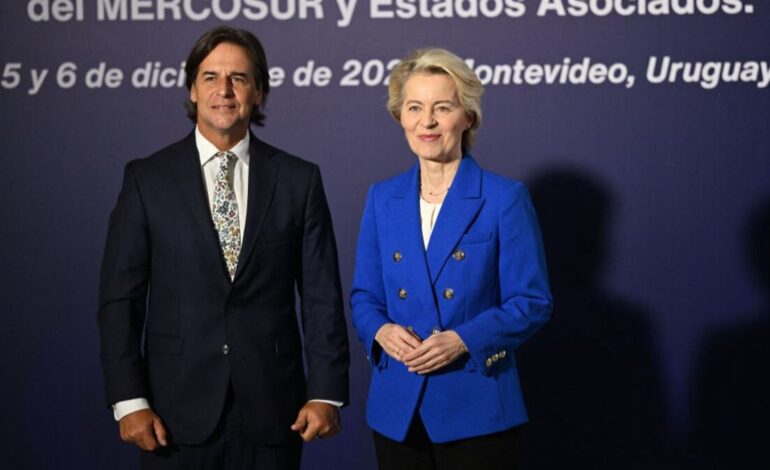
The French statement, issued from Prime Minister Sébastien Lecornu’s office, creates an immediate timing crisis. European Commission President Ursula von der Leyen is scheduled to be in Brazil on Monday to finalize the pact, aiming for a signing at a Mercosur summit on December 20th.
Yet, Paris has pointedly noted that “the conditions have not been met for any vote” by EU states this week, effectively blocking the necessary unanimous approval. This puts Brussels in a difficult position, caught between advancing a major geopolitical trade achievement and appeasing one of the EU’s most influential and agriculturally powerful members.
The Bigger Picture: More Than Just France
While France is taking the most public and firm stance, its concerns are shared by agricultural communities in Ireland, Poland, and several other member states. The European Parliament is set to vote on Tuesday on safeguard measures meant to reassure these very farmers, highlighting how politically sensitive this issue has become.
The French resistance underscores a broader, increasingly contentious debate within the EU about the nature of its trade policy. Should it prioritize open markets and geopolitical alliances, or protect its internal social, environmental, and economic standards—even if it means slower deal-making? This deal has become the flashpoint for that debate.
What Happens Next?
With France’s veto threat on the table, the path forward is murky. The EU and Mercosur negotiators now face the arduous task of revisiting complex clauses to satisfy Paris without unraveling the entire agreement. A short-term delay seems inevitable, but a longer postponement risks losing the political momentum that has brought the deal to the brink of completion after over two decades of talks.
One thing is clear: as European farmers watch closely, the EU’s ambition for a global trade win has collided head-on with domestic political reality. The coming days will reveal whether a compromise can be forged or if this historic deal will be sent back to the drawing board.
Also Read:
Historic Rains in Washington State Lead to Severe Flooding and Rescue Efforts
US Forces Raid Ship Bound for Iran Amid Rising Gulf Tensions