






FBI Reveals Arson Suspect Targeted Jewish Synagogue in Mississippi
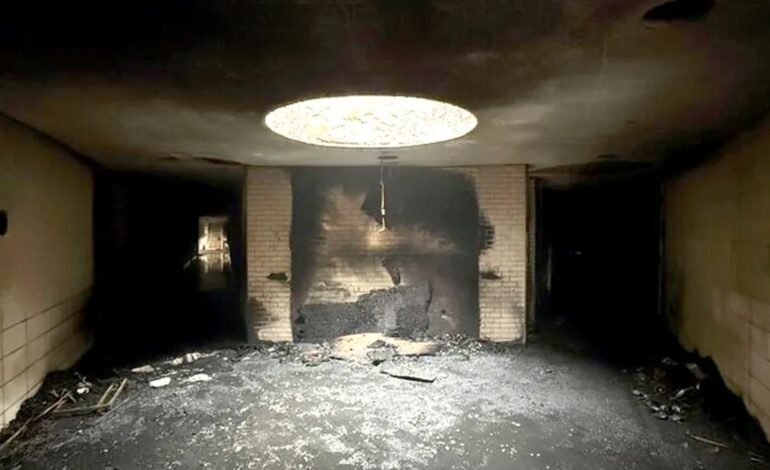

In the quiet hours before dawn this past Saturday, a masked figure moved through the halls of the Beth Israel Congregation in Jackson, Mississippi. The act was deliberate, the intent clear. By pouring gasoline and igniting a flame, a 19-year-old man sought to destroy a pillar of faith and history. He called it, according to an FBI affidavit, “the synagogue of Satan.” But the story of this building, and the community it shelters, is one of profound and unyielding light—a light that this attack, yet again, failed to extinguish.
The fire badly damaged the 165-year-old congregation’s library and offices. Two sacred Torah scrolls within were consumed. But in a poignant symbol of survival, another Torah—one that had endured the Holocaust—remained safe behind glass. The sanctuary’s scrolls, though threatened by smoke, were spared. No congregants or firefighters were hurt. The structure, scarred, stands.
A Father’s Agony and a Chilling Confession
The path to an arrest was as heartbreaking as the crime. The suspect’s own father, noticing burns on his son’s hands, face, and ankles, contacted authorities after the young man confessed. Text messages revealed a chilling premeditation: a photo of the synagogue’s rear with the note, “There’s a furnace in the back.” When pleaded with to come home, the suspect replied he was “due for a homerun” and had “done my research.”
Stephen Pittman, 19, now faces federal charges. Appearing in court from a hospital bed with bandaged hands, he heard the potential sentence of 5 to 20 years. His stated motive, as conveyed by the FBI, was singular: because it is a Jewish house of worship.
A History of Defiance
This is not the first time Beth Israel has been attacked for its faith and its conscience. The synagogue moved to its current location in 1967, a time of great tumult in the fight for civil rights. Soon after, it was bombed by the Ku Klux Klan. Months later, the home of its then-rabbi, Perry Nussbaum, was also bombed.
Rabbi Nussbaum had been a vocal opponent of segregation. While some congregants feared his stance, he held firm in his commitment to justice. “He had this strong, strong sense of justice,” recalled historian Rabbi Gary Zola. That legacy of moral courage is woven into the very bricks of Beth Israel.
The Heartbeat of Southern Jewish Life
To see Beth Israel only as a target is to miss its true essence. It is a beacon. The building houses not just a congregation, but the Jewish Federation of Jackson and the Institute of Southern Jewish Life, which serves communities across 13 states. It is, as Rabbi Zola noted, the “capital synagogue” of Mississippi—a flagship of perseverance for a community that has proudly kept its traditions alive in the Deep South for generations.
A Vow to Rebuild
Outside the soot-stained, tape-lined building this Monday, bouquets of flowers appeared. One note simply read, “I’m so very sorry.” But from the congregation’s leadership comes not a whisper of retreat, but a roar of resolve.
President Zach Shemper has already vowed to rebuild. Offers from local churches to host worship have poured in. This is a community that knows how to stand its sacred ground. They have done it before.
The story of this fire is a stark reminder that ancient hatreds still smolder. But the truer story, the more powerful one, is the response. It is a story of a father’s painful duty, a leader’s steadfast vow, and a community’s resilient spirit—a spirit that has outlasted bombs, bigotry, and now, flames. Beth Israel was founded in 1860. It has survived war, social upheaval, and violence. It will survive this, too. Not in spite of its history, but because of it.
Also Read:
Why China Urges Peace and Rejects Outside Interference in Iran
Gambia Tells ICJ That Myanmar Targeted Rohingya for Destruction