



Brazil Halts Amazon River Dredging Following Strong Indigenous Protests

In a significant response to sustained Indigenous activism, the Brazilian government announced on Friday the suspension of a major dredging project on the Tapajós River, a vital Amazon tributary. The decision marks a pivotal moment in the ongoing conflict between industrial development and the protection of ancestral lands and waterways.
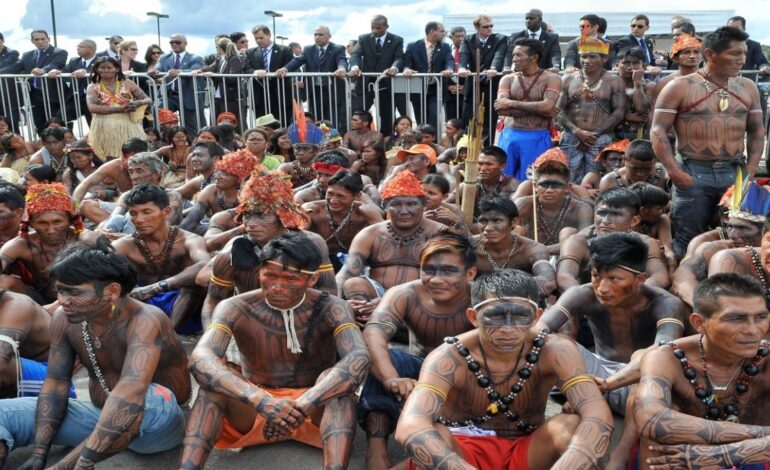
The suspension came after hundreds of Indigenous people staged a two-week protest outside a Cargill port terminal in northern Brazil. Their demonstration was a direct challenge to President Luiz Inácio Lula da Silva’s administration, targeting a core grievance: the transformation of Amazonian rivers into industrial waterways for grain exports.
The Heart of the Conflict
The protesters’ demands were clear. They called for the cancellation of an August decree signed by President Lula himself, which designated major Amazon rivers as federal priorities for cargo navigation and private port expansion. They also sought to revoke a federal tender worth 74.8 million reais ($14.2 million) issued in December for the management and dredging of the Tapajós River.
For Indigenous communities, these rivers are not transport channels but the lifeblood of their culture, food security, and spiritual identity. Dredging—deepening riverbeds for larger cargo ships—threatens to alter water dynamics, affect fish stocks, and accelerate the encroachment of industrial activity into fragile ecosystems.
A “Gesture of Negotiation”
The government’s statement framed the suspension of the contracting process as “a gesture of negotiation.” Beyond halting the immediate project, officials promised a critical concession: to consult with local communities before proceeding with any future work.
This pledge touches on a fundamental right—Free, Prior, and Informed Consent (FPIC)—enshrined in international law and the Brazilian Constitution for Indigenous peoples. Prior consultation is not a mere formality but a necessary process to ensure development does not come at the cost of cultural survival.
A Test for Lula’s Balancing Act
The move places President Lula’s complex environmental and economic agenda in the spotlight. His administration has been hailed for dramatically reducing deforestation rates, yet it also faces immense pressure to bolster Brazil’s economy and agricultural exports. The “Arc of Grain,” a network of rivers and railways for commodity transport, is central to this economic vision.
Friday’s decision demonstrates that this vision cannot advance without addressing the powerful resistance of those who depend on the Amazon’s rivers most directly. It acknowledges that true sustainability must include social and cultural dimensions, not just environmental metrics.
The suspension is a victory for Indigenous mobilization, but it is likely a pause, not an end. The coming consultations will be the real test. They will determine whether Brazil can forge a path for development that genuinely respects the guardians of the Amazon, or if the dredges will eventually return, deepening divides along with the riverbed.
Also Read:
Venezuela Moves Closer to Political Freedom with New Amnesty Bill
Russia Reports Positive Movement After Ukraine Talks in Abu Dhabi