



Bangladesh Politics Sees Major Shift as PM Contender Returns After 17 Years
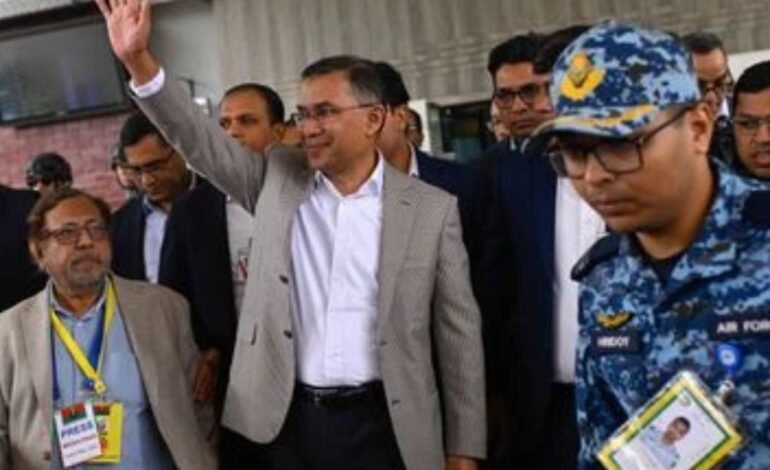

The streets of Dhaka erupted in a sea of green and red on Thursday, not for a festival, but for a man absent for seventeen years. Millions of supporters packed the capital to welcome Tarique Rahman, the acting chairman of the Bangladesh Nationalist Party (BNP), marking a seismic shift in the nation’s politics as it approaches a pivotal election.
Waving from a party bus escorted by security, Rahman acknowledged the colossal crowds that lined his route from the airport. Supporters carried banners, chanted slogans, and showered his convoy with flowers, signaling the potent return of a central political figure. His homecoming arrives at a critical juncture: following the ouster of former Prime Minister Sheikh Hasina last year and with general elections scheduled for February, Rahman is now positioned as a leading contender for the premiership.
From Exile to Acquittal
The 60-year-old Rahman fled to London in 2008, citing what he described as politically motivated persecution under Hasina’s government. During his exile, he was convicted in absentia on multiple charges, including money laundering and alleged involvement in an assassination plot against Hasina. Those legal barriers crumbled following Hasina’s removal from power, with courts acquitting him and paving the way for his return.
Addressing a roaring crowd, Rahman outlined his vision. “As a member of the BNP, I want to say in front of you that I have a plan for the people of my country,” he declared, calling for nationwide support to implement plans for development and change.
A Nation at a Crossroads
Analysts see his return as a defining moment. “People of Bangladesh are expecting that there will be free and fair elections, and whoever wins will form the government… In that sense, his return is significant,” said Professor Dilara Choudhury, highlighting the country’s ongoing political crisis.
Bangladesh, a nation of nearly 175 million, is navigating a fragile transition. Since the student-led uprising that toppled Hasina’s Awami League government in August 2024, an interim administration led by Nobel laureate economist Muhammad Yunus has governed. This caretaker government has banned the Awami League from all activities, effectively barring the former ruling party from the February 12 parliamentary race.
This unprecedented situation has reshaped the electoral landscape. A December survey by the US-based International Republican Institute suggested the BNP is on course to win the largest number of seats. “I believe a new era in our politics will start with the arrival of Tarique Rahman in the country,” observed political analyst Mahbub Ullah. “He will take the reins of his party… and lead the party to victory in the next election.”
Rahman’s dramatic return has undeniably redrawn the battle lines. From a distant figure in exile to a prime ministerial hopeful greeted by millions, his re-entry injects a powerful and unpredictable force into Bangladesh’s volatile political arena. The February election will now test whether the fervor in Dhaka’s streets translates into a mandate for change, opening a new and uncertain chapter for South Asia’s strategic nation.
Also Read:
Saudi PIF-Linked Humain Hands AI Data Center Development to MIS
Russia Plans to Build a Nuclear Power Plant on the Moon Within 10 Years