



Bangladesh Elections 2026: BNP Announces Win, What Happens Next?
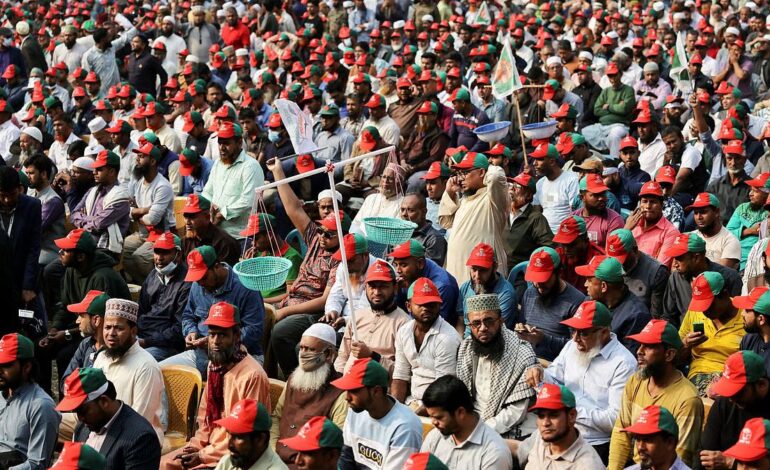

The ballots have been counted. The celebrations, subdued by design, have taken place quietly in homes rather than boisterously in the streets. Bangladesh Nationalist Party chairman Tarique Rahman, the son of former prime minister Khaleda Zia, has led his party to a commanding victory in the nation’s first general election since the seismic 2024 student uprising that toppled Sheikh Hasina.
But as one senior BNP official acknowledged, this is “not a time for celebration.” The mounting challenges awaiting the incoming government are formidable—and the margin of victory does not diminish their weight .
The Mandate
The numbers are decisive. The BNP and its allies have secured approximately 211 seats in the 300-member parliament, a two-thirds majority that grants the party broad authority to govern and legislate . Its principal rival, the Jamaat-e-Islami-led alliance, claimed roughly 70 seats—a respectable opposition presence, but one that leaves little doubt about which party the electorate has entrusted with power .
Voter turnout exceeded 60 percent, a significant increase from the 42 percent recorded in the 2024 election—itself a reflection of renewed faith in the democratic process . More than four million young voters participated for the first time, many of whom were active in the protests that reshaped the country’s political landscape .
Alongside the parliamentary vote, a simultaneous referendum showed strong support for the “July Charter”—a package of constitutional reforms including a two-term, ten-year limit for prime ministers and the establishment of a neutral caretaker government during future election periods .
A Victory Without Triumphalism
The BNP’s response to its win has been conspicuously restrained. Party leaders explicitly instructed supporters to forgo celebratory processions or rallies, urging them instead to offer prayers for the nation’s welfare . This measured posture reflects an awareness that the circumstances of this victory are unlike any before it.
Tarique Rahman, who returned to Bangladesh in December after years of self-imposed exile following his acquittal on corruption and grenade attack charges widely viewed as politically motivated, inherits a mandate born not of normal political transition but of popular uprising . The students who occupied the streets in 2024, who faced live ammunition and lost comrades, did not risk their lives merely to restore the BNP to power. They demanded a fundamentally different kind of governance.
Whether Rahman can deliver it is the central question of the coming months.
The Agenda
The BNP’s campaign platform outlined ambitious commitments. The flagship “Family Card” initiative promises monthly financial support or basic goods to low-income households—a significant expansion of the social safety net that will require substantial fiscal resources . Youth employment features prominently, with pledges to support digital innovation, entrepreneurship, and job creation for Bangladesh’s large population of highly skilled but underemployed graduates .
On governance, Rahman has committed to strengthening anti-corruption mechanisms and implementing the prime ministerial term limit approved in the referendum—a direct response to the concentration of power that characterized the Hasina era .
Foreign policy presents a delicate recalibration. The BNP’s manifesto promotes a “Bangladesh Before All” approach, signaling greater independence from the New Delhi-aligned posture of the previous administration. This includes pursuing the Teesta River water-sharing agreement with India and deepening engagement with other regional partners . The shift carries both opportunity and risk.
The Shadows of the Past
Yet even before the new government takes office, observers have sounded notes of caution. The BNP’s decades-old reputation for corruption and extortion—the “chandabaj” label—has not been erased by election victory . While Rahman has publicly disciplined thousands of party members accused of misconduct, critics argue that systemic reform, not symbolic action, is required to uproot entrenched practices .
The political landscape is further complicated by the rise of Jamaat-e-Islami, which has staged a notable resurgence through its alliance with the student-founded National Citizen Party. Its leader, Shafiqur Rahman, has pledged “positive politics” in opposition, but the party’s ideological foundations and historical legacy remain sources of deep polarization .
And in exile, Sheikh Hasina has rejected the election as a “carefully planned farce,” demanding its cancellation—a statement that carries diminishing weight domestically but underscores the enduring bitterness of Bangladesh’s political divisions .
What Happens Next
The immediate path is procedural. The BNP will form government, select its cabinet, and assume responsibility for a nation still recovering from the economic disruptions of the post-uprising transition. The garment industry, backbone of the export economy, requires stability. Inflation remains a concern. Investor confidence, while improved, is not yet fully restored.
But the deeper test is political. The July Uprising was not merely a rejection of Sheikh Hasina; it was a rejection of the entire system of personalized, unaccountable power that had come to define Bangladeshi governance. The students who voted for the first time this week did so not out of partisan loyalty, but out of hope that their sacrifice had purchased something lasting.
As BNP chairman Rahman himself said after casting his ballot: “For more than a decade, the people of Bangladesh had been waiting for this day. Today is the day that expectation is being fulfilled” .
Fulfilling that expectation now moves from the ballot box to the business of governing. The victory has been secured. The harder work is only beginning.
Also Read:
Key Highlights from the German Parliament Speaker’s Visit to Gaza
Colors of the Desert: Sahara Cultures Take Center Stage in Chad